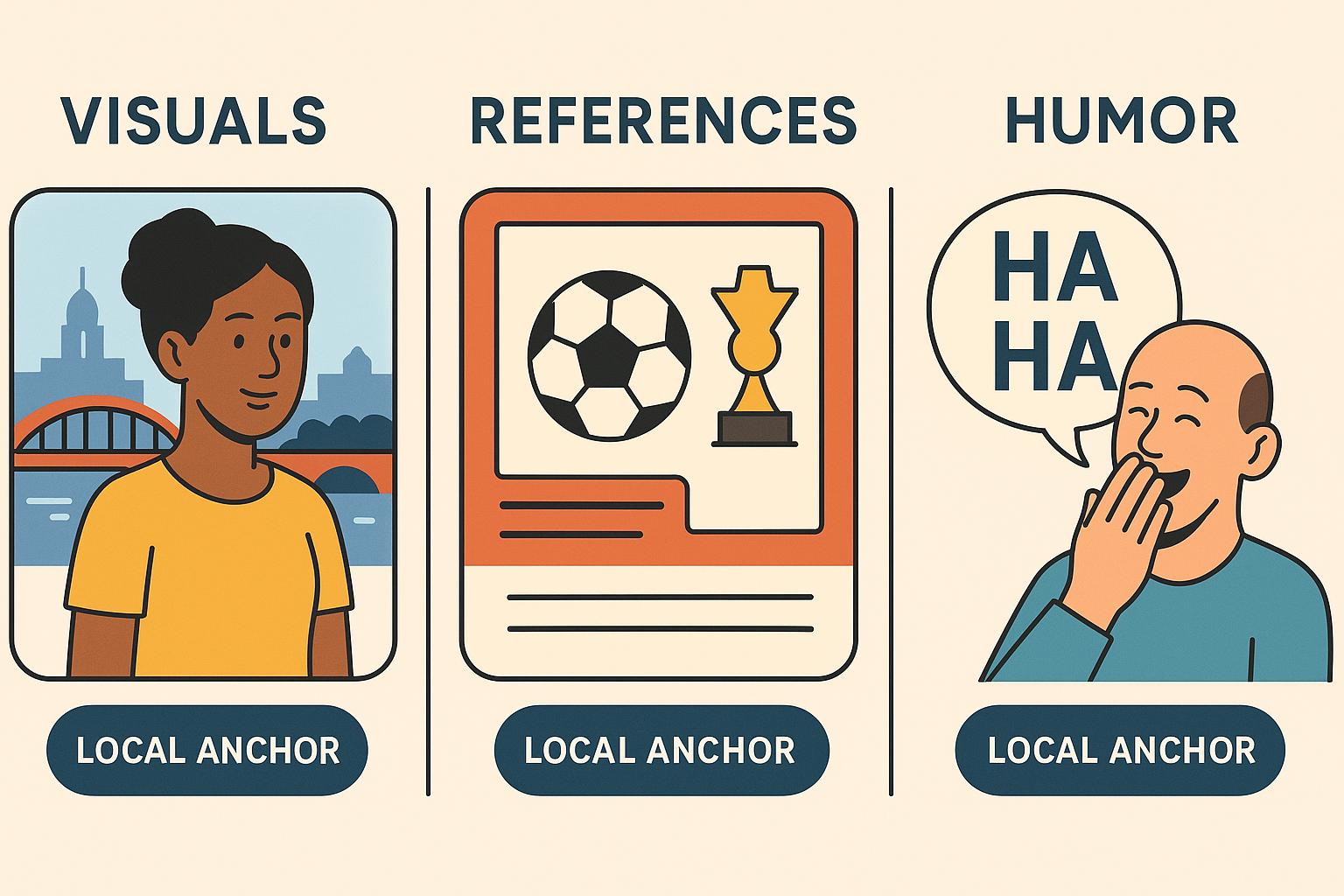
Most teams localize words and stop there. But what actually drives attention and conversion across markets is the creative substrate—the visuals, cultural references, and humor... Continue reading

All posts by Art Arutyunyan
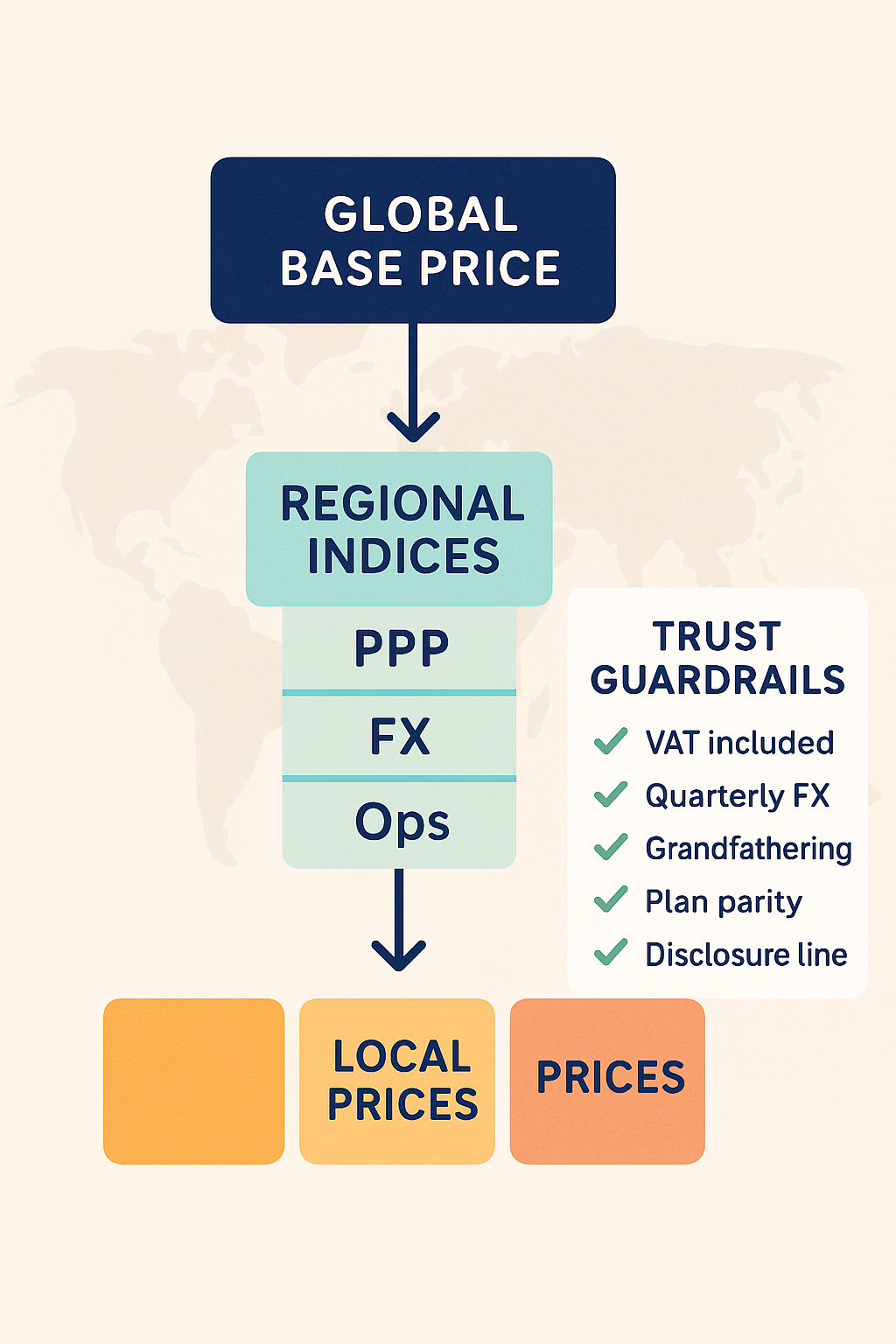
Regional pricing can increase conversion 10–40% with no new features. It can also trigger a backlash (“Why do I pay more?”) and erode brand equity... Continue reading
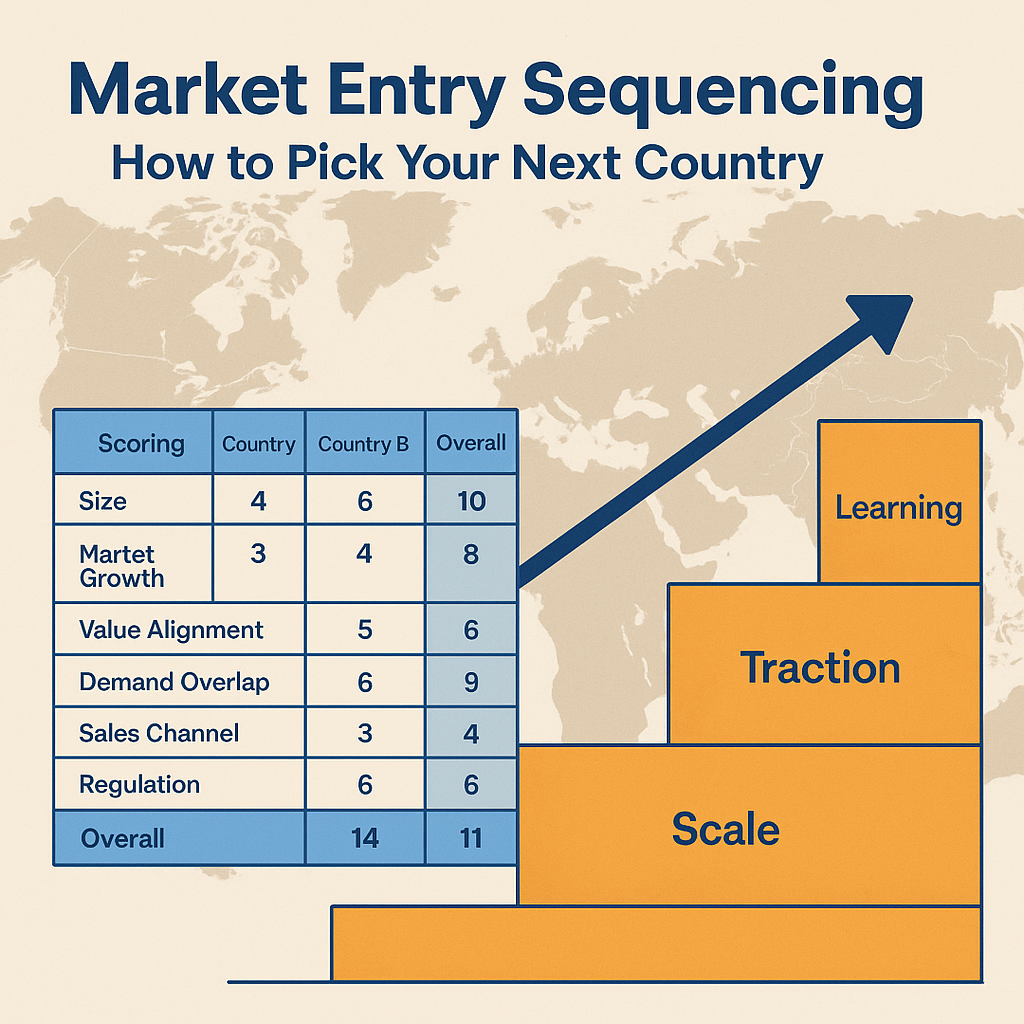
Winning globally is less about bravery and more about order of operations.Most expansion failures happen not because the product is bad, but because teams pick... Continue reading
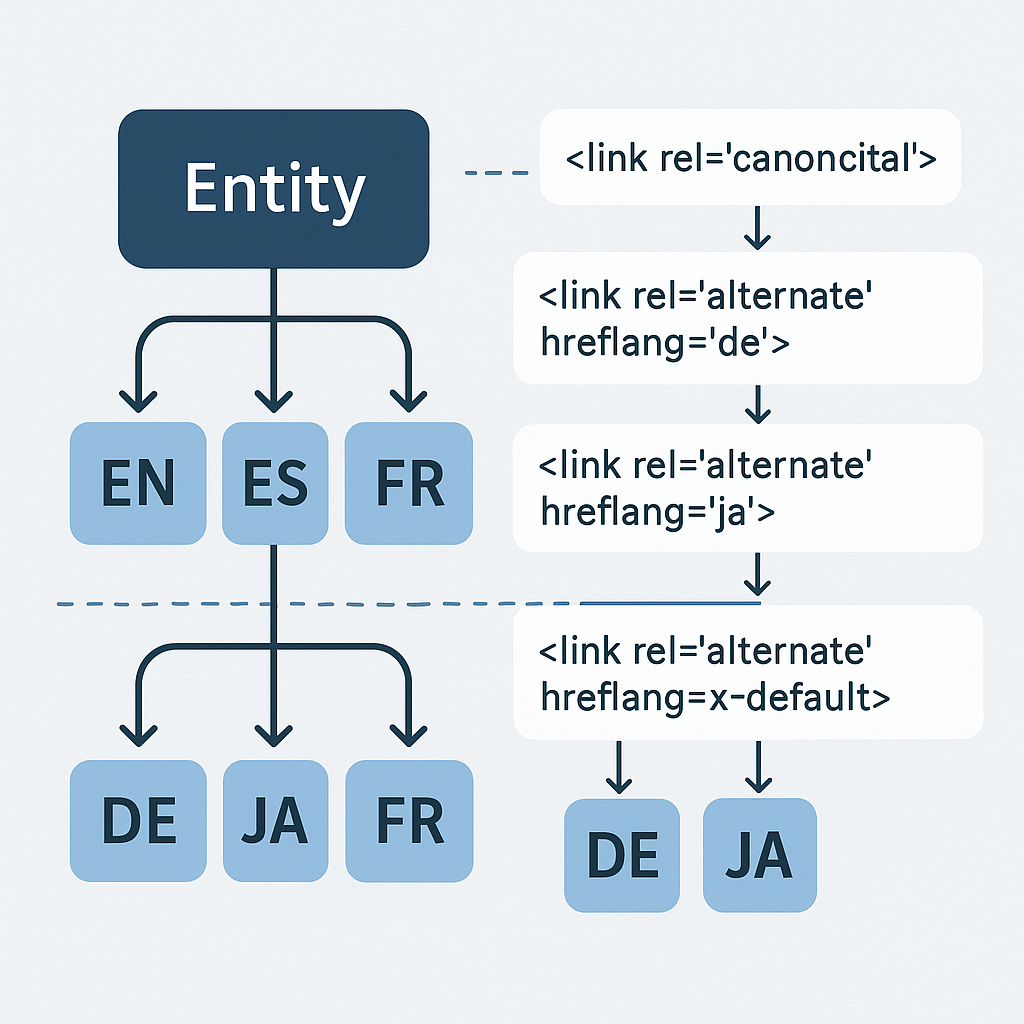
Translating pages is easy. Ranking them across languages and regions—without cannibalization, duplicates, or knowledge-graph confusion—is the hard part. Modern multilingual SEO is no longer just... Continue reading
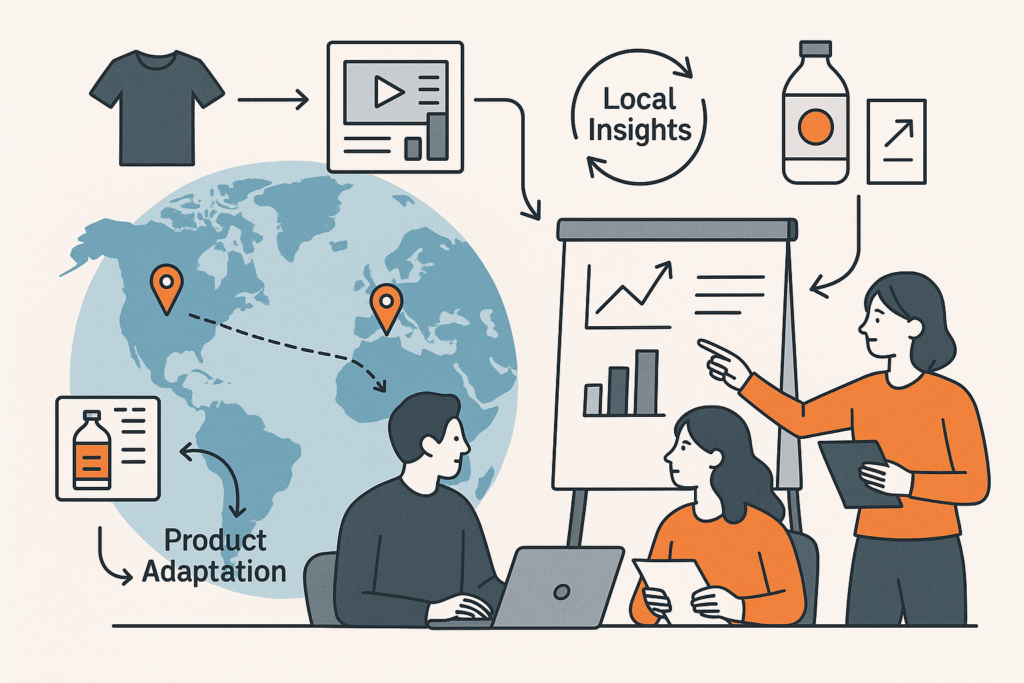
Localization used to mean swapping text strings and updating currency symbols.But in 2025, the difference between global and generic isn’t language — it’s insight. Brands... Continue reading
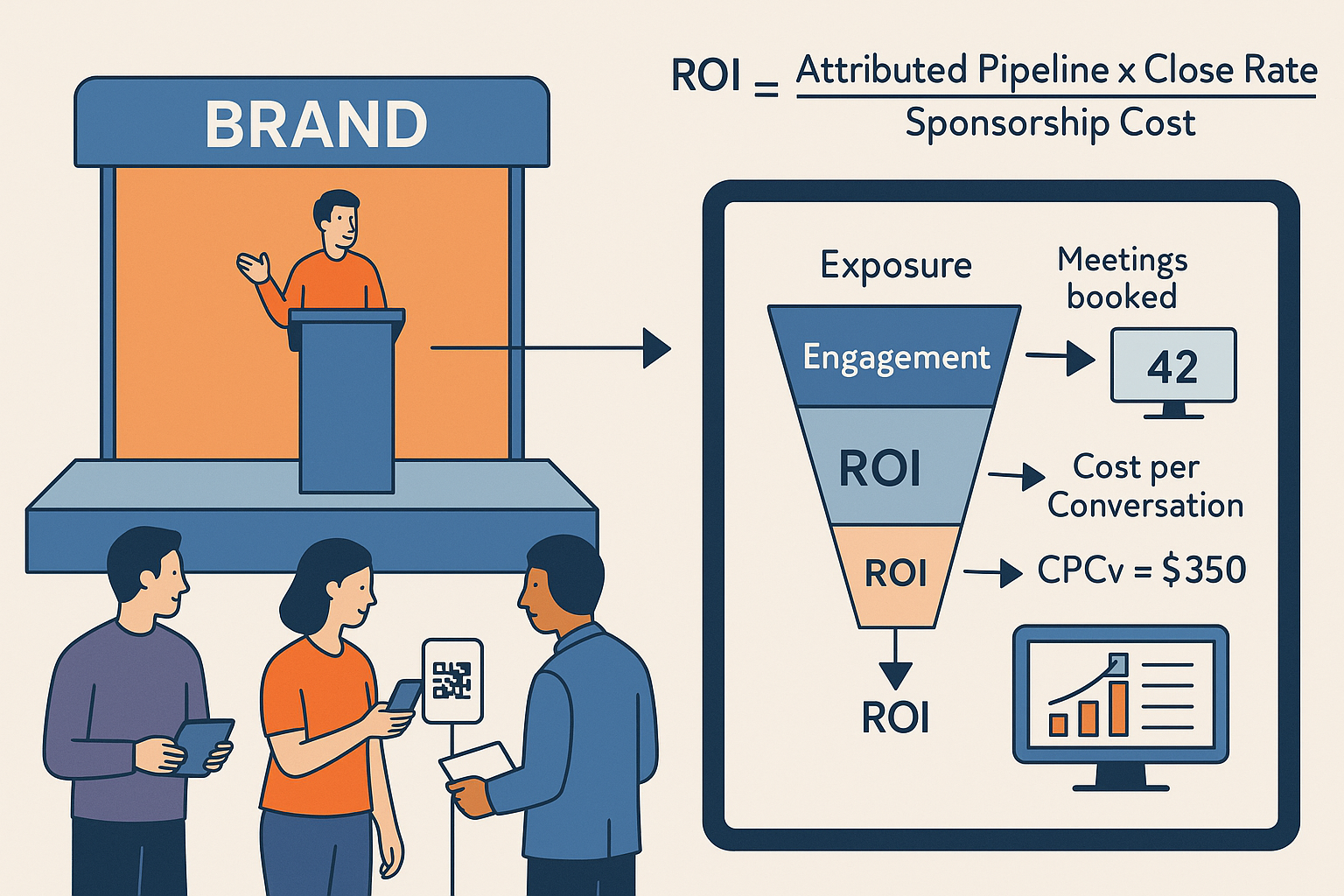
Sponsorships can be the most overpaid line in the marketing budget — or the most underestimated growth lever.The difference lies in intent, integration, and instrumentation.... Continue reading
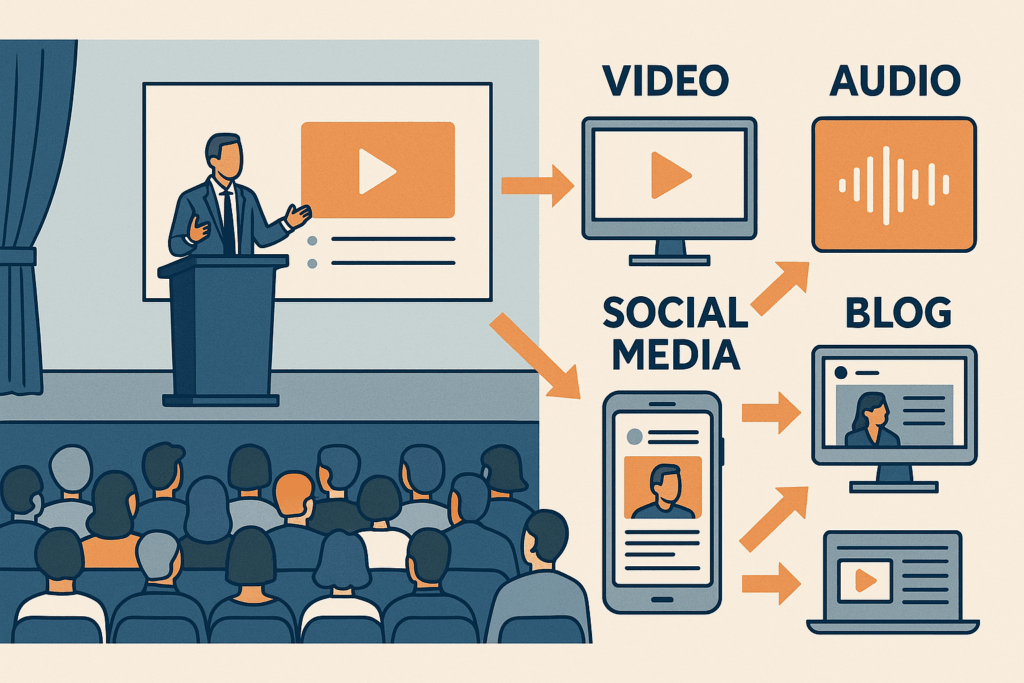
A stage is not a one-hour experience — it’s a one-year asset.Modern marketing teams no longer treat events as endpoints; they’re content engines.Each talk, demo,... Continue reading

Hybrid events—where physical and virtual audiences meet in one experience—can amplify reach or implode under complexity. The difference is never luck; it’s operational choreography. While... Continue reading

The quality of a panel depends less on the stage setup and more on the sourcing discipline behind it. “Get me three speakers” isn’t sourcing—it’s... Continue reading
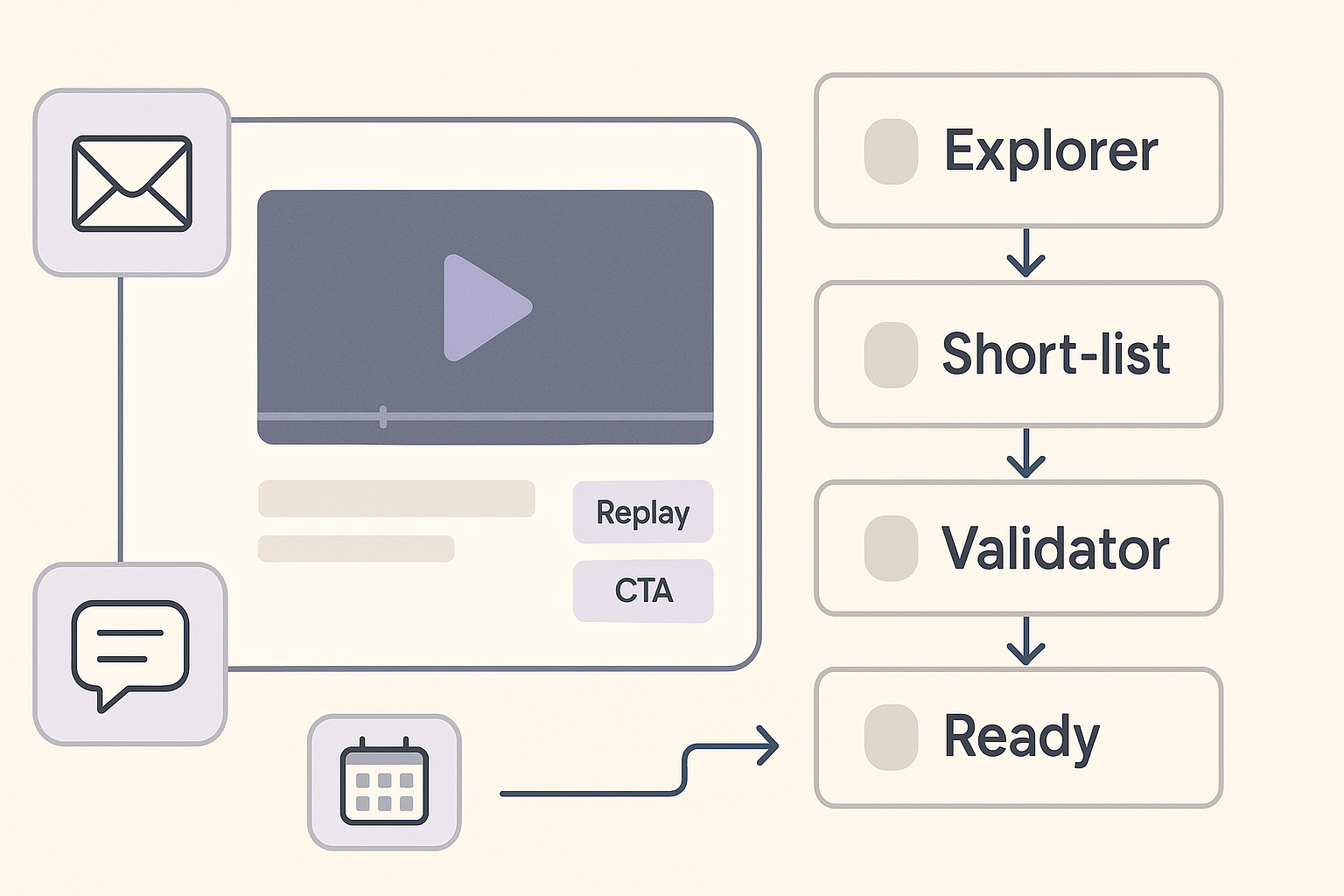
Most events stop at the “thanks for coming” email. That wastes the highest-intent moment you’ll have with a prospect for months. Post-event nurture isn’t a... Continue reading
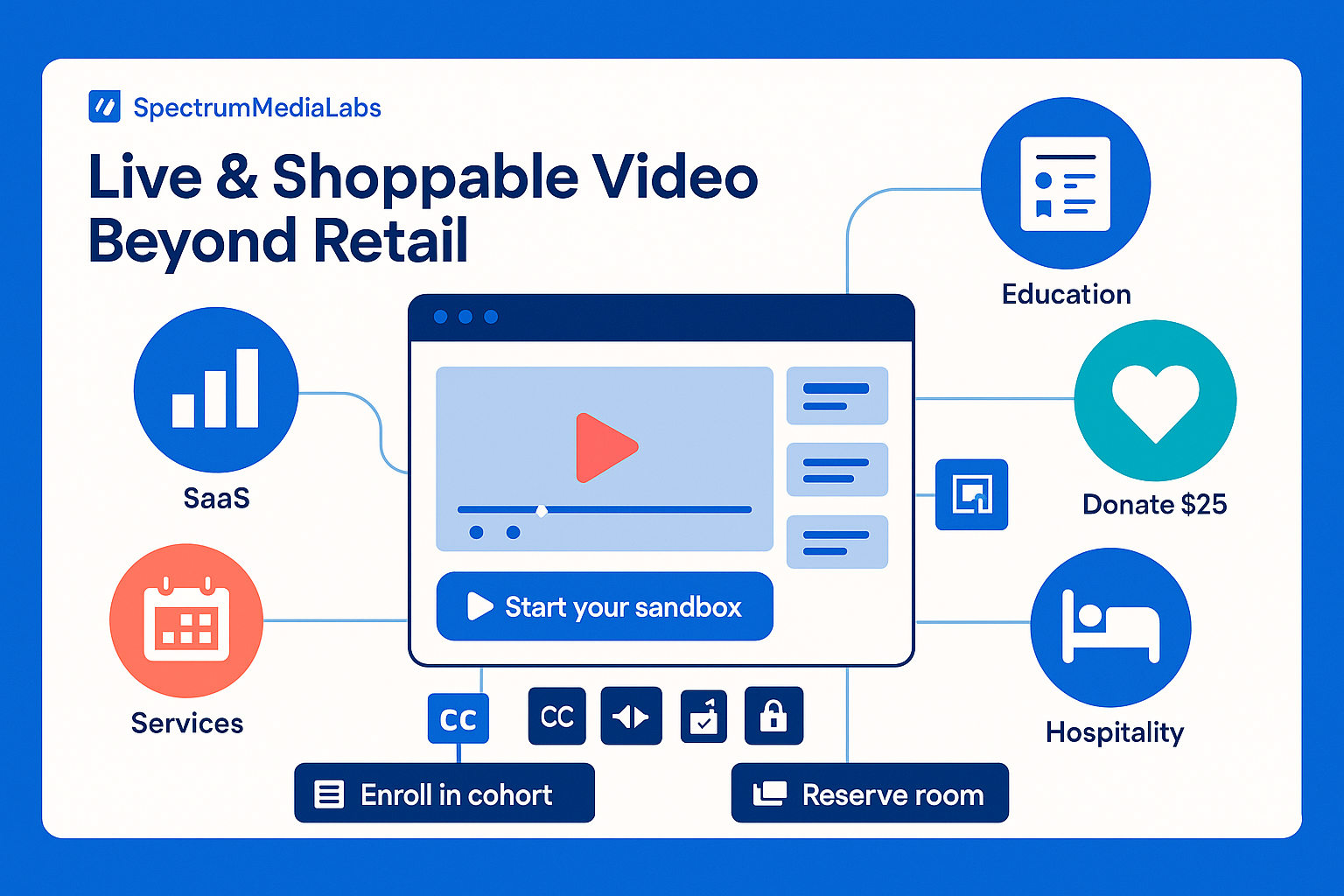
“Live shopping” sounds like lipstick and limited drops. But the mechanics—real-time proof + frictionless action—work far beyond retail. SaaS, education, media, fintech, hospitality, even non-profits... Continue reading
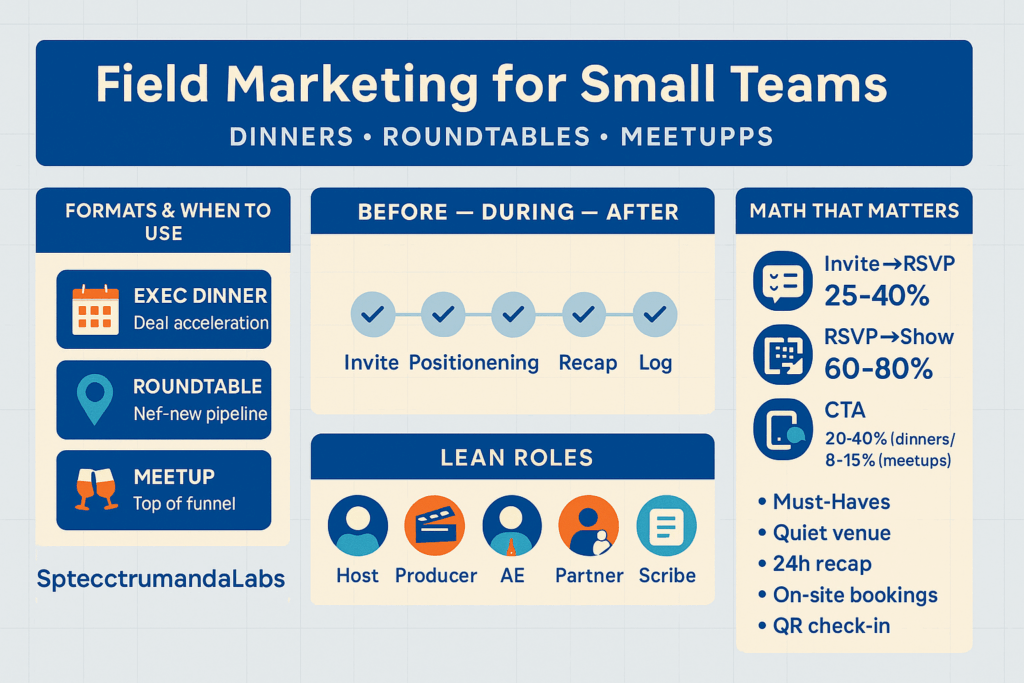
Big-budget roadshows are nice. But small teams win field marketing by curating rooms, not renting rooms. Executive dinners, practitioner roundtables, and community meetups can outperform... Continue reading
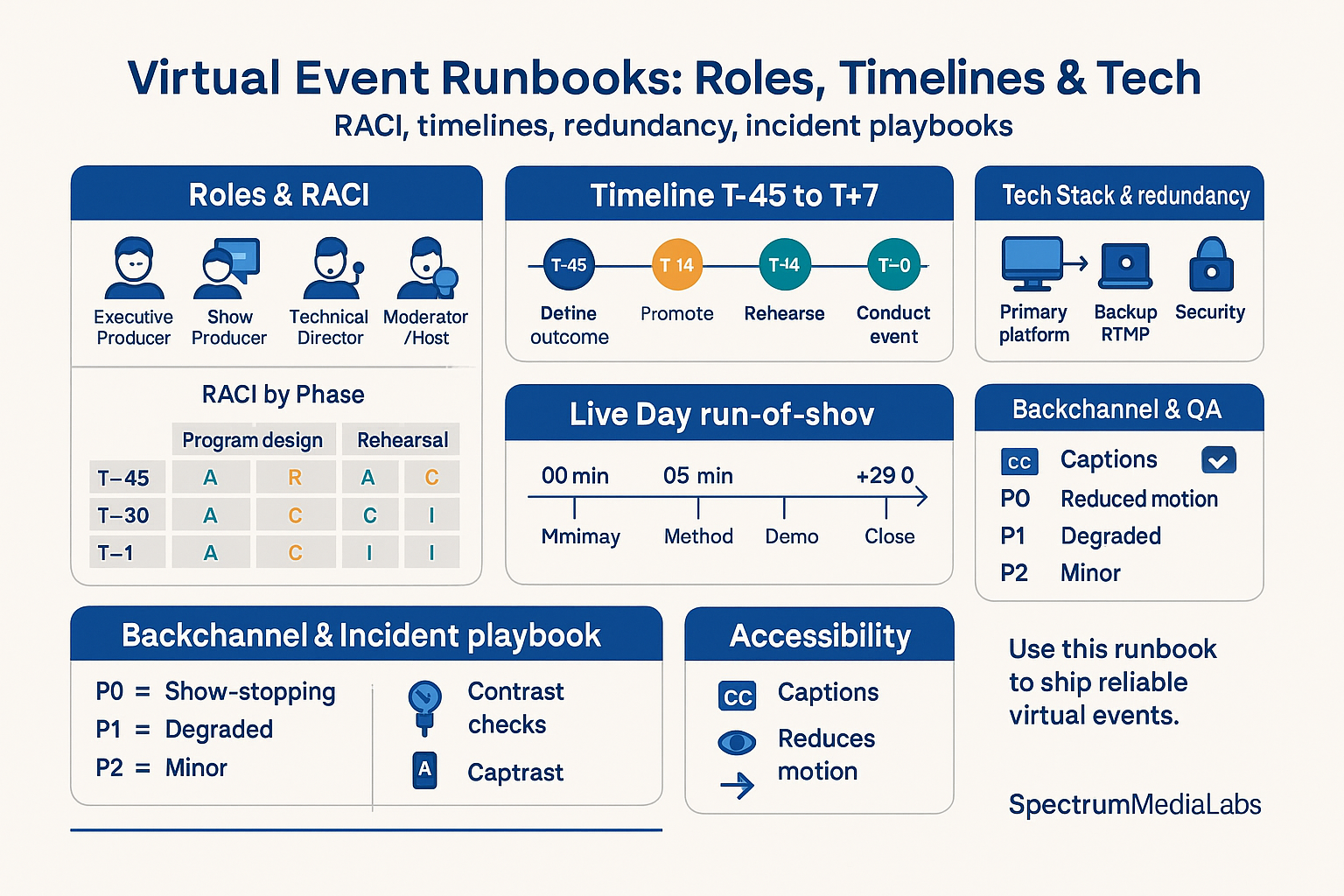
A virtual event is a live production with customer impact—and it deserves the same rigor as a product launch. “We’ll wing it on Zoom” turns... Continue reading
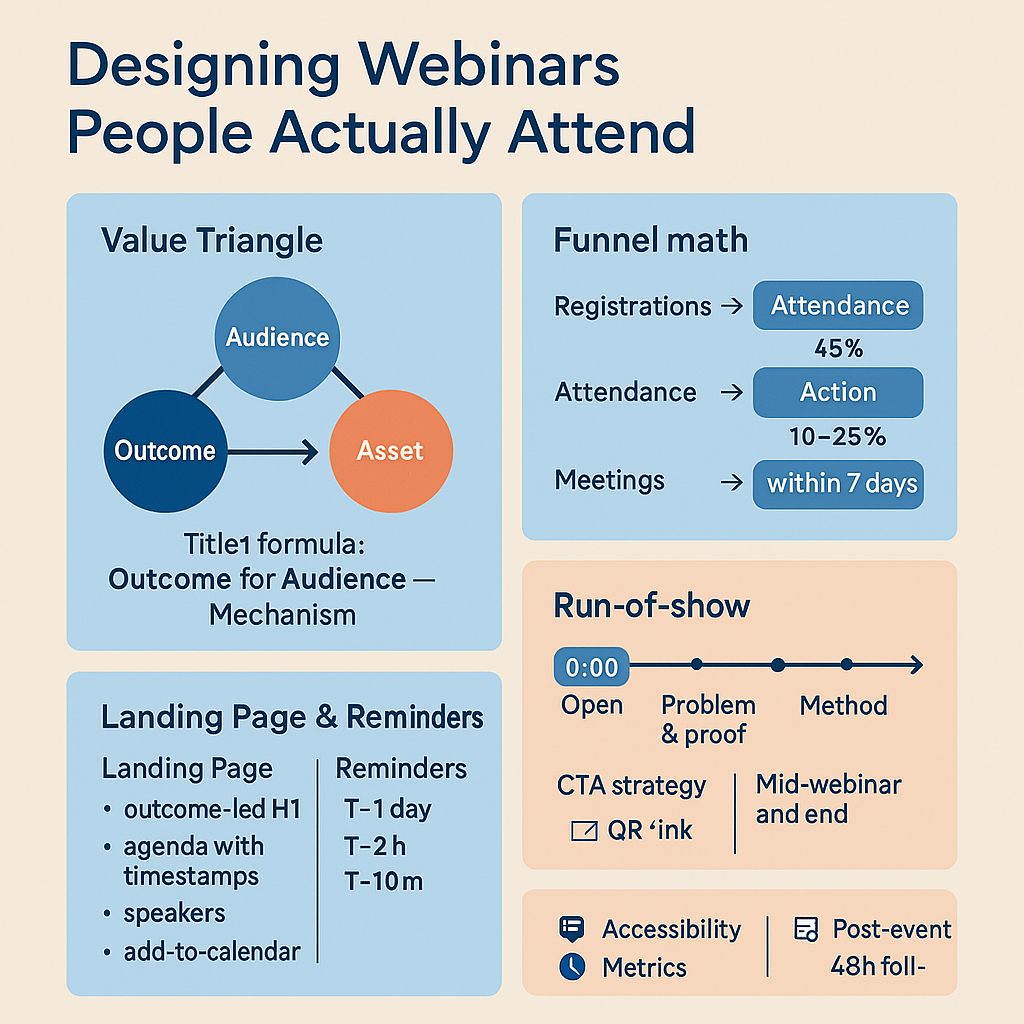
Most webinars fail before anyone presses “Join.” Titles are vague, agendas are bloated, and reminders arrive when your audience is already in another meeting. For... Continue reading
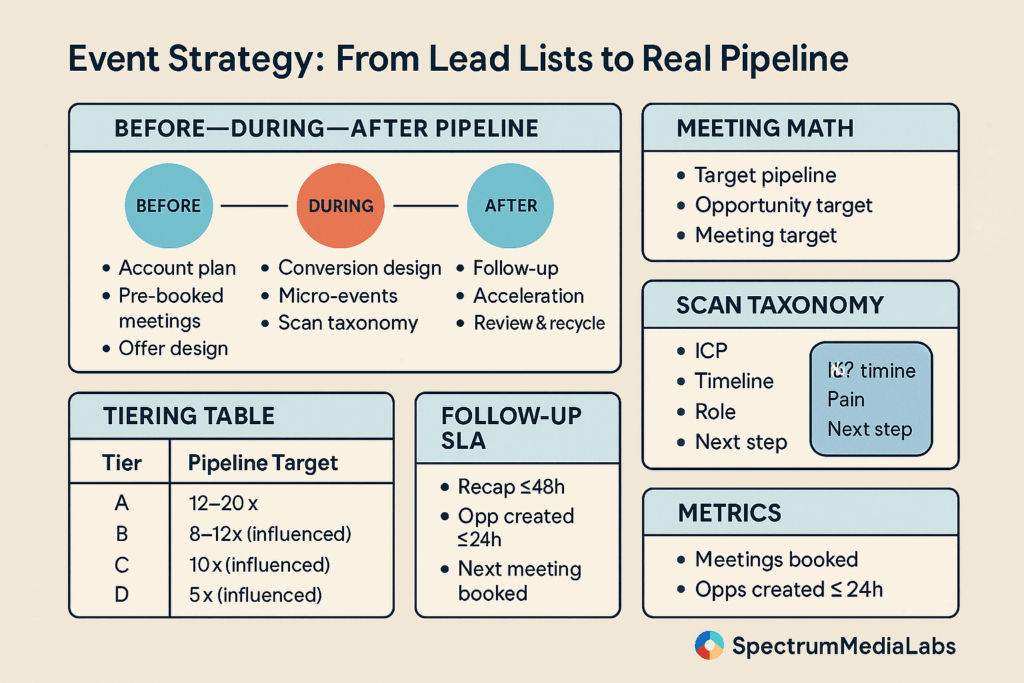
Most event programs die the same death: a gorgeous booth, a full badge scanner, and three weeks later… a CSV graveyard. If SpectrumMediaLabs wants events... Continue reading
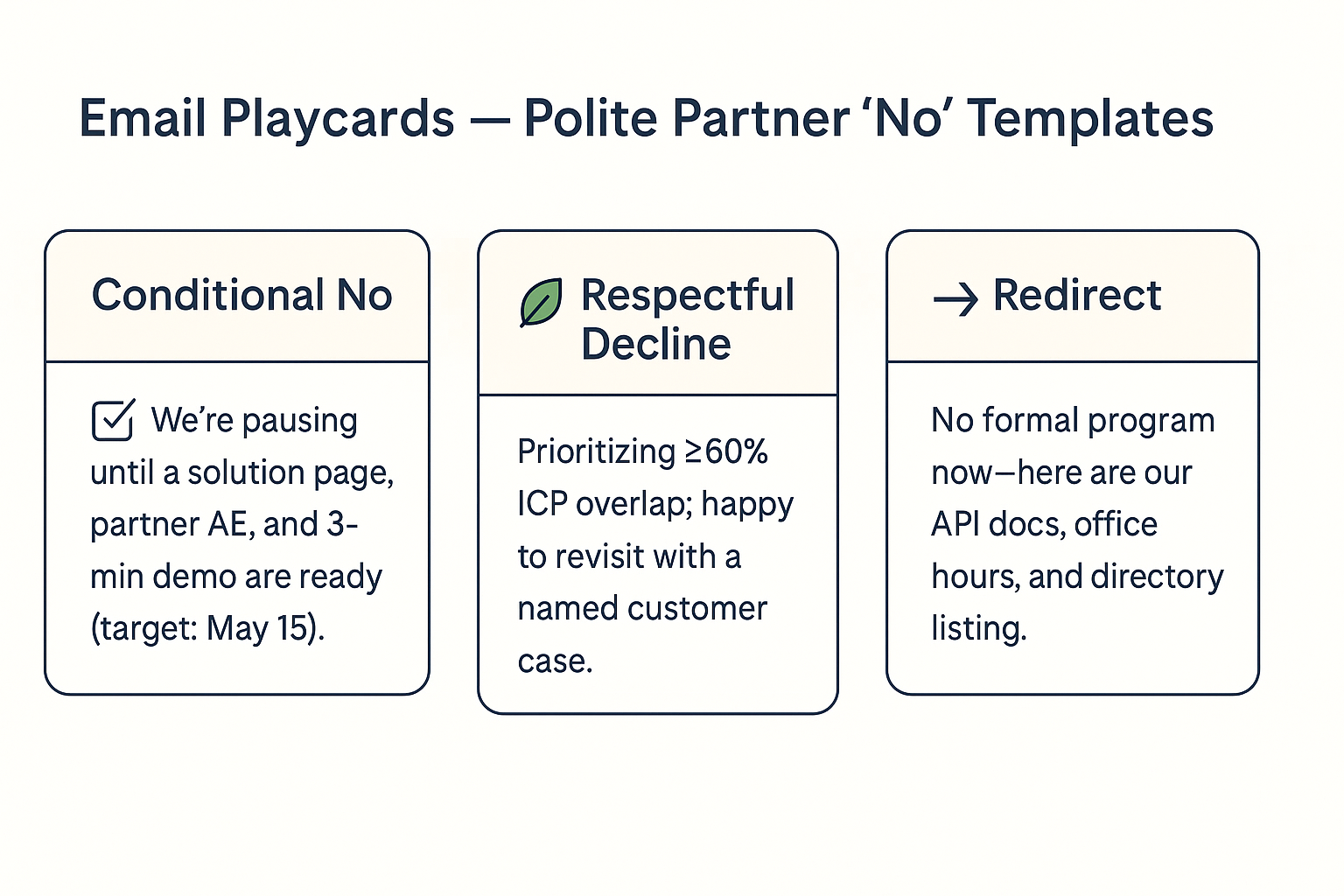
Introduction Partnerships multiply your reach—or your risk. The hardest skill in Partner Ops isn’t closing a logo; it’s saying no to the wrong ones without... Continue reading
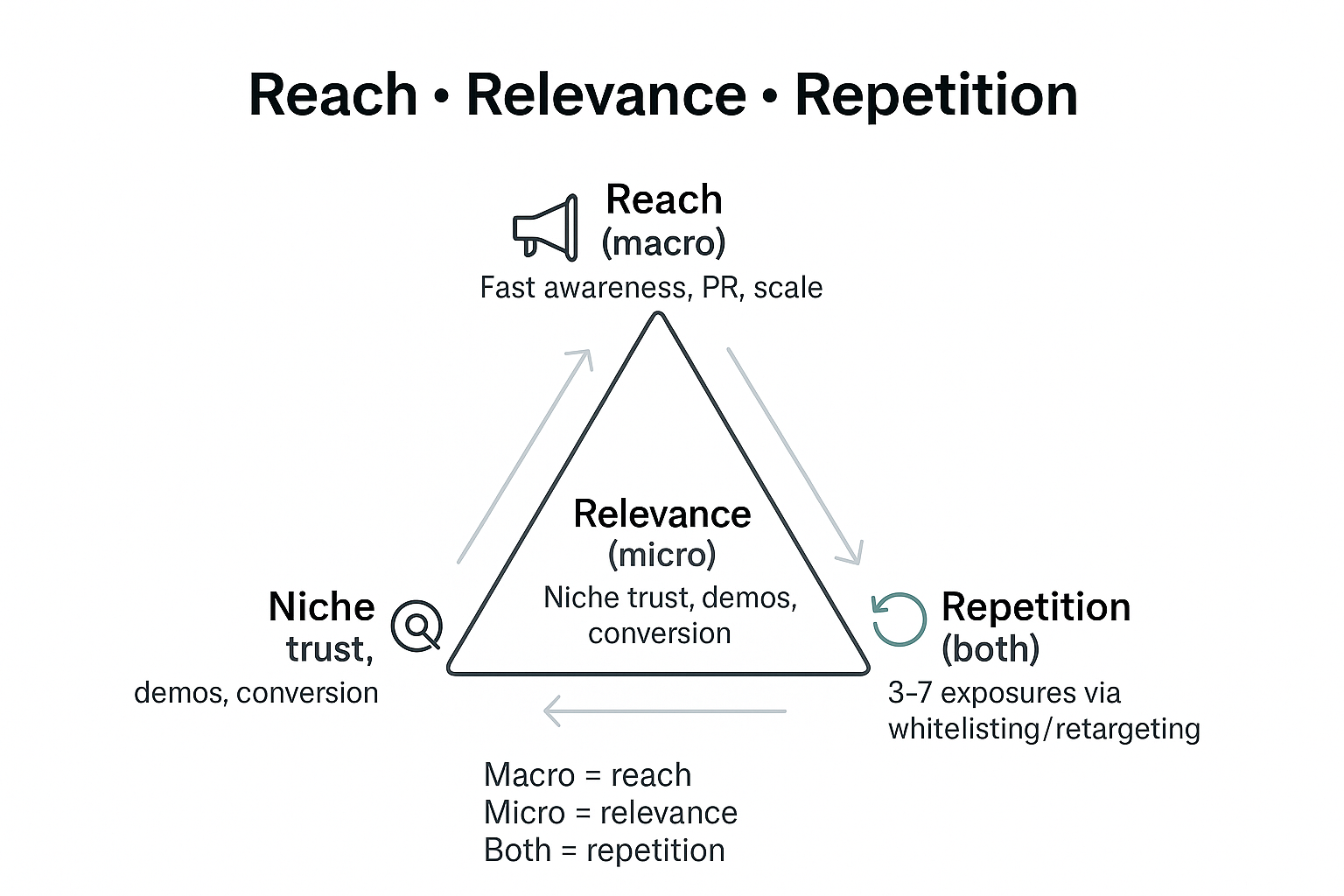
Introduction “Micro or macro?” is the wrong first question. Better: what outcome are we buying, on which platform, for which audience, and how will we... Continue reading
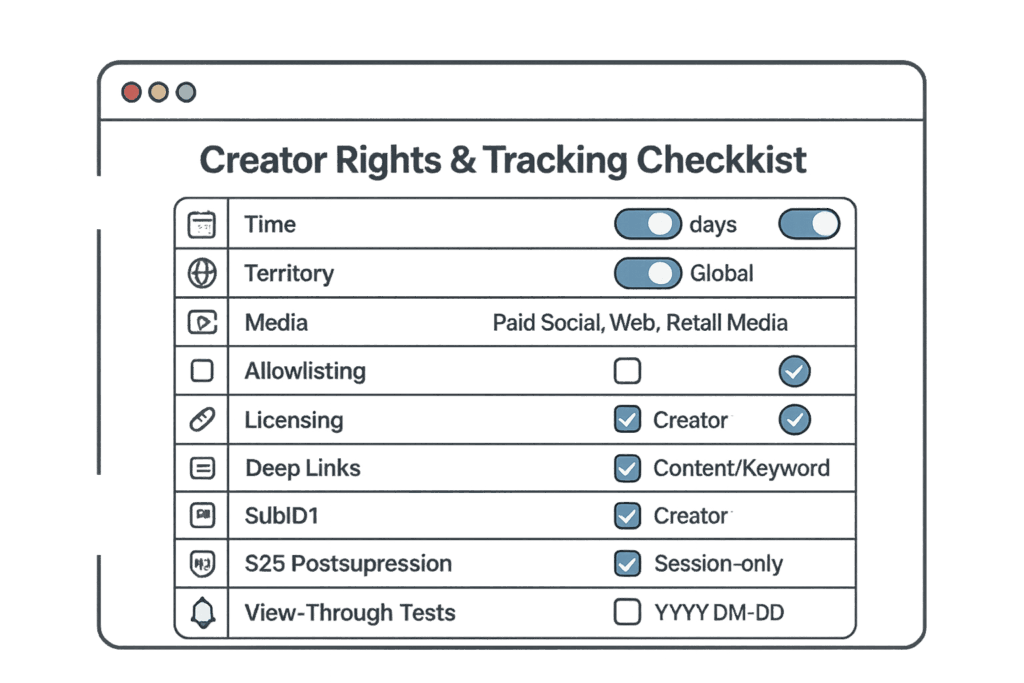
Paying creators is simple until money moves. Flat fees feel predictable but risk over‑ or under‑paying. Pure performance aligns incentives but can be unfair when... Continue reading
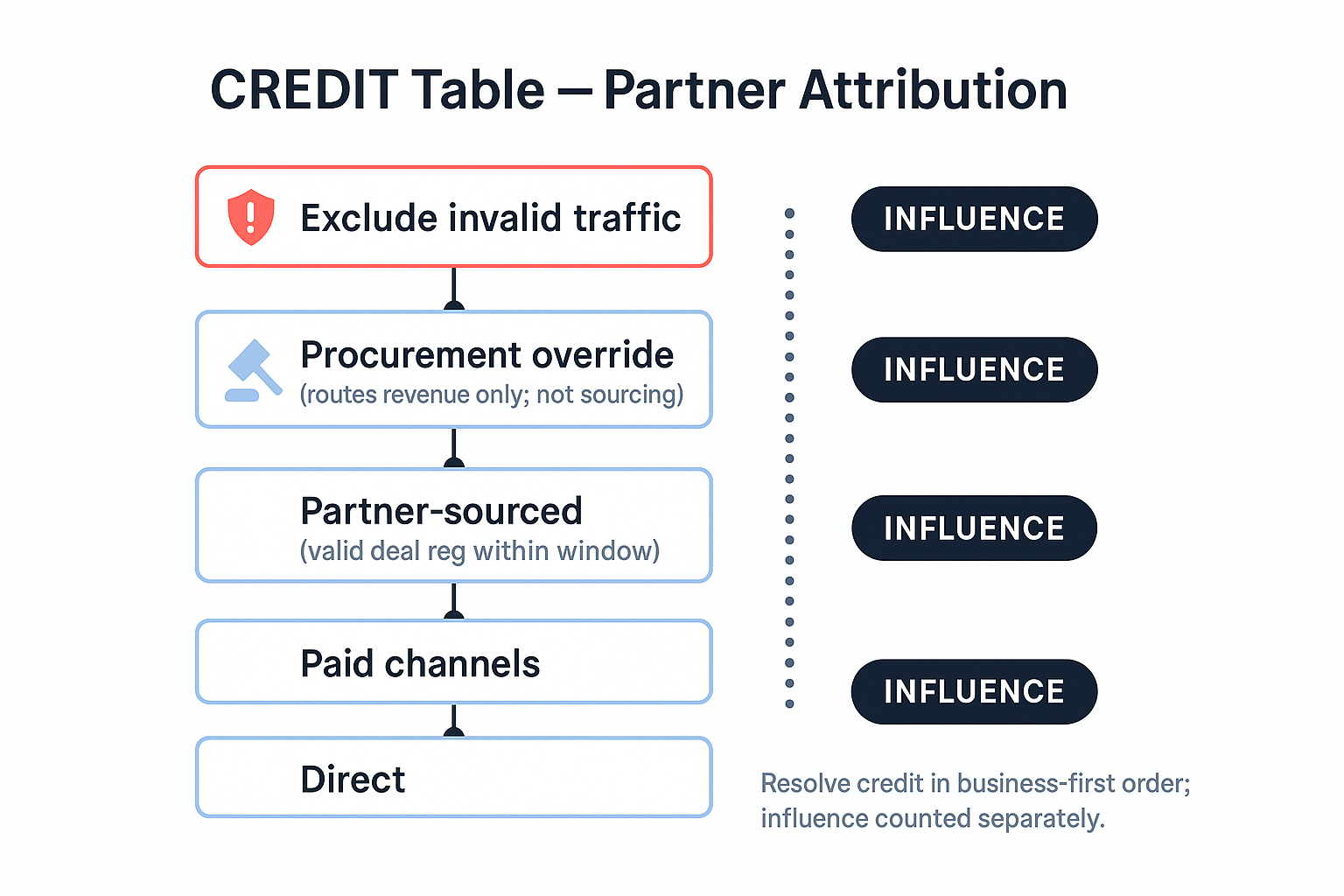
Introduction Attribution fuels trust between you and your partners—and trust fuels revenue. But most programs either give away credit too easily (inflated numbers, angry finance)... Continue reading
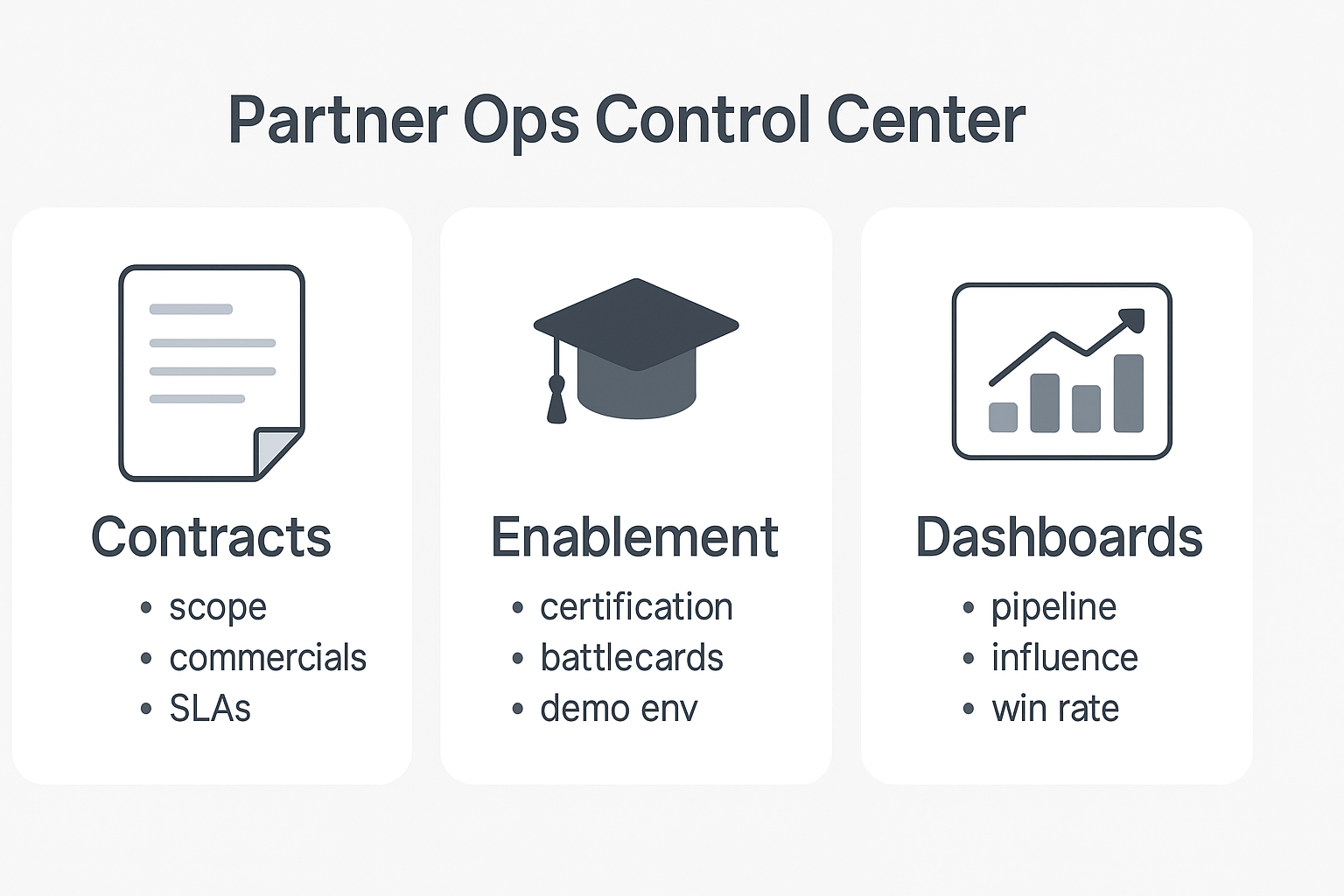
Introduction Great partnerships don’t collapse because the strategy is wrong—they stall because Partner Ops is missing. No clean contracts, no shared definitions, no way to... Continue reading
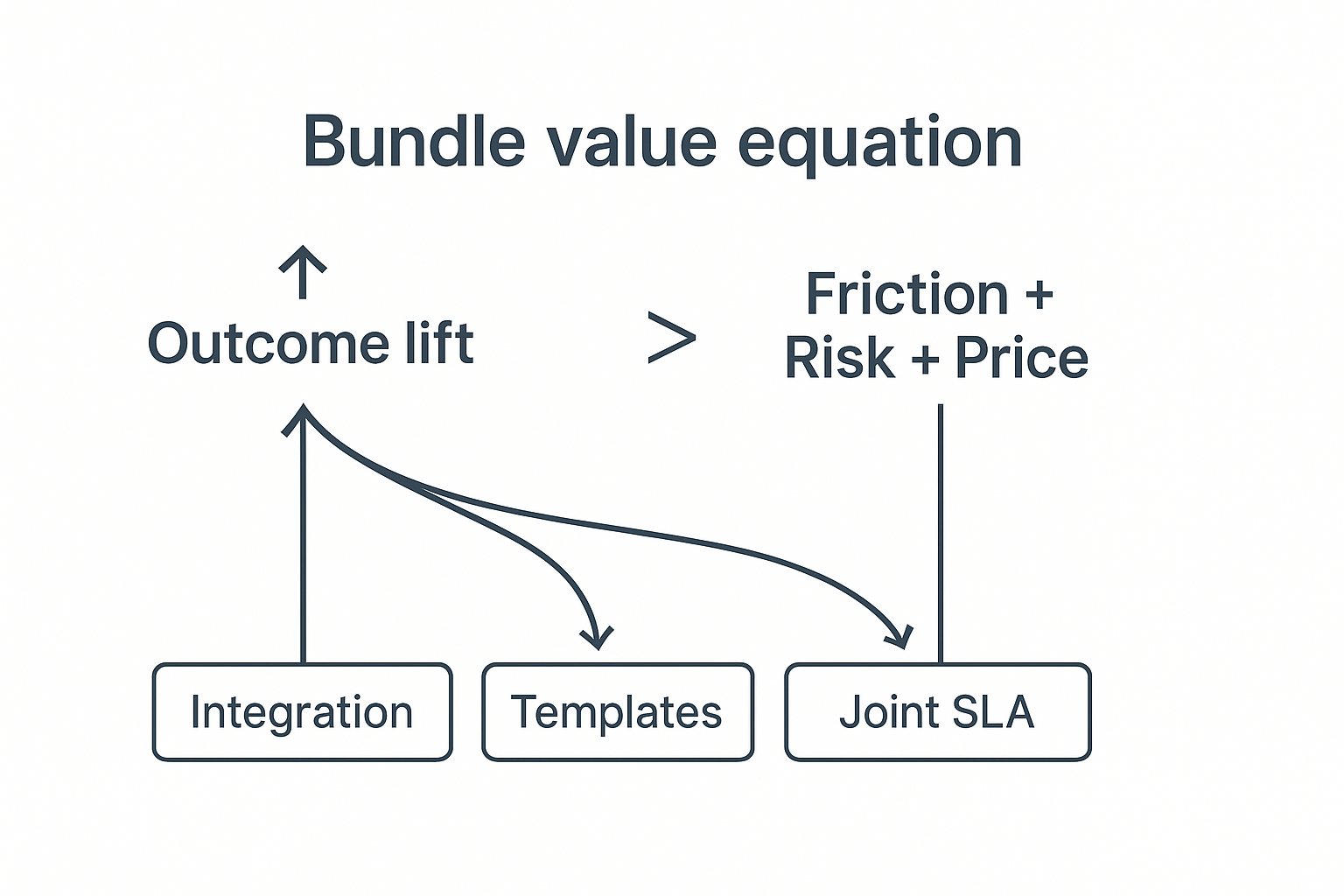
Introduction Bundles can be magic—or messy. Done right, a joint offer converts “two good things” into one clear outcome with less risk and lower switching... Continue reading
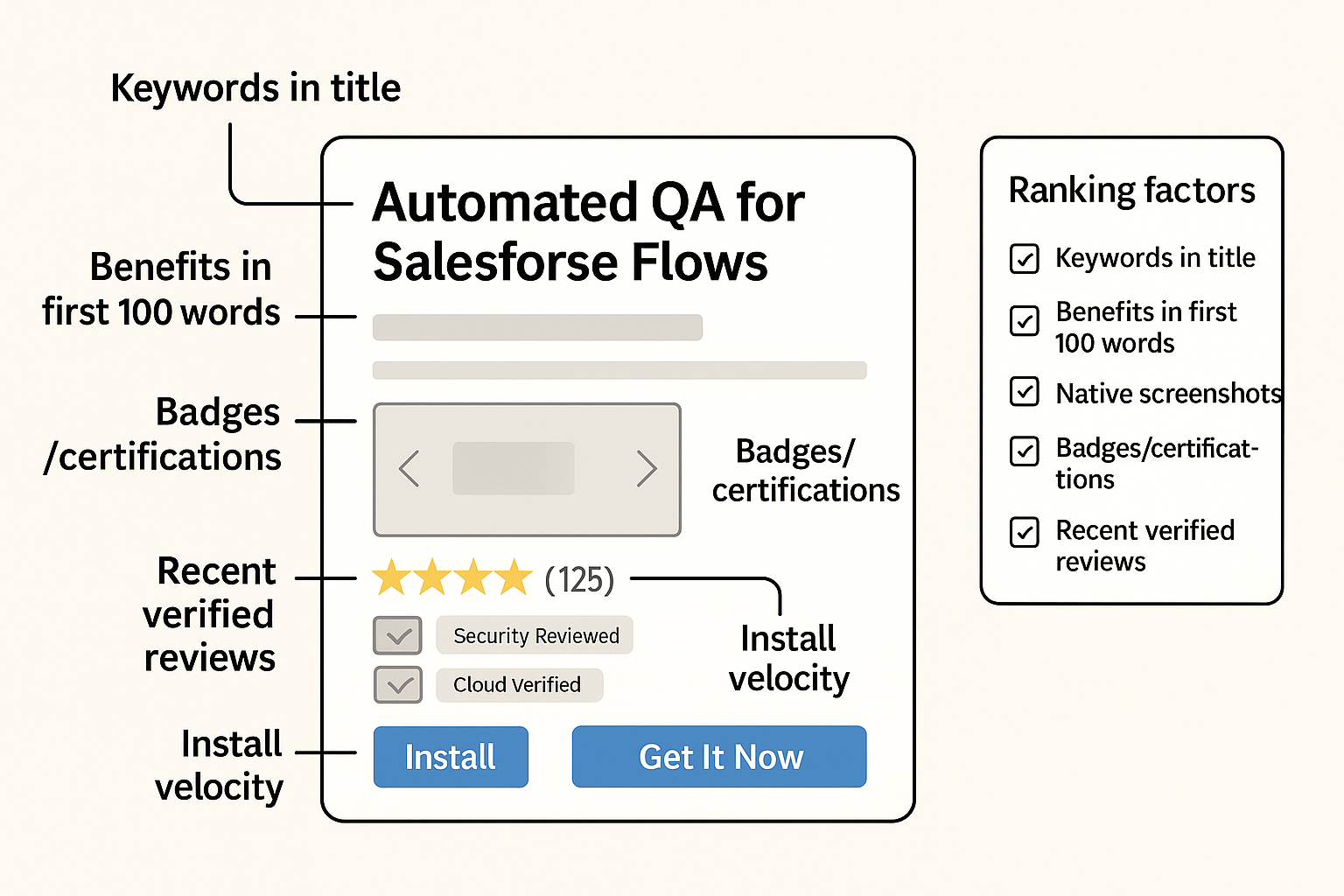
Introduction Marketplaces concentrate demand. Buyers already trust them, budgets are pre‑approved, and procurement is baked into the platform. The trap is assuming a listing equals... Continue reading
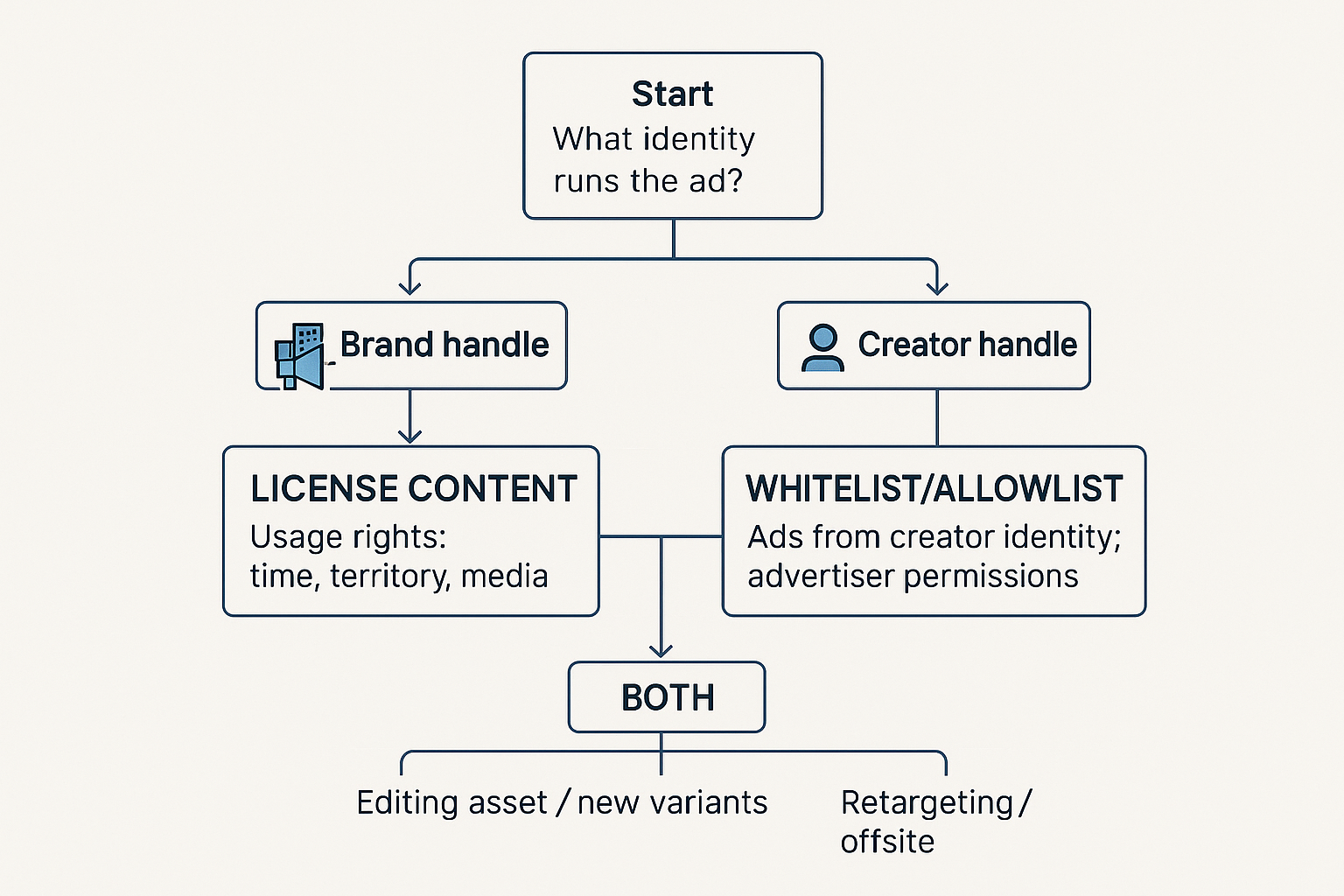
Introduction Creator content converts. But the fastest way to waste budget—or invite legal trouble—is to boost influencer posts without clean rights, settings, and measurement. This... Continue reading
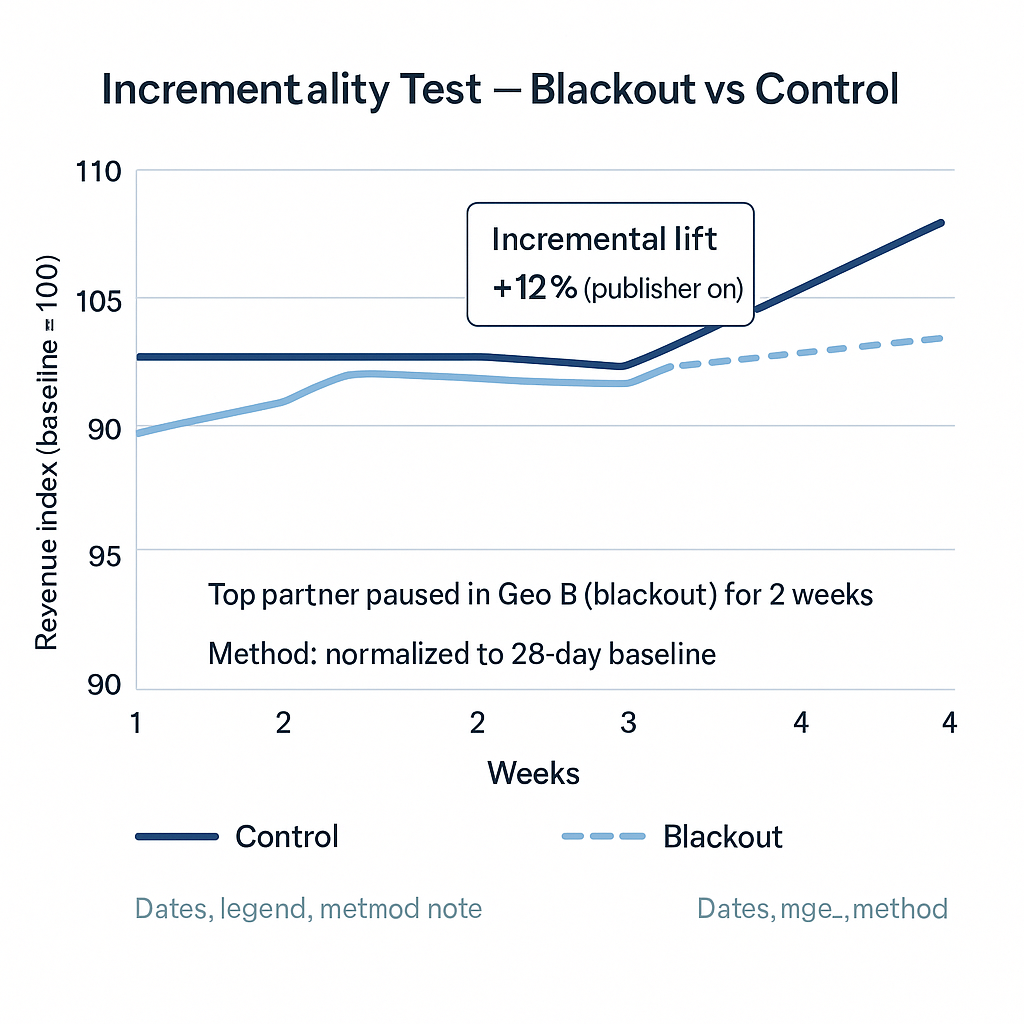
Introduction Affiliate can be a force multiplier—or a very expensive way to pay for sales you would have earned anyway. The difference is incrementality by... Continue reading
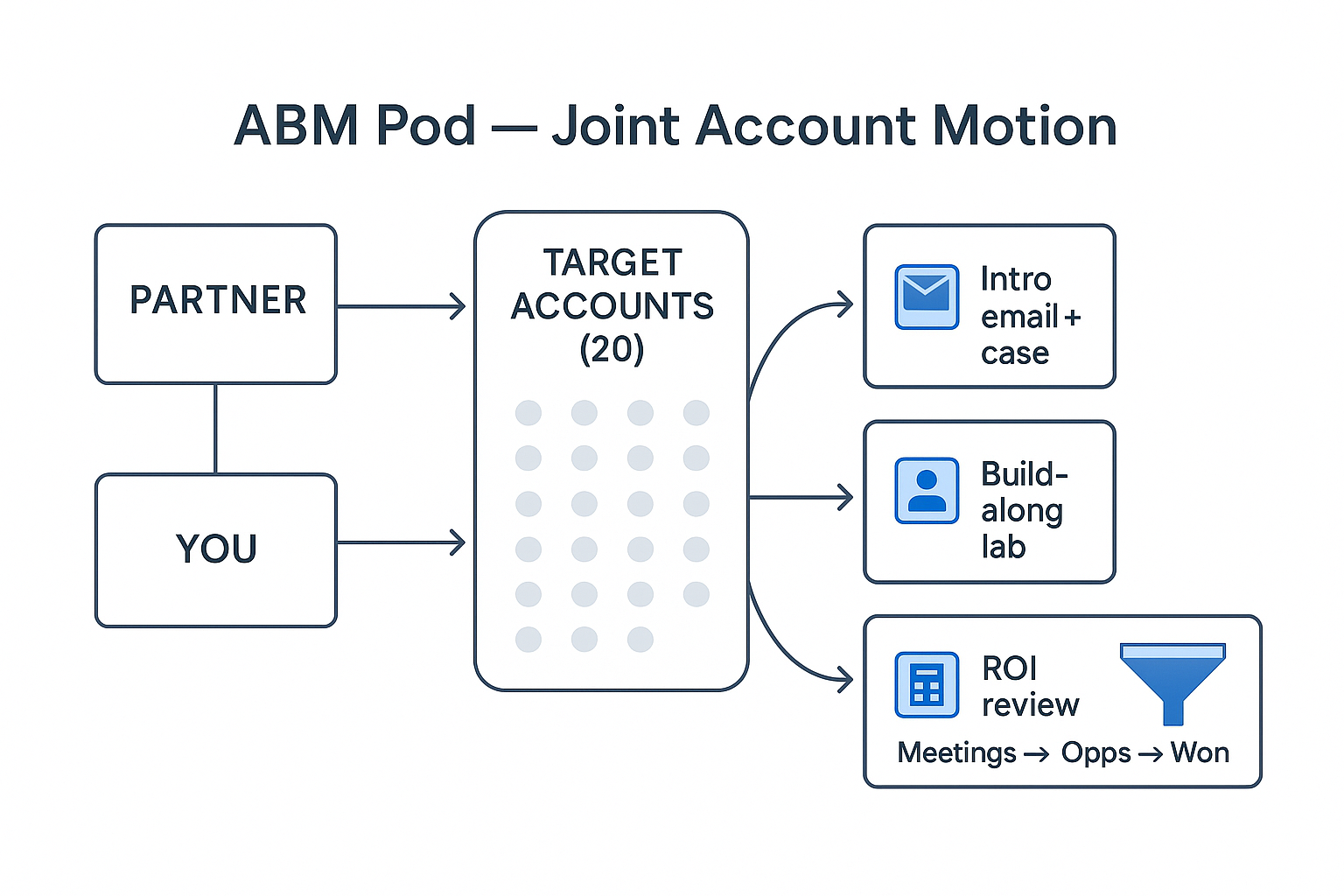
Introduction The default co‑marketing plan is a 45‑minute webinar that everyone registers for and only a few watch. You can do better. Partner‑led growth is... Continue reading
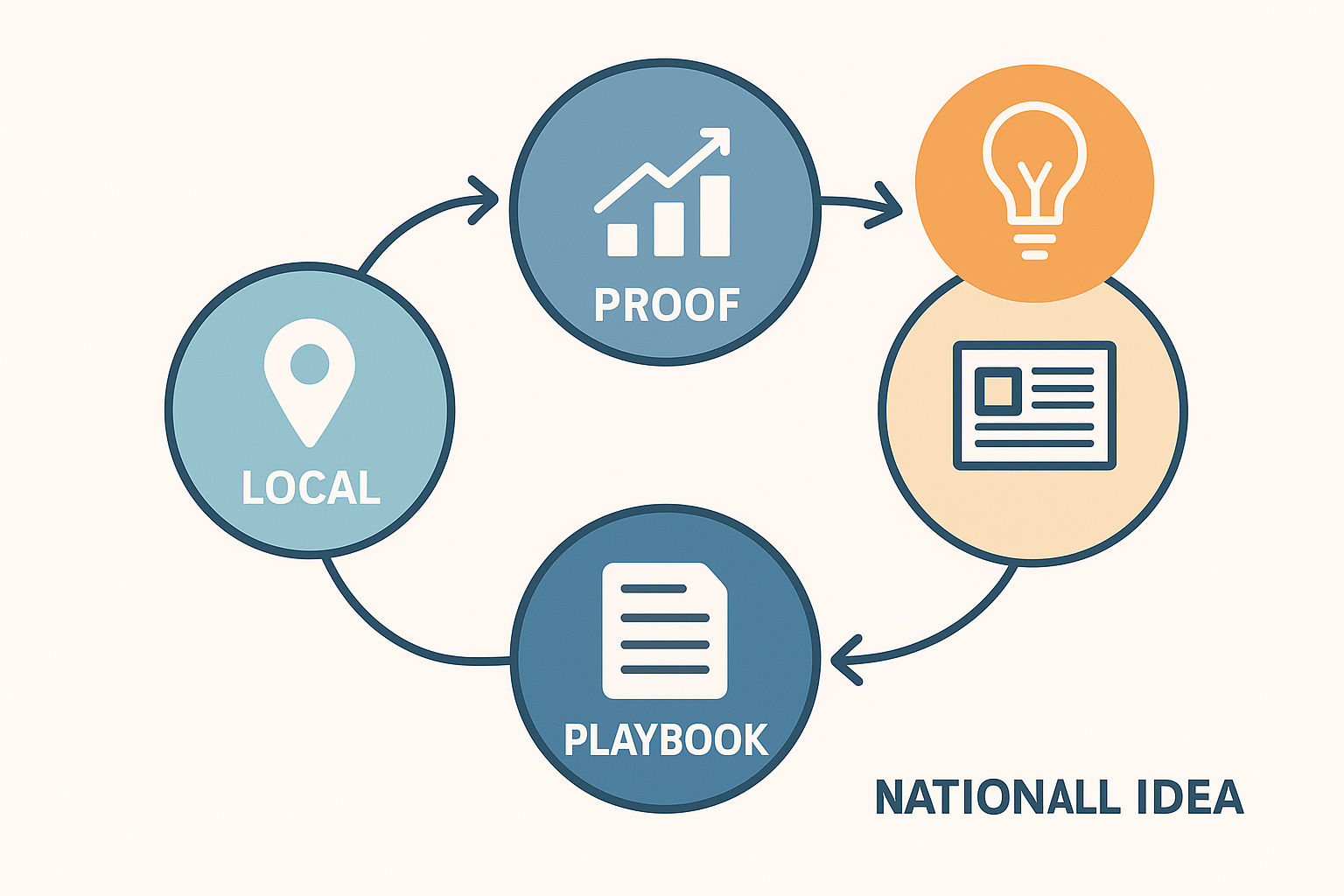
Introduction National reputation often starts on neighborhood streets. Editors everywhere are hunting for specific, human stories with proof—exactly what community work produces. But most brands... Continue reading
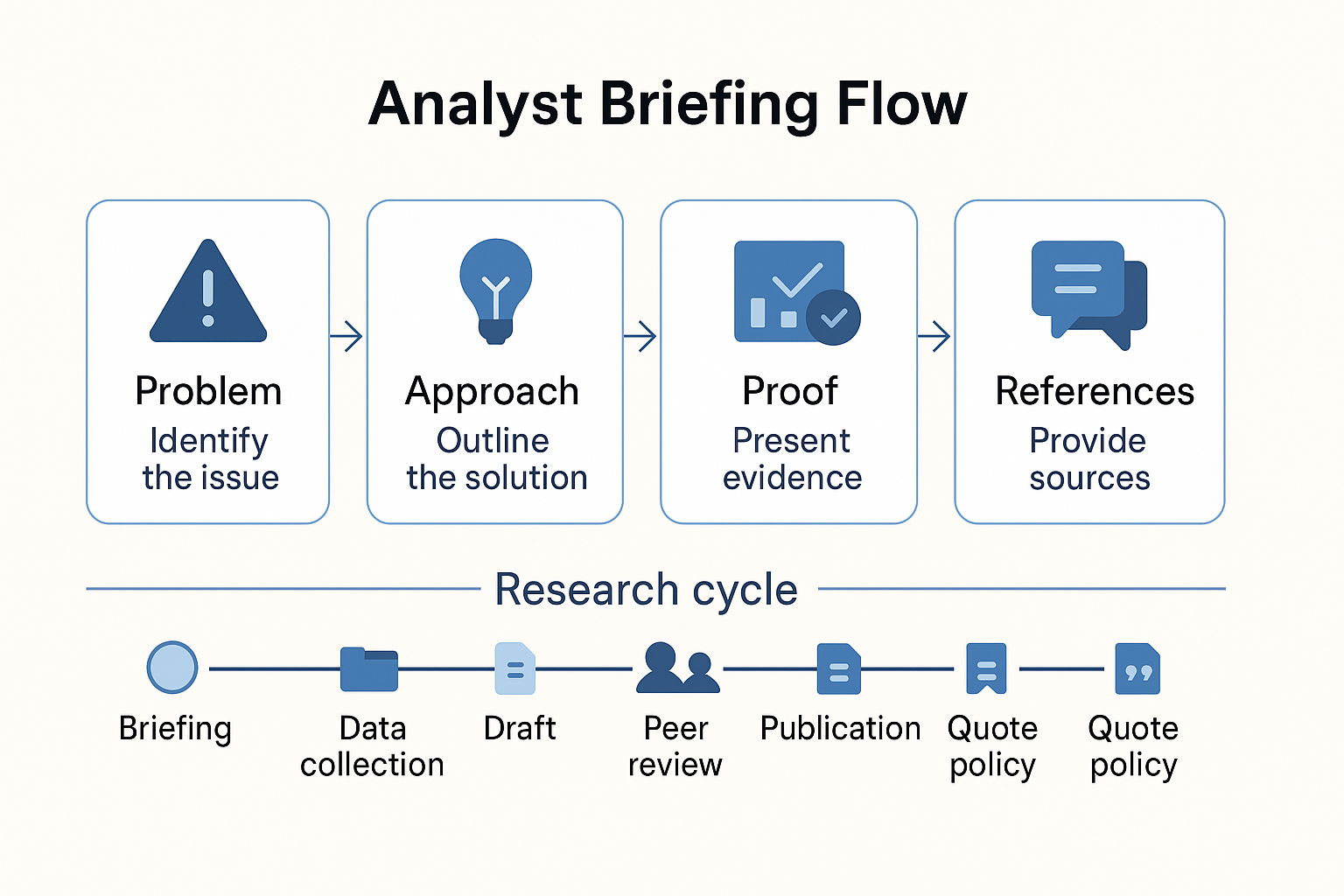
Introduction Trust is earned twice: first by what you do, then by what others say you did. Third‑party validation converts your internal wins into external... Continue reading
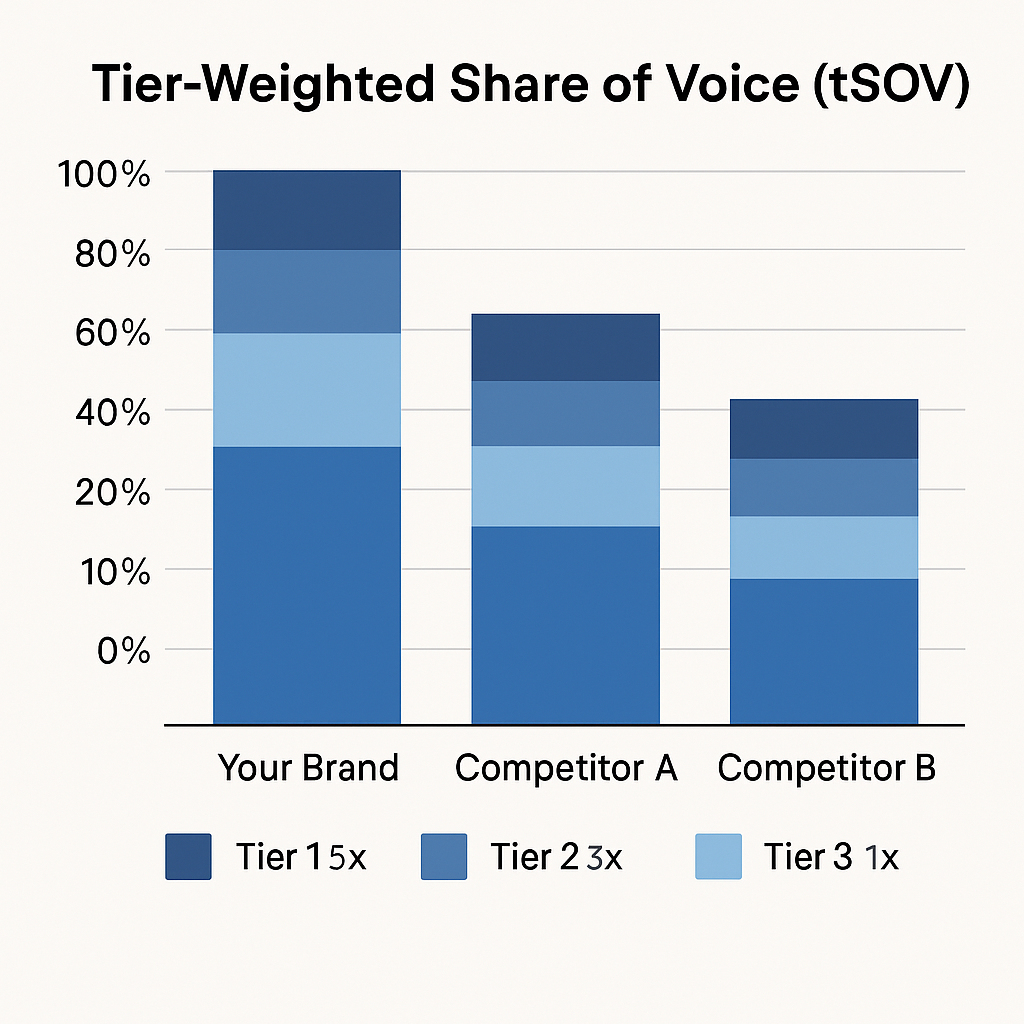
Introduction Mentions are not meaning. A hundred low‑quality clips can’t match a single, credible story that moves how people think and act. If your reporting... Continue reading
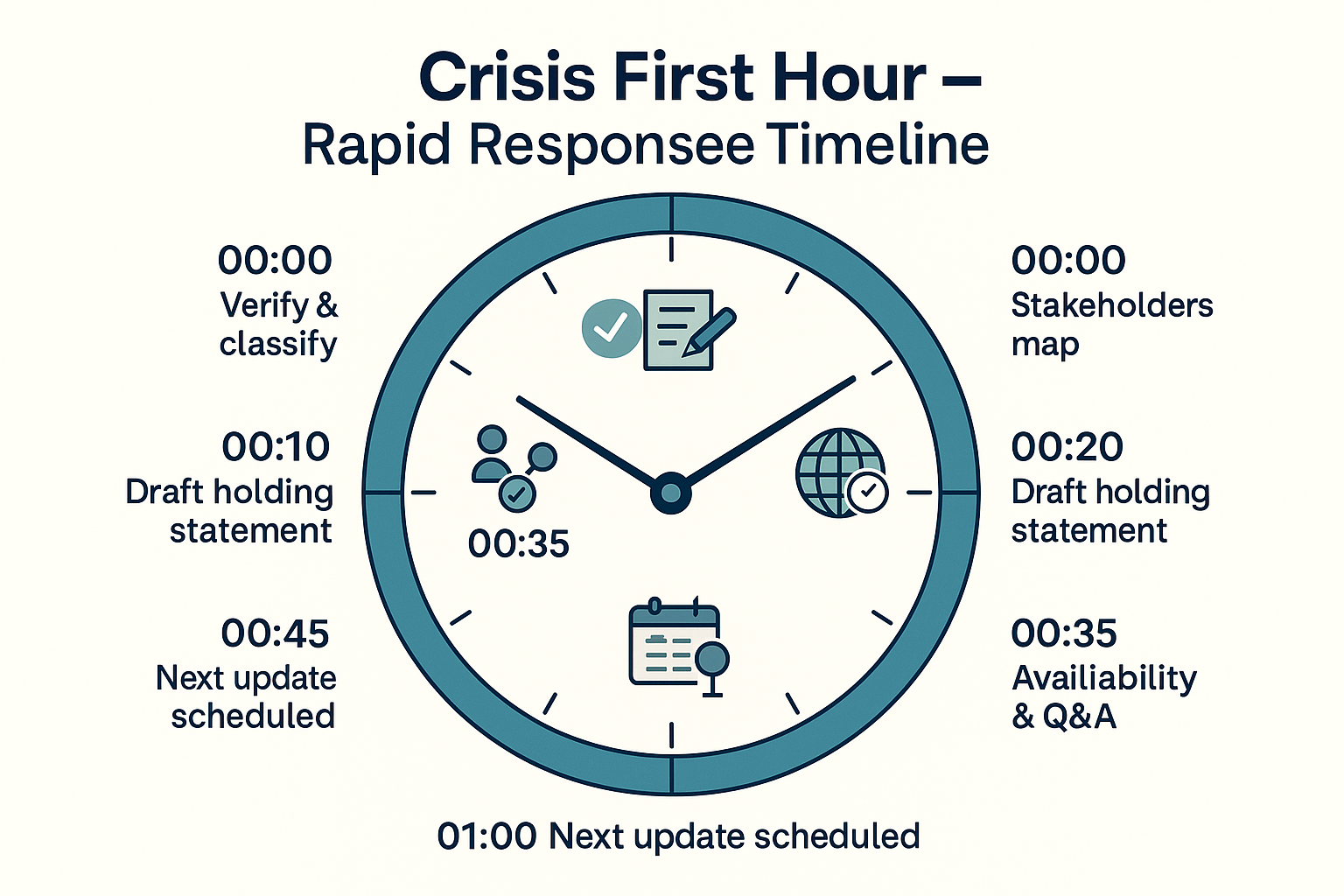
Introduction Real crisis communications starts long before the incident. On calm days you design the system—roles, channels, templates, and proof—so on hot days you can... Continue reading
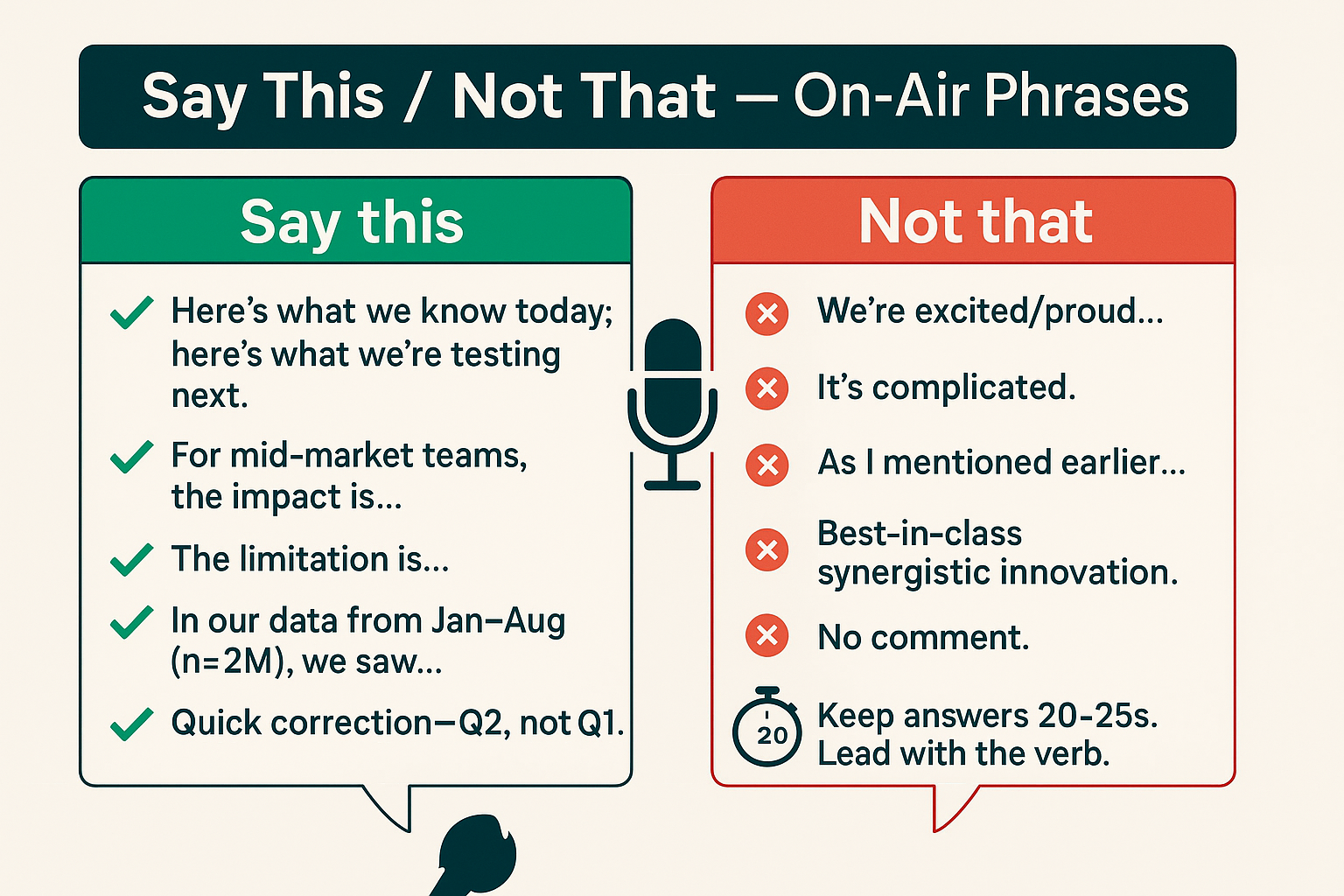
Introduction Media interviews aren’t exams you “pass.” They’re collaborations: the reporter needs a clear, verifiable story; you need your core messages to survive the edit.... Continue reading
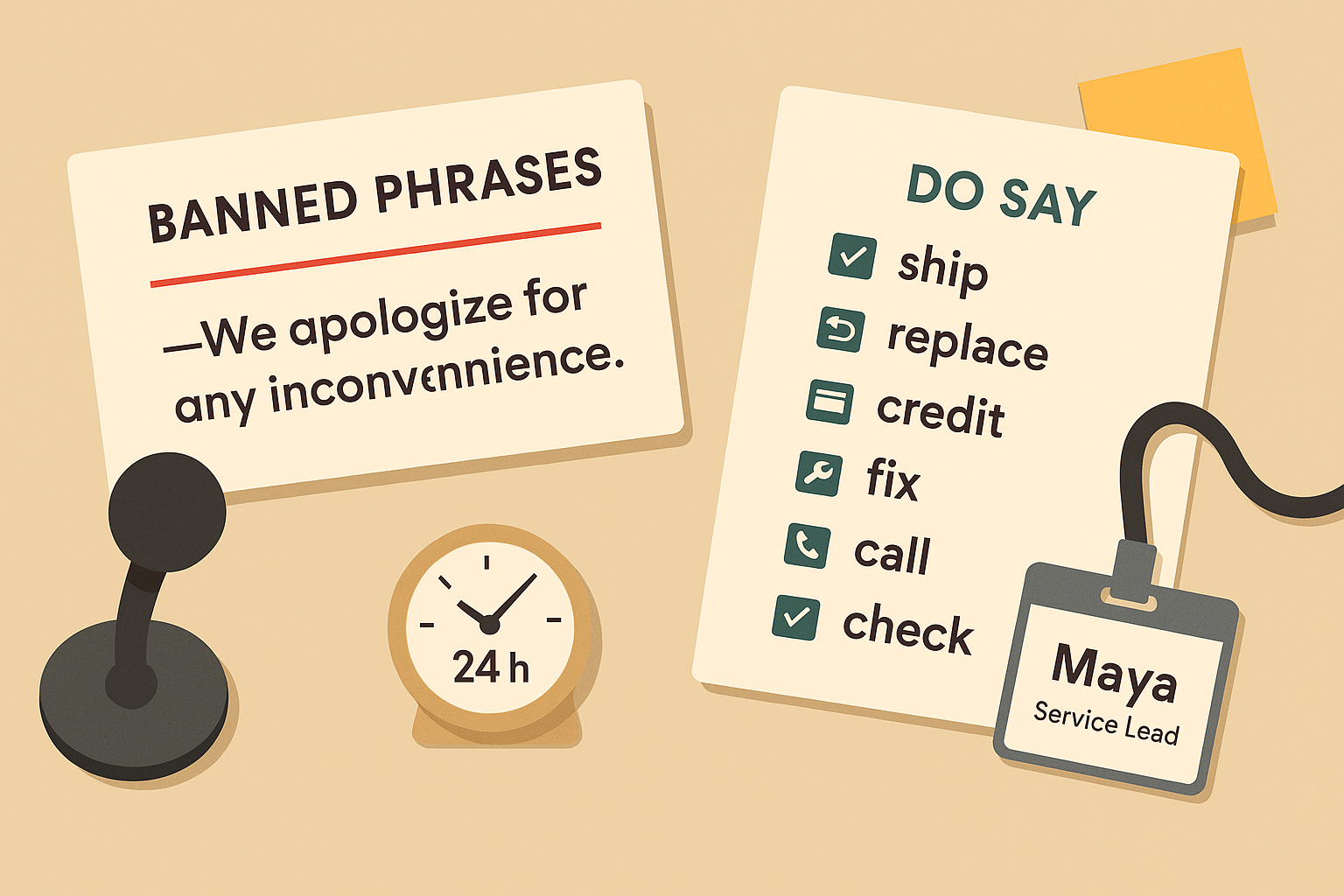
Introduction Most brands handle reviews like a compliance chore: mass emails, generic replies, five emoji hearts. Customers—and editors—can spot the script a mile away. Robotic... Continue reading
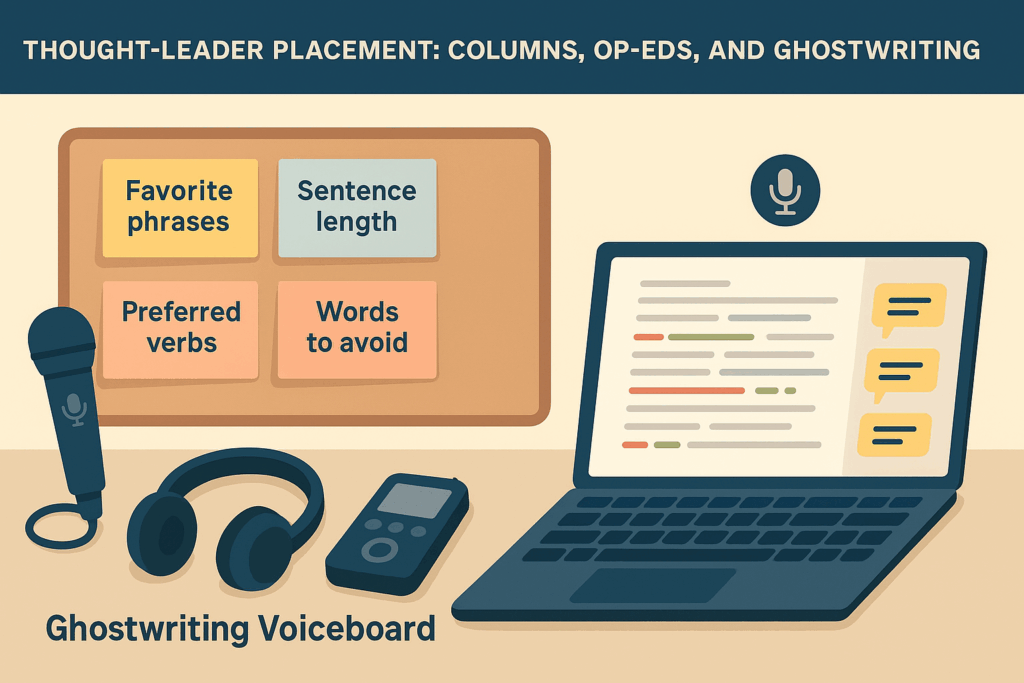
Introduction Columns and op‑eds still shape agendas—when they are timely, argued with evidence, and written in a human voice. The problem: most brand “thought leadership”... Continue reading
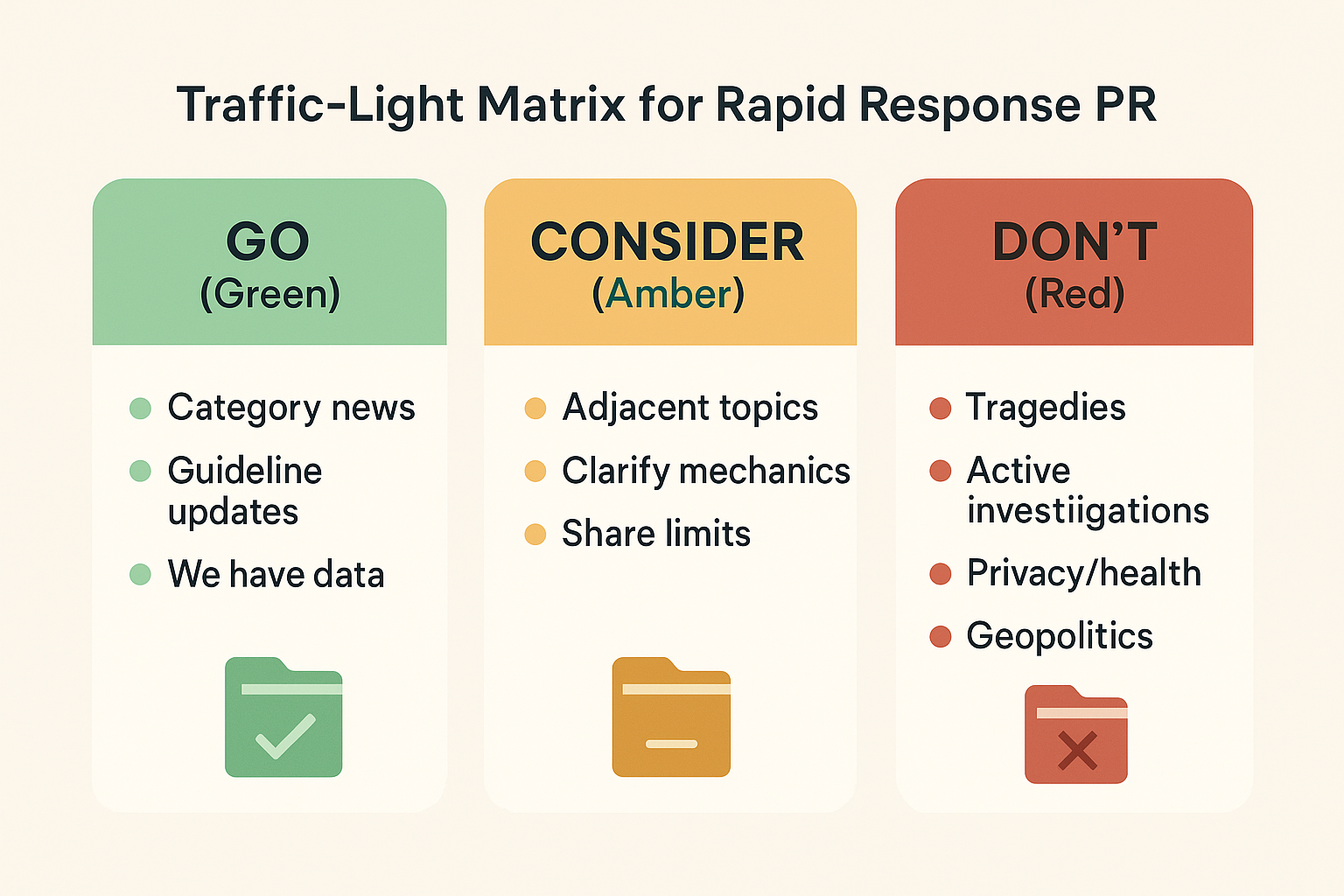
Introduction Speed helps, substance wins. In fast news cycles, many brands scramble to “say something” and end up newsjacking—pushing irrelevant or opportunistic takes into sensitive... Continue reading

Introduction Journalists don’t wake up looking for your brand. They wake up looking for stories that are timely, relevant to their audience, evidence‑backed, and easy... Continue reading
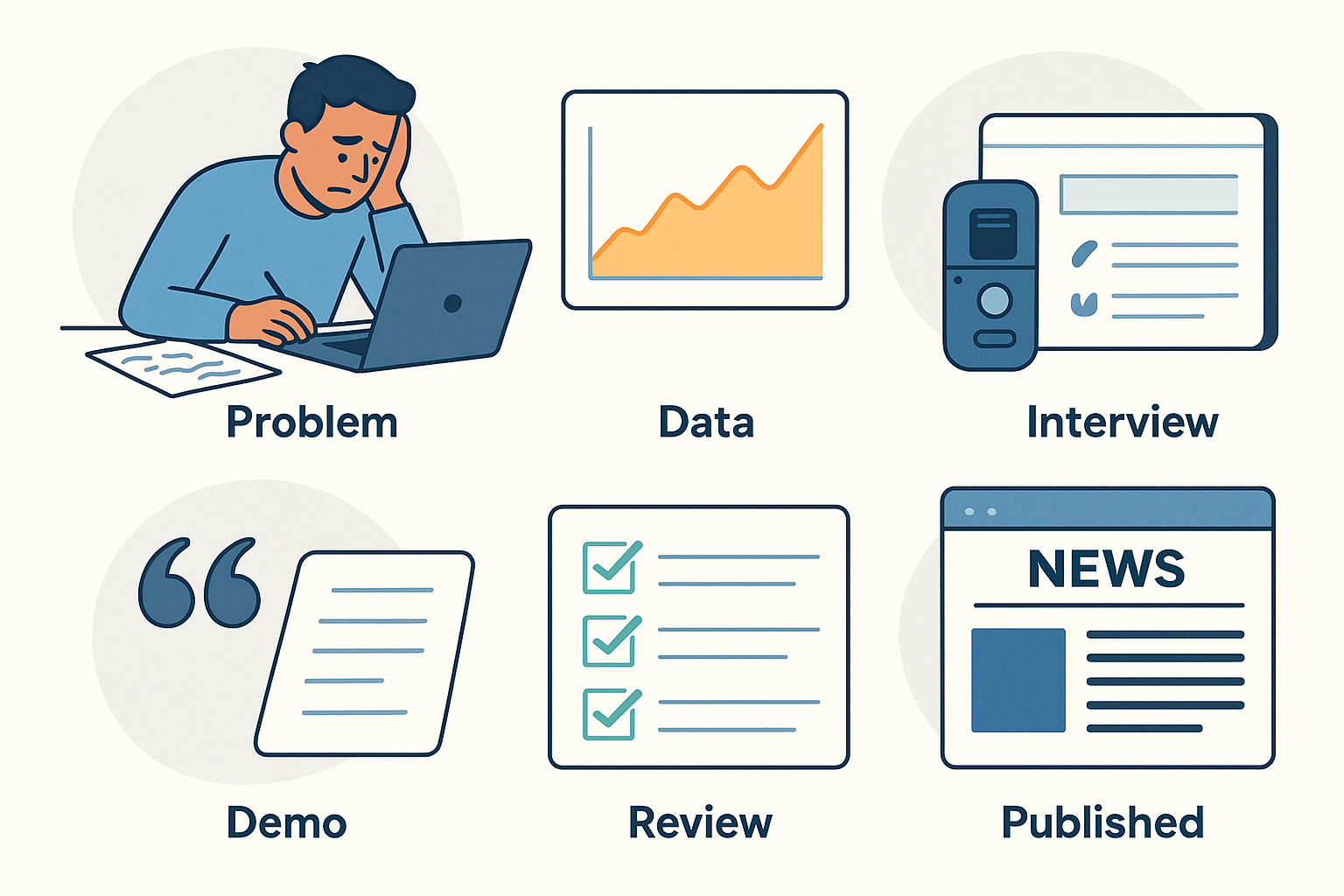
Introduction Editors don’t buy features—they buy stories. The most common reason pitches get ignored is that the “news” reads like a changelog, not a narrative.... Continue reading
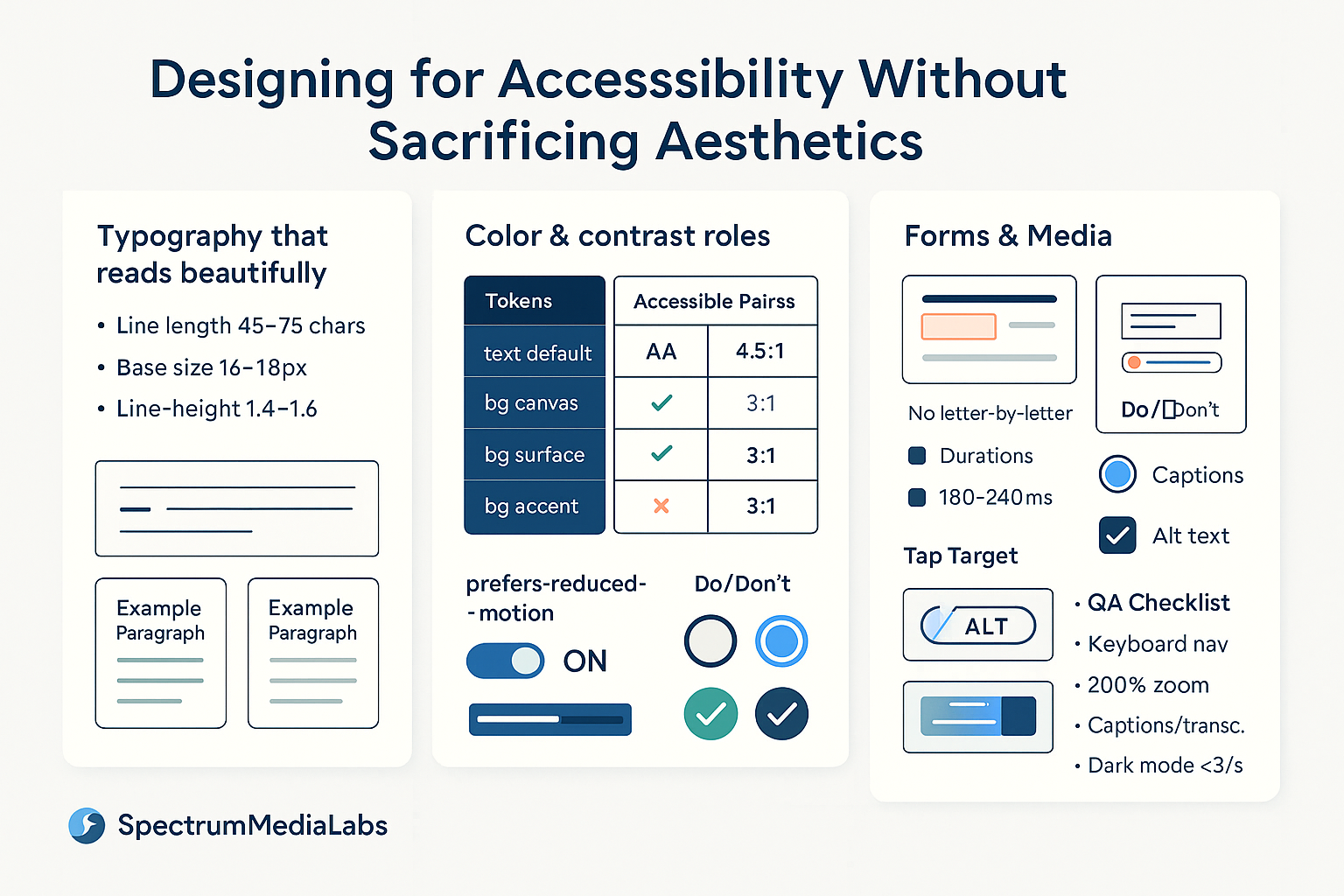
Accessibility and aesthetics are not trade-offs—they’re multipliers. Interfaces that respect human limits (vision, motion sensitivity, cognition) look calmer, feel more premium, and convert better. This... Continue reading
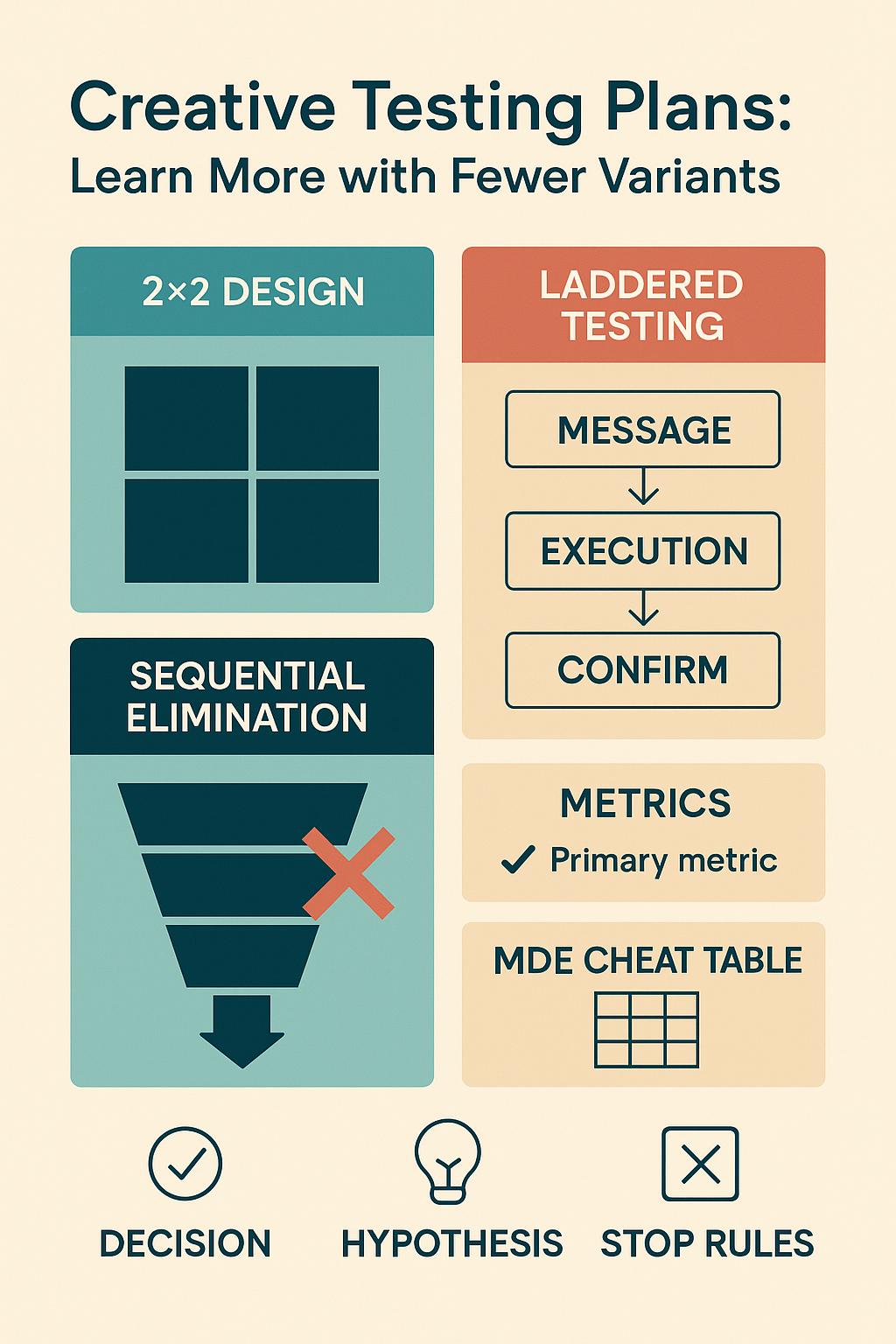
Most teams treat creative testing like a buffet: more options must mean more learning. In practice, the opposite happens—budgets fragment, signals get noisy, and teams... Continue reading
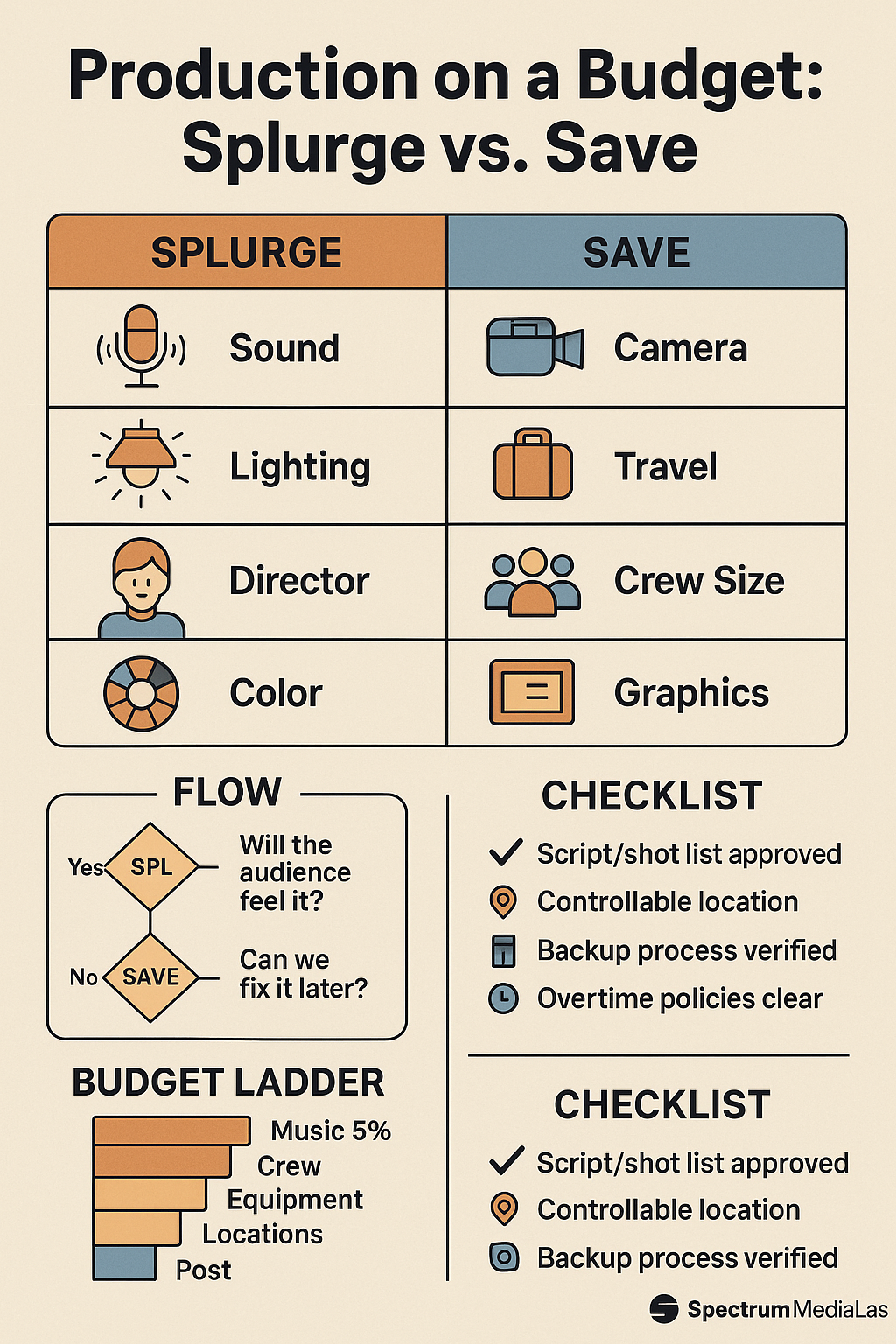
You don’t buy great production values—you allocate for them. On lean budgets, the winners aren’t the teams with the newest camera; they’re the teams that... Continue reading
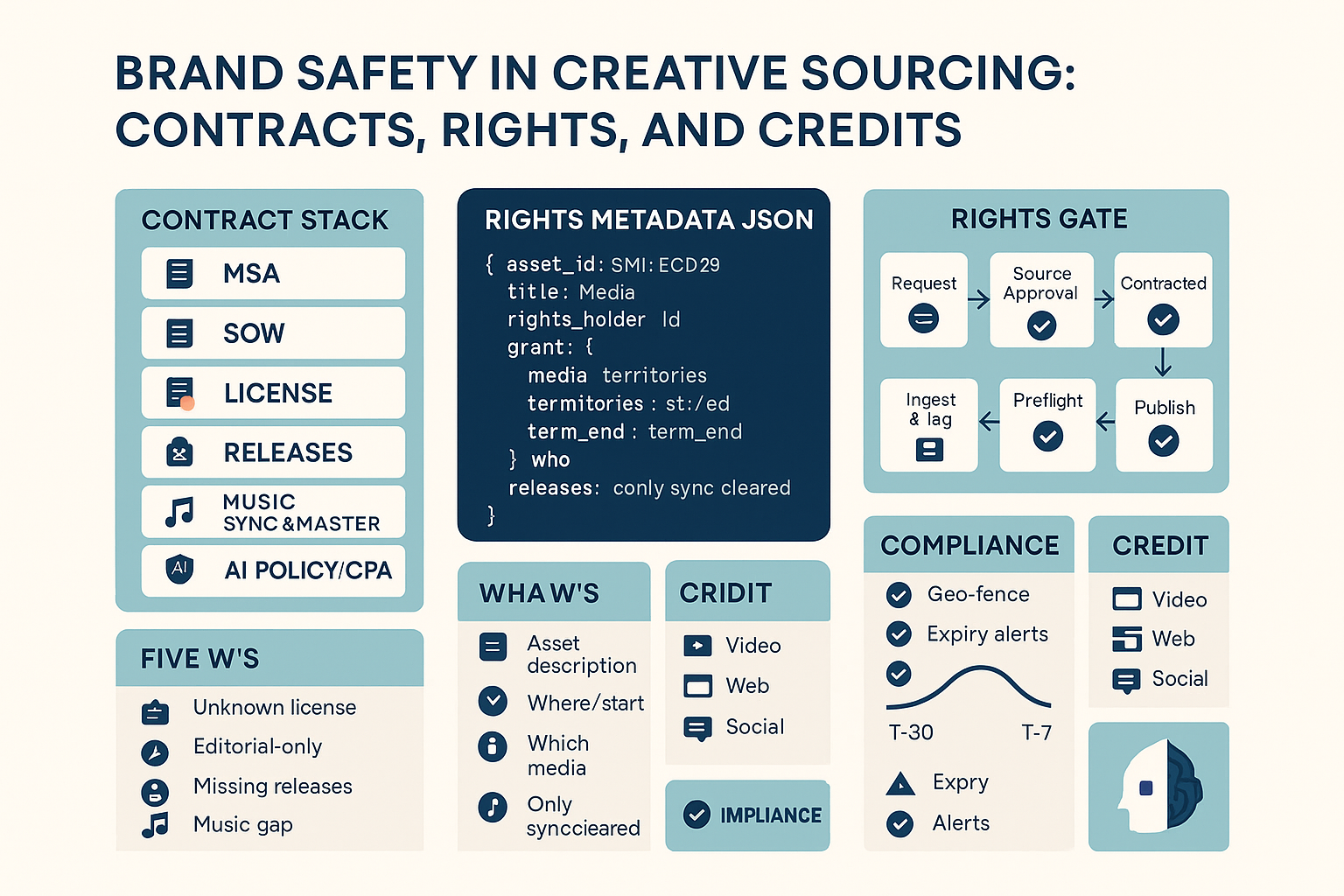
Great creative can still be unusable if the rights chain is broken. At SpectrumMediaLabs’ scale, brand safety is less about taste and more about proof—can... Continue reading
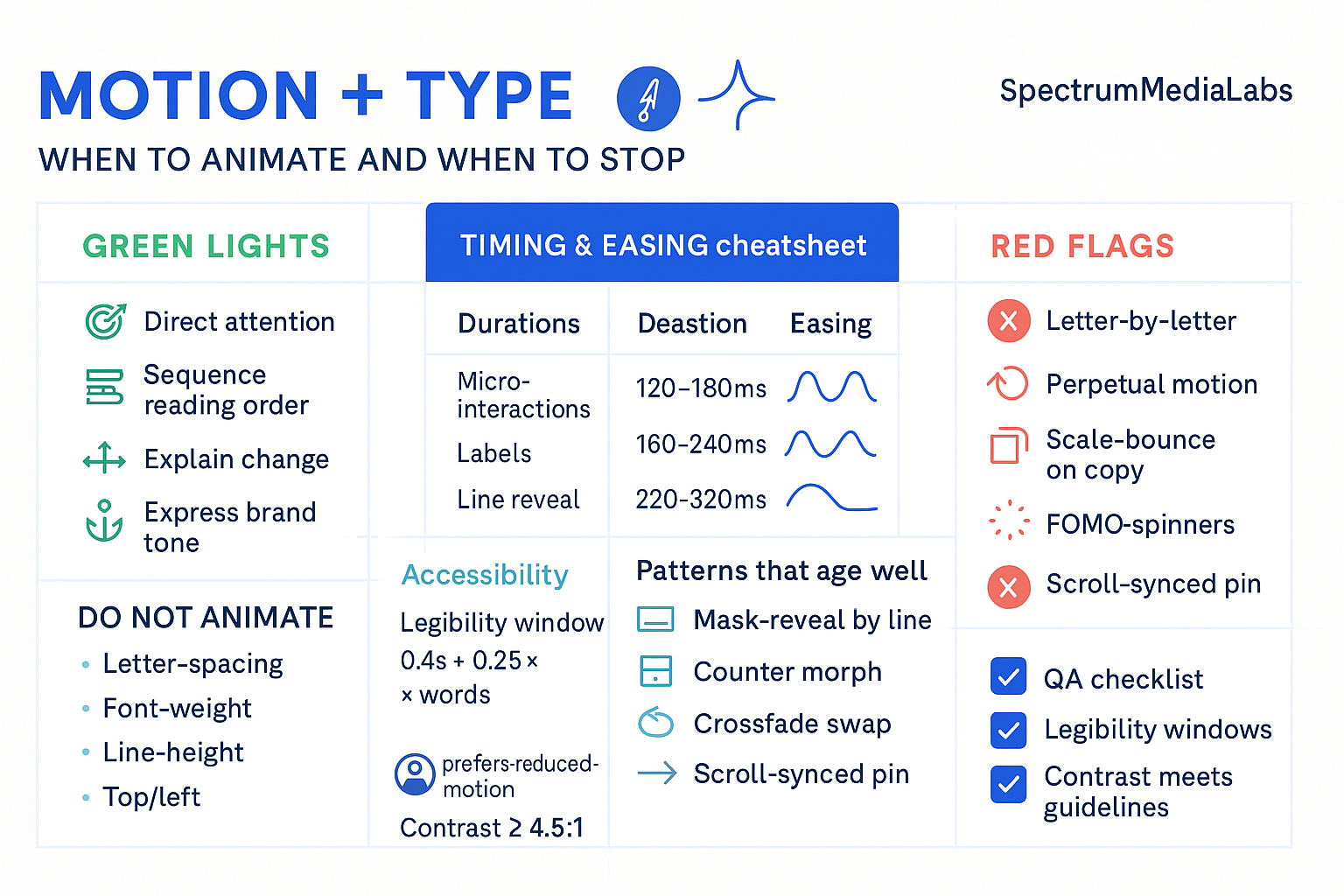
Kinetic typography is everywhere—yet most of it steals clarity in the name of flair. For SpectrumMediaLabs, motion is not decoration; it’s an attention and comprehension... Continue reading
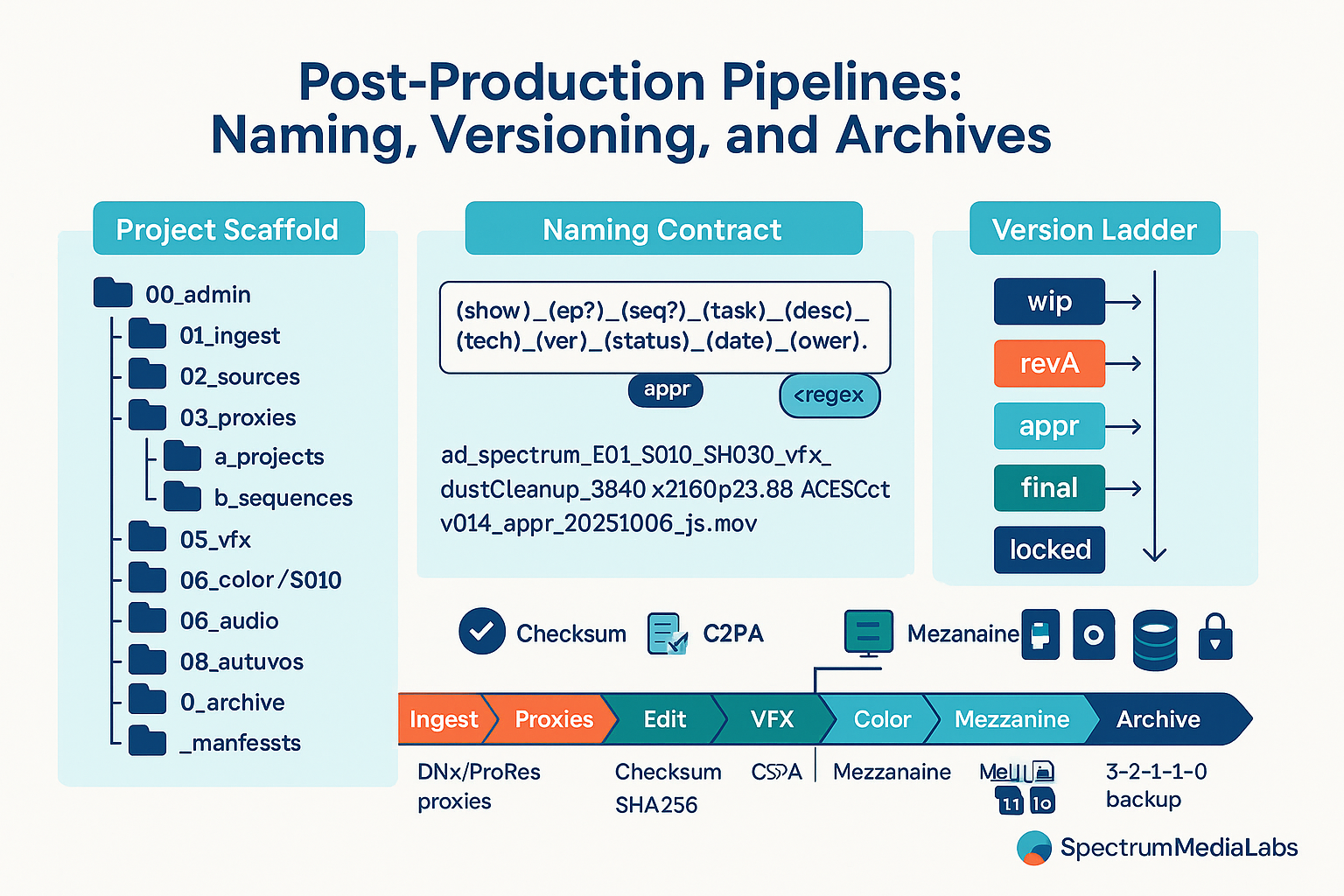
Post-production breaks when teams can’t find, trust, or reproduce the work. The fix isn’t another storage array; it’s a rigorously designed pipeline where naming, versioning,... Continue reading
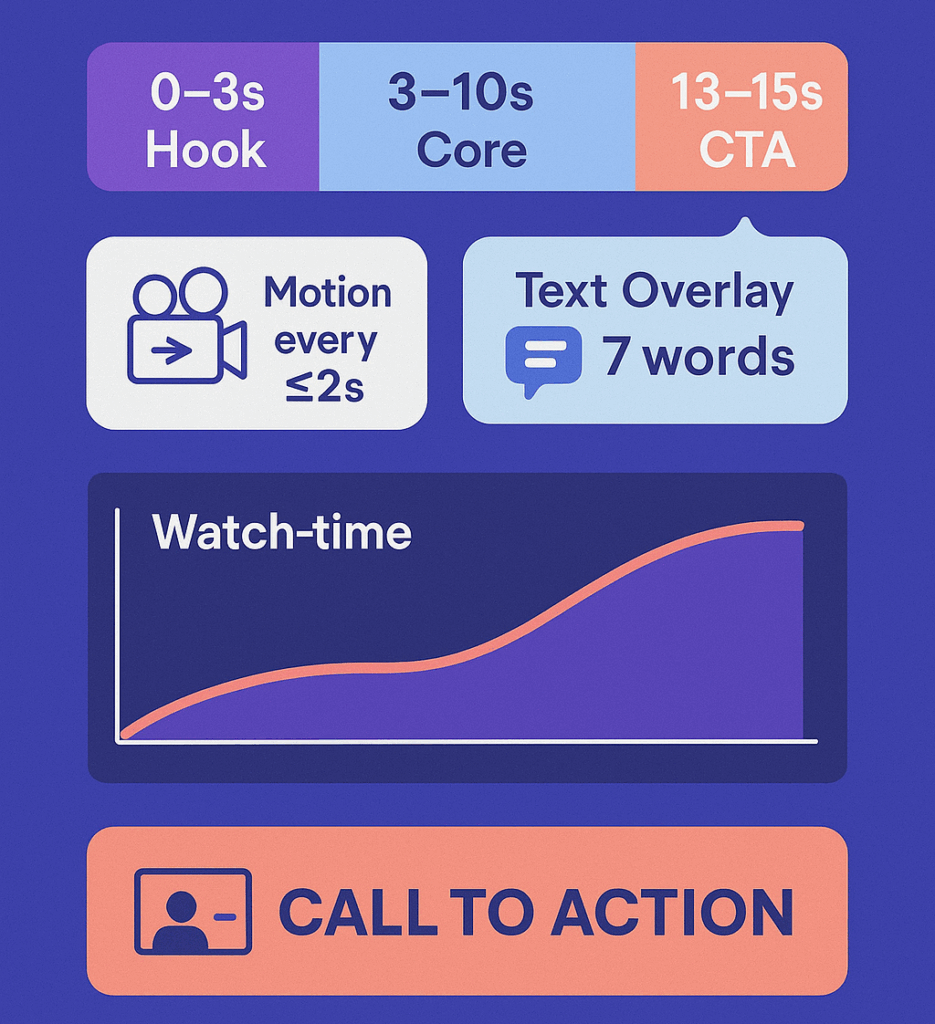
Short-form video (Reels, TikTok, Shorts) isn’t “mini TV.” It’s decision theater: users decide every second whether to keep watching. For SpectrumMediaLabs, a good storyboard does... Continue reading
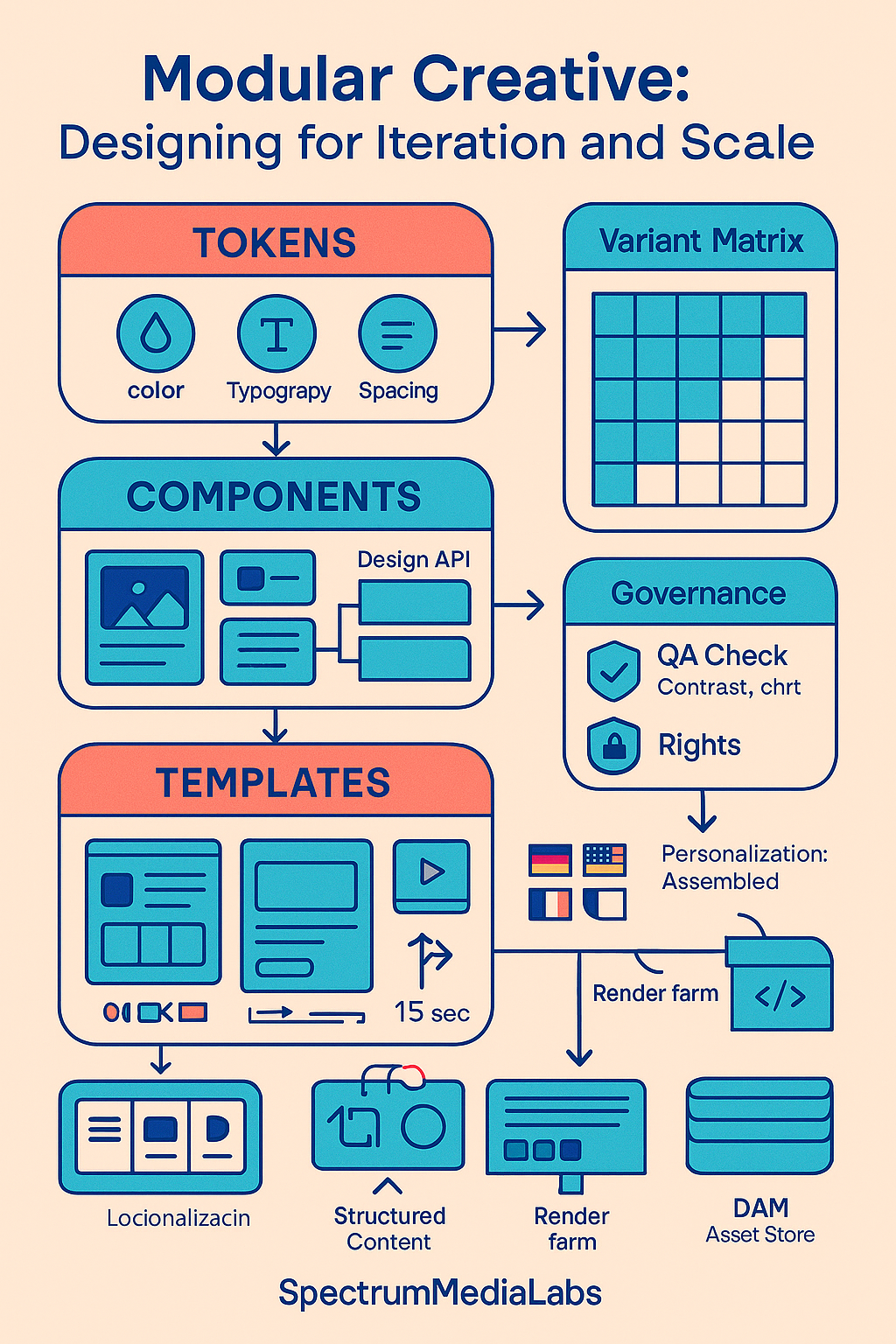
Most teams try to scale by hiring more people or buying more tools. The sustainable path is different: design the work so it scales. Modular... Continue reading
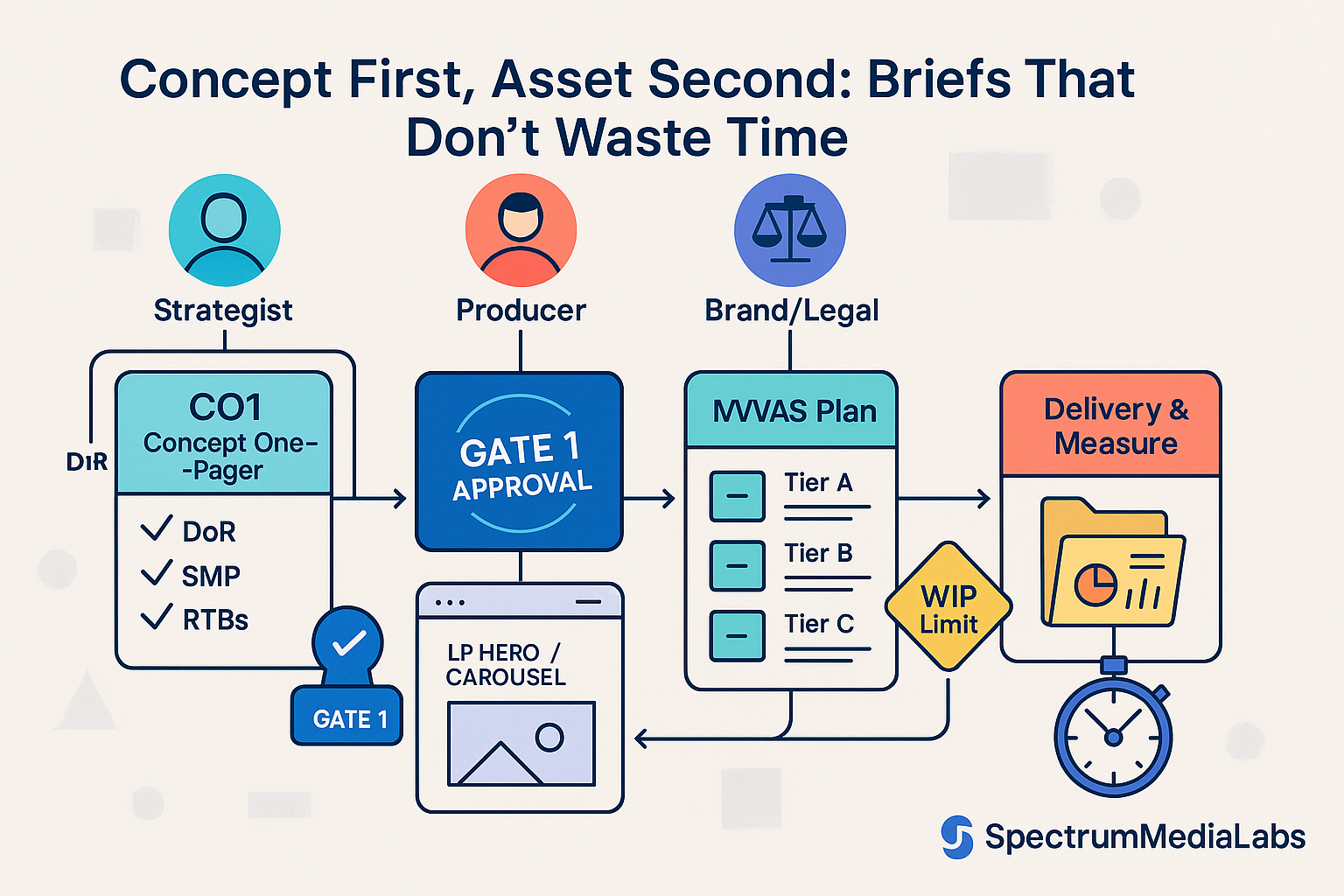
Most creative teams drown in perfectly executed assets that never had a strong idea behind them. The problem isn’t design or craft; it’s sequencing. When... Continue reading
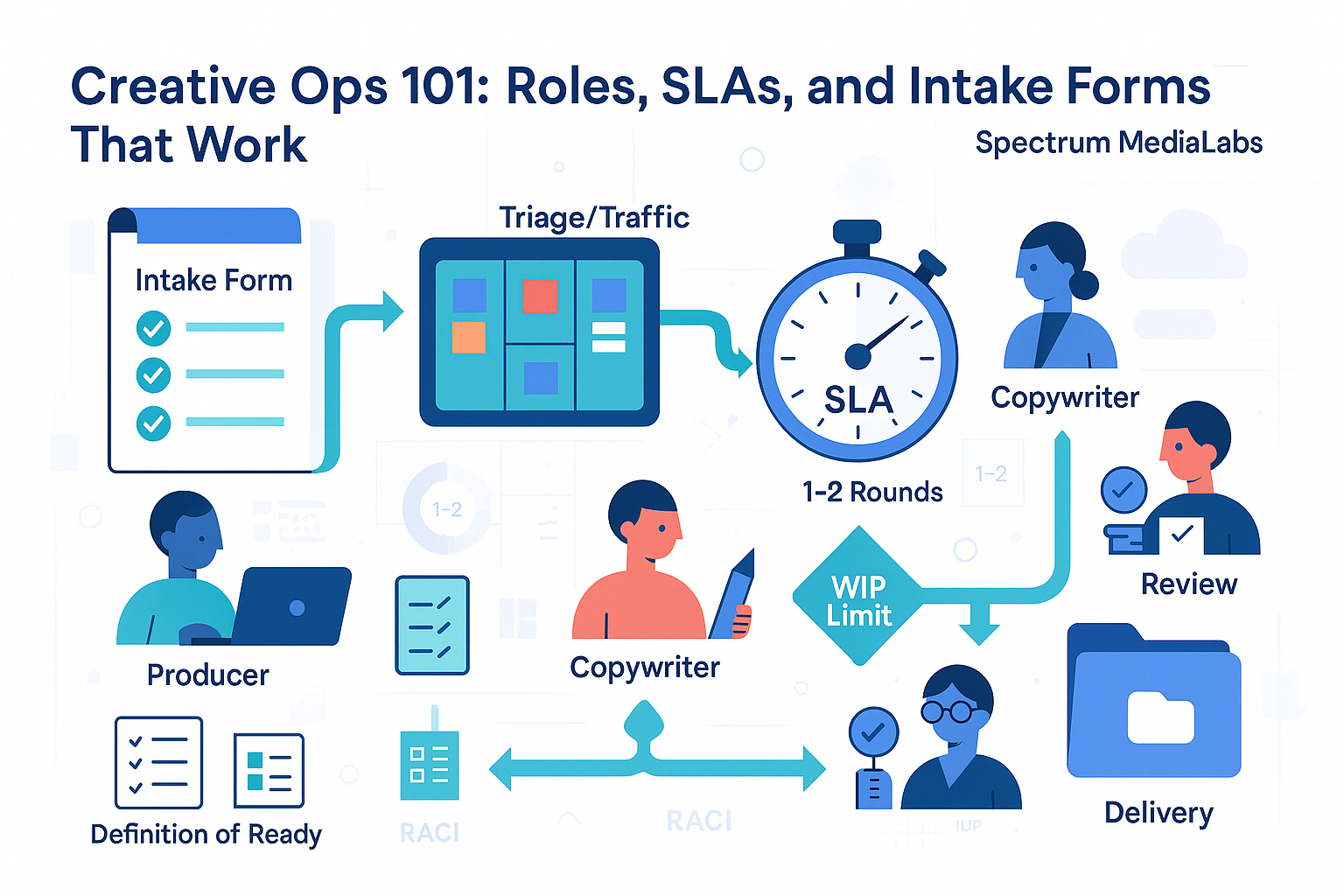
High-performing creative teams don’t run on heroic effort—they run on clear roles, explicit service levels, and an intake process that prevents chaos before it starts.... Continue reading
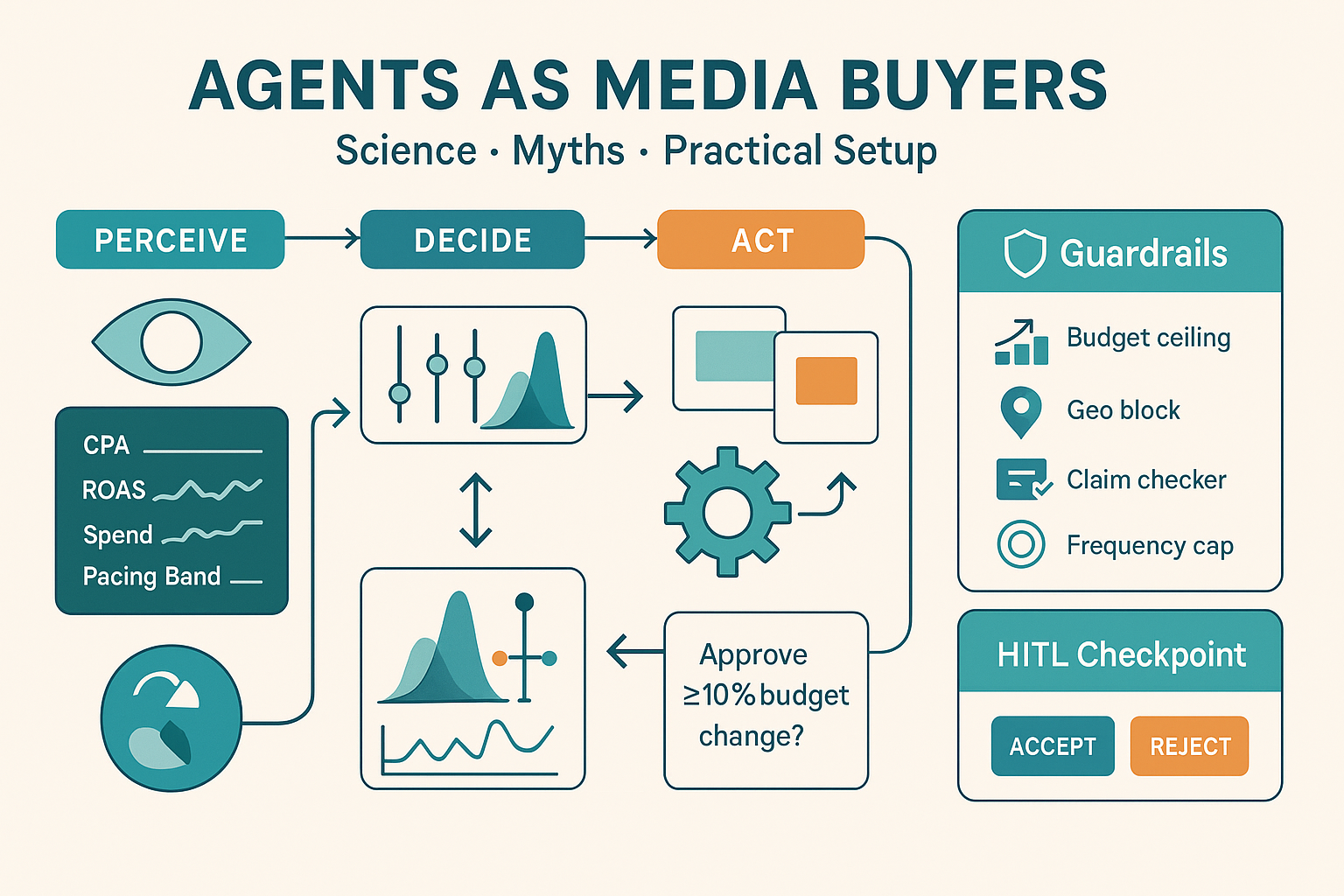
AI “agents” are creeping from demos into ad accounts. Some teams already let software propose budgets, rotate creatives, and pause losers overnight. Others are rightly... Continue reading
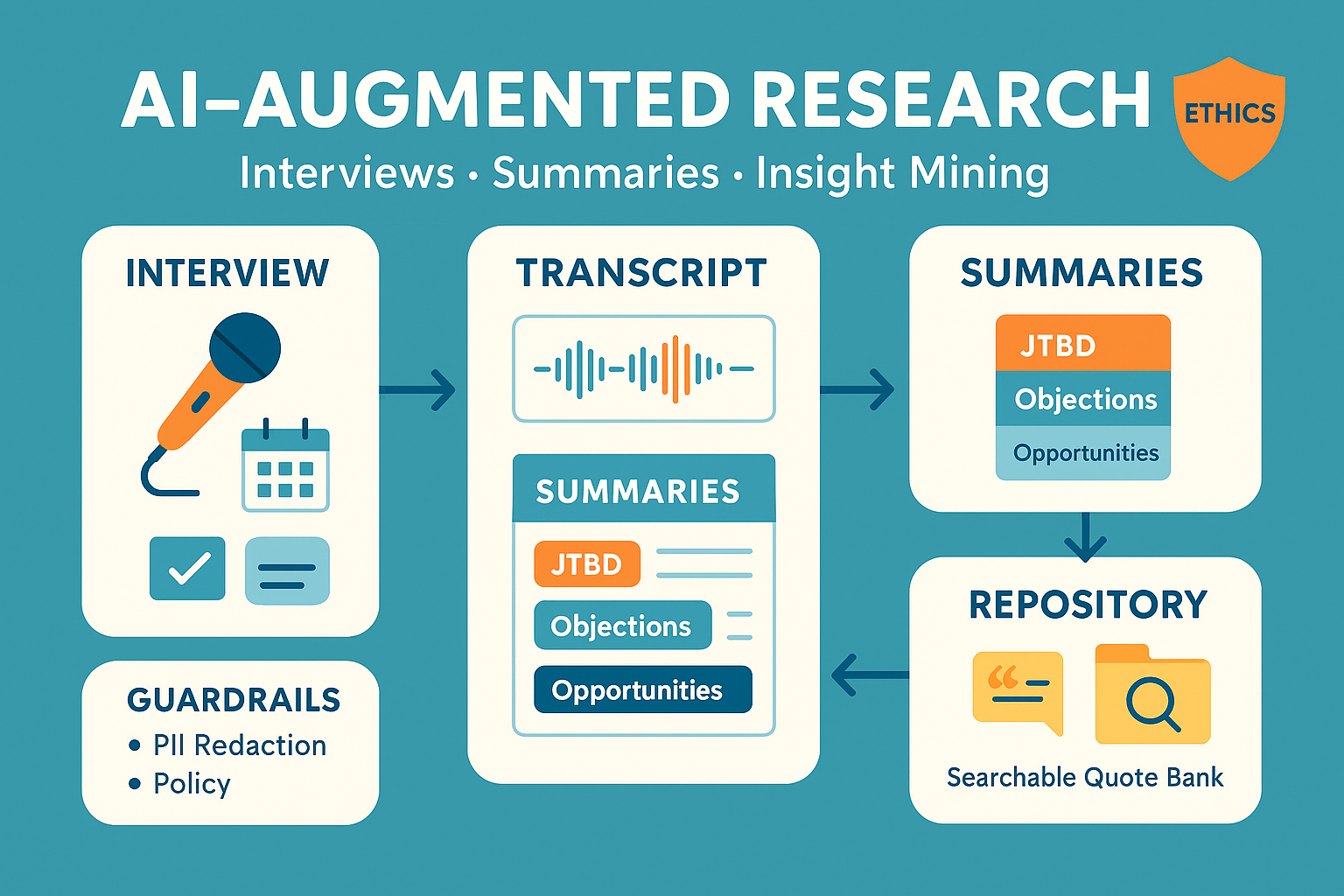
Good customer research is slow for a reason: you’re collecting stories, reconciling contradictions, and converting them into decisions. AI can’t replace that judgment—but it can... Continue reading
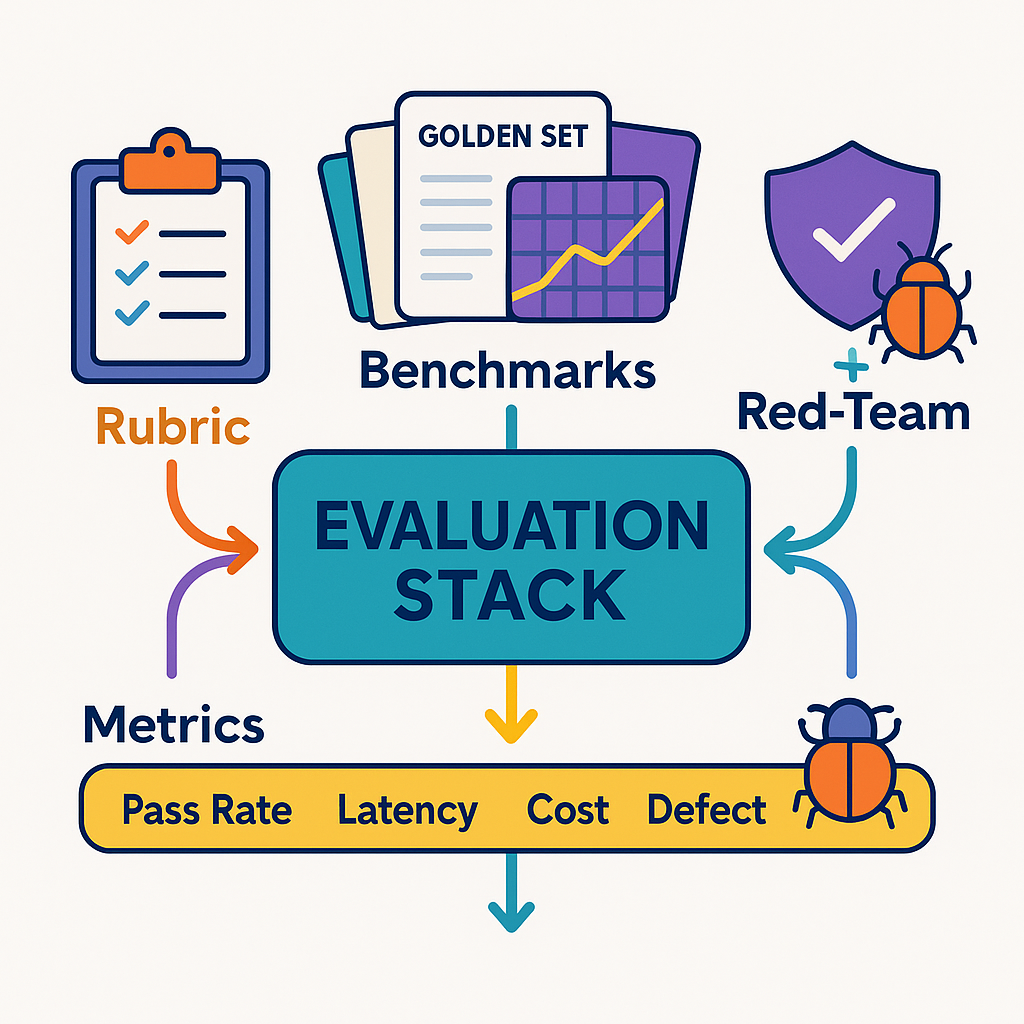
GenAI can draft, analyze, and summarize at breathtaking speed—but speed without verification is just faster risk. If you want outputs that are useful and defensible,... Continue reading
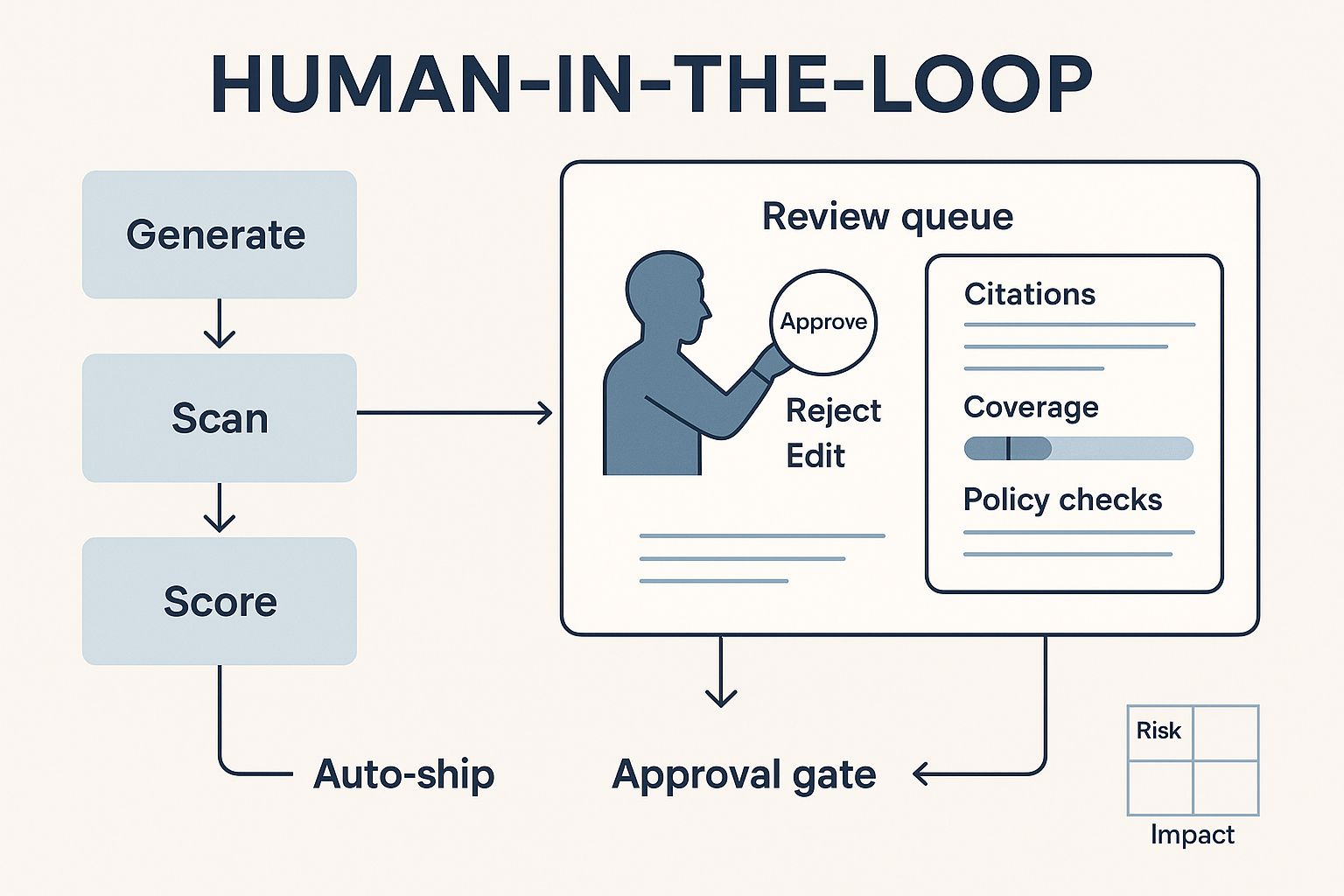
Automation is wonderful at speed, consistency, and recall—but terrible at judgment. If you want outputs that are not only fast but defensible, you need Human-in-the-Loop... Continue reading
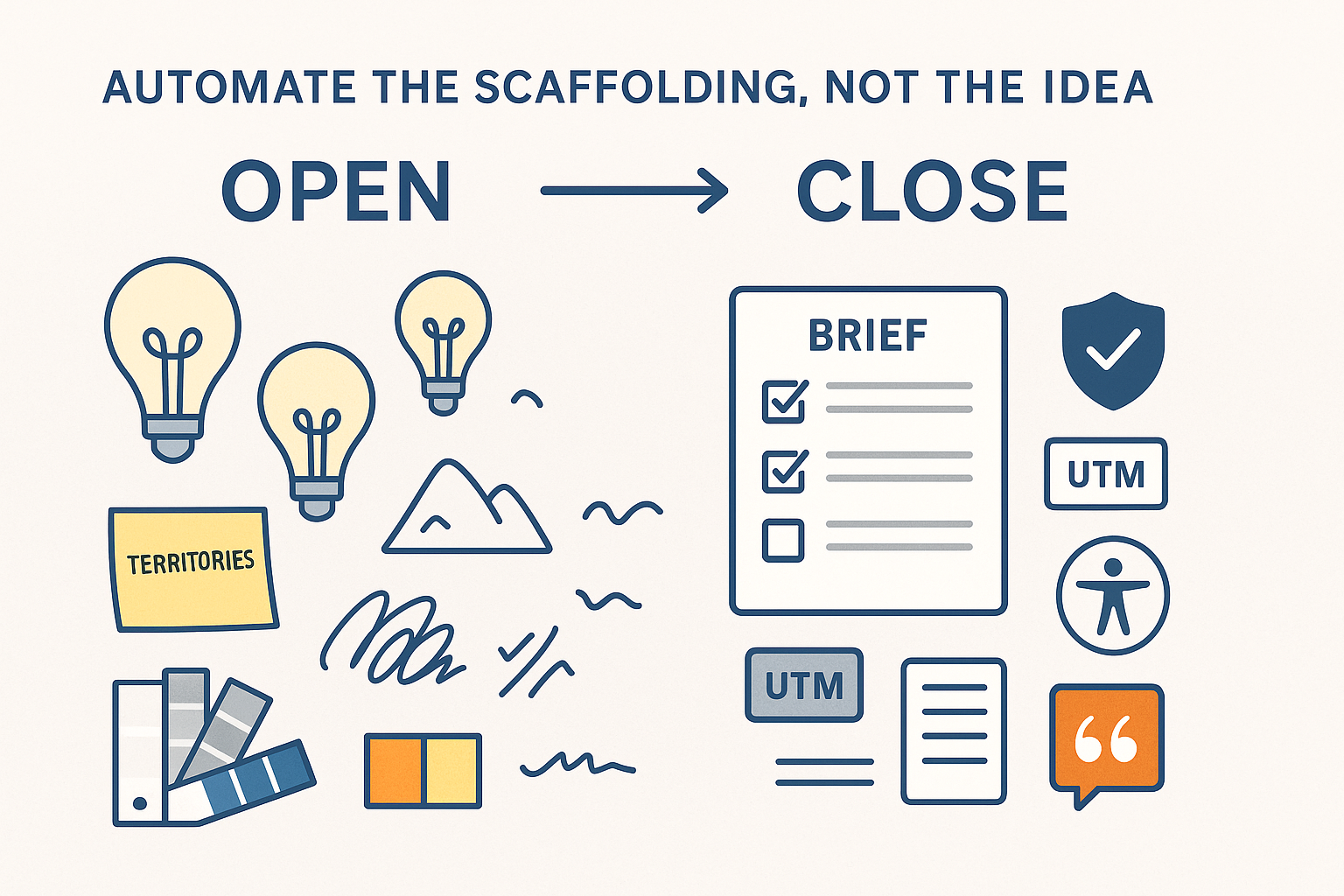
Great creative work is messy on purpose. The best ideas start wide, chaotic, and a bit irrational—then get narrowed by constraints, data, and polish. Most... Continue reading

Most teams treat prompts like magic spells: someone pastes a long incantation into a chat box and hopes for the best. That scales about as... Continue reading
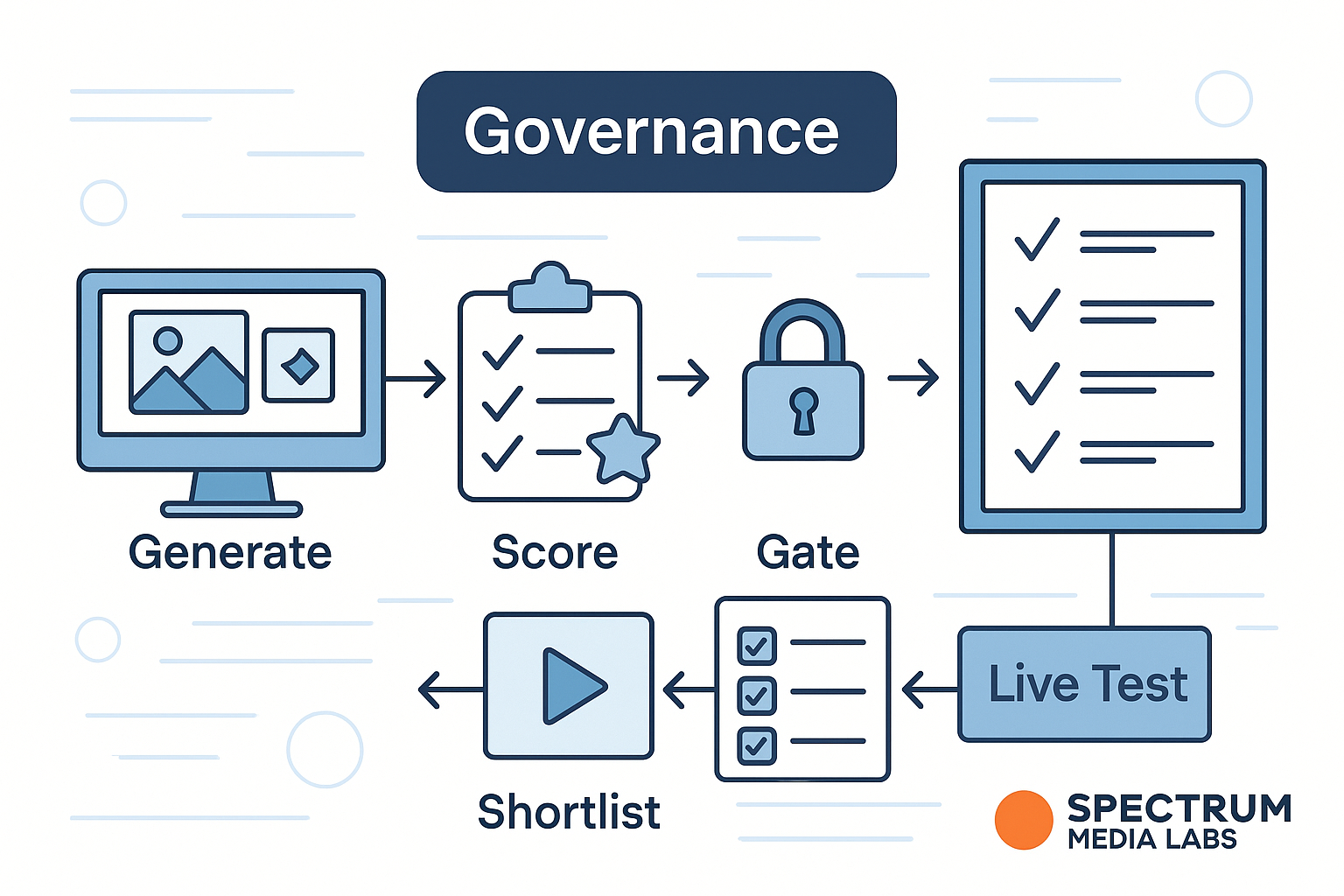
Most marketing teams struggle to test enough creative ideas before a launch. Budgets are limited, audiences are fragmented, and every platform favors speed. Synthetic data—artificially... Continue reading
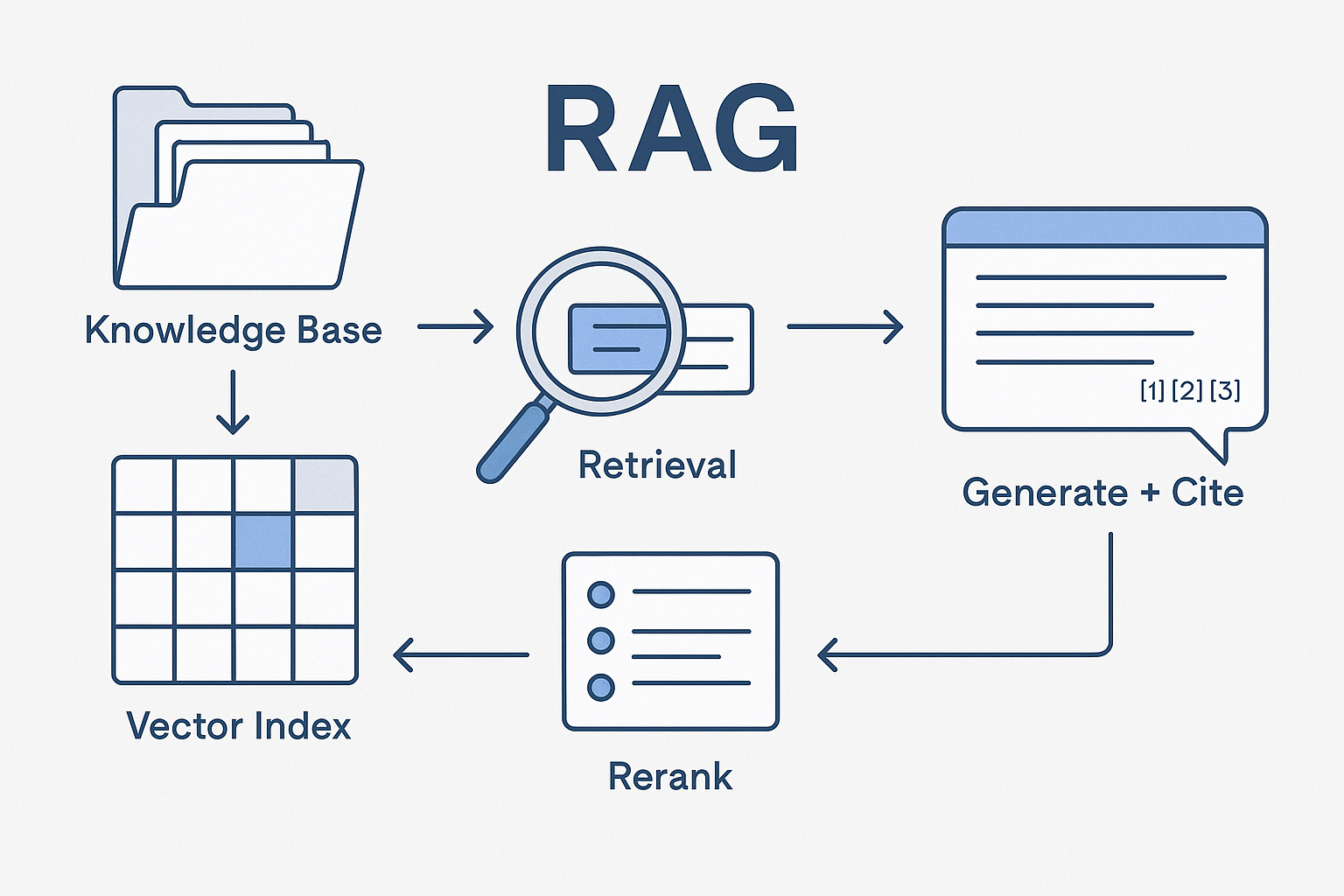
Most teams already have the raw materials for great answers—brand books, style guides, KPI dictionaries, case studies, naming conventions, legal boilerplates—scattered across drives, wikis, and... Continue reading
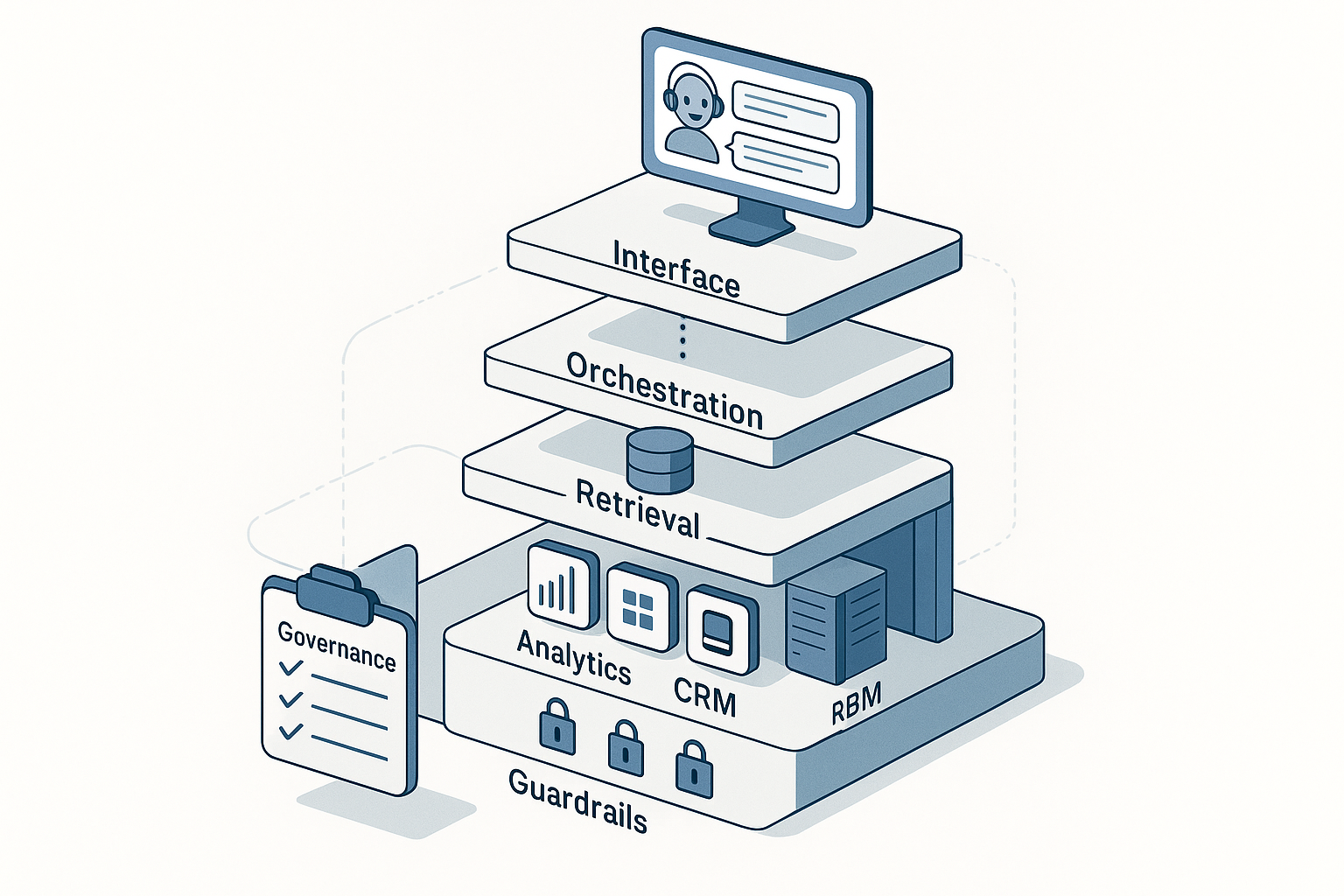
A private marketing copilot is an internal AI assistant that can read your brand canon, playbooks, KPI dictionary, and performance history—and answer questions or draft... Continue reading

Thesis: “Agents” are great at doing—not deciding why. Treat agentic workflows as force-multipliers for bounded, multi-step tasks with clear success criteria. Use them to compress... Continue reading

Thesis: KPIs tell you how the system is behaving. OKRs tell you what you will change. Strategy happens when you connect the two: a small,... Continue reading

Thesis: You don’t need to choose between growth and privacy. You need a smaller, better-designed analytics stack: keep the signals that drive decisions, transform what... Continue reading

Thesis: Boards don’t need prettier sheets; they need fewer, decision-ready numbers with context, confidence, and clear asks. Your job isn’t to dump metrics—it’s to tell... Continue reading

Thesis: You don’t need a crystal ball to see demand shocks early—you need the right leading signals, turned into a disciplined, testable forecast. Marry a... Continue reading
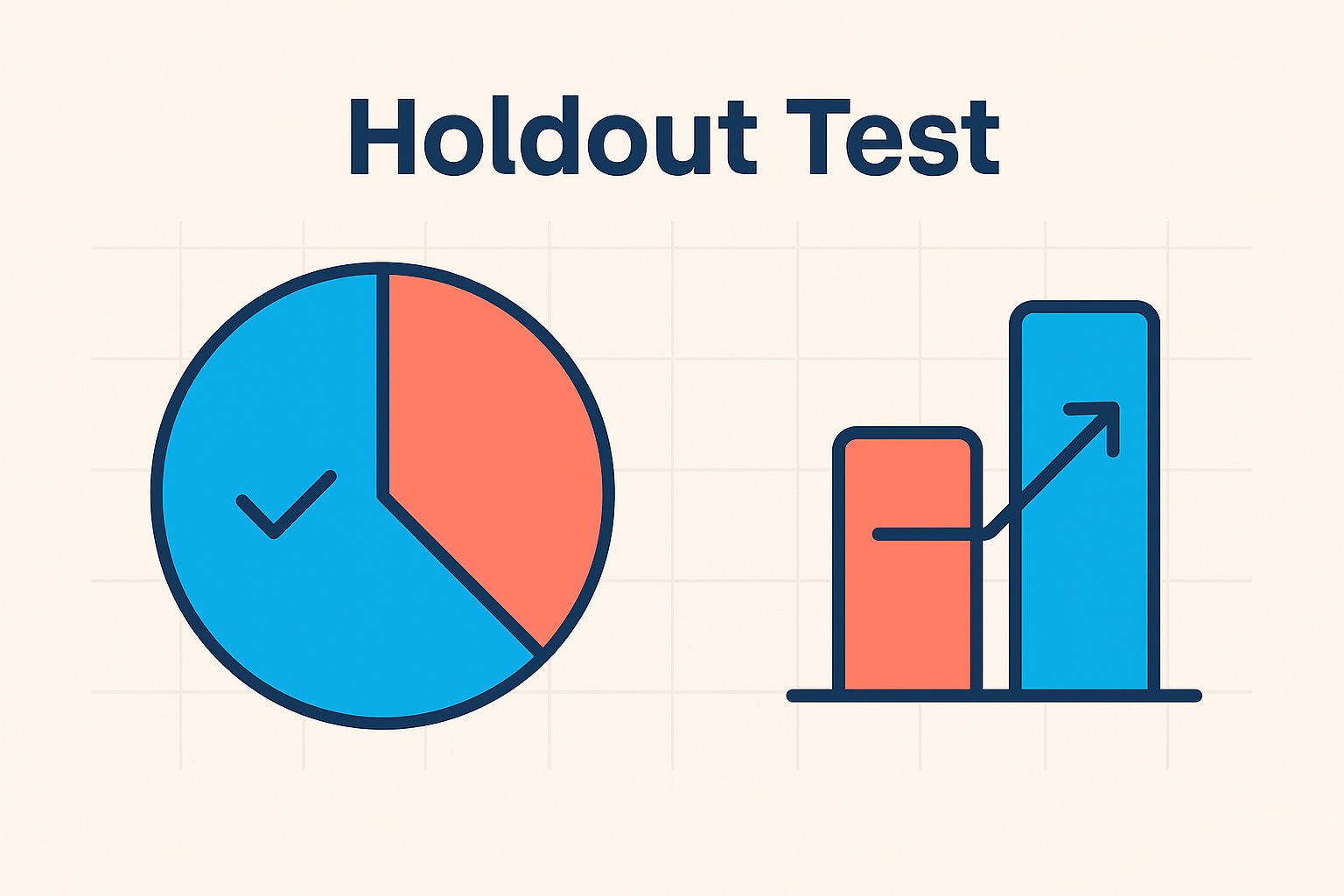
Thesis: When attribution gets noisy, experiments are how you buy clarity. For channels that can’t randomize at the user level (TV/CTV/OOH, upper‑funnel social, brand search),... Continue reading

Thesis: Dashboards don’t fail because they’re ugly—they fail because the data contract is weak. Data quality debt accrues interest as broken trust, bad decisions, and... Continue reading

Thesis: Analytics breaks not from lack of data but from inconsistent names. A scalable event taxonomy is a contract across product, data, and marketing: consistent... Continue reading

Thesis: Growth programs stall when teams optimize a single number in isolation. A defensible system pairs one clear North‑Star Metric (NSM) with a small set... Continue reading

Thesis: You don’t need a seven‑figure data stack to get actionable media mix answers. With weekly data, a few disciplined assumptions, and Bayesian regularization, you... Continue reading

Thesis: Attribution isn’t a single truth; it’s a decision aid. The right “story” depends on your stage, traffic mix, and the decisions you need to... Continue reading

Thesis: Accessibility (a11y) is not compliance overhead; it is a growth engine. Done well, it expands reach, increases conversion, improves retention, and reduces risk—compounding into... Continue reading

Thesis: Big lifts often come from small moments. Micro‑interactions—those concise, contextual feedback loops tied to a single user intent—compound into measurable gains across conversion, activation,... Continue reading

Thesis: Most A/B programs don’t fail because the math is wrong — they fail because the design allows false positives to sneak in. Stop chasing... Continue reading

Thesis: Complex services don’t convert like SaaS trials or DTC carts. Buyers advance through a sequence of de‑risked commitments. High CRO here means selling the... Continue reading

Working definition: Trust architecture is the deliberate system of signals that lower a buyer’s perceived risk at every step of the journey—message, medium, and moment.... Continue reading

Forms are the unsung heroes of digital growth. They sit at the junction between interest and conversion—between a click and a lead, a signup, or... Continue reading

In digital marketing, not all clicks are created equal. Some visitors stumble onto your website out of curiosity, while others arrive with strong intent to... Continue reading

A pricing page is not a rate card—it’s a decision engine. Visitors arrive with uncertainty, hidden objections, and half-formed mental models of value. Your job... Continue reading

In the digital age, attention is both scarce and fleeting. Studies show that visitors form an impression of a website in less than five seconds.... Continue reading

In fast-moving digital organizations, redesigns often begin with aesthetics. A new color palette, updated typography, or a slicker homepage becomes the focus. But without research,... Continue reading

For years, open rates were the north star of email marketing. A higher percentage meant a healthier list, better content, and supposedly more revenue down... Continue reading

In today’s digital landscape, personalization is no longer a “nice-to-have”—it’s an expectation. Users want content, offers, and recommendations that feel designed specifically for them. Yet... Continue reading

In 2025, attention has become the rarest and most valuable asset in marketing. Consumers are not only selective with their wallets but also with their... Continue reading
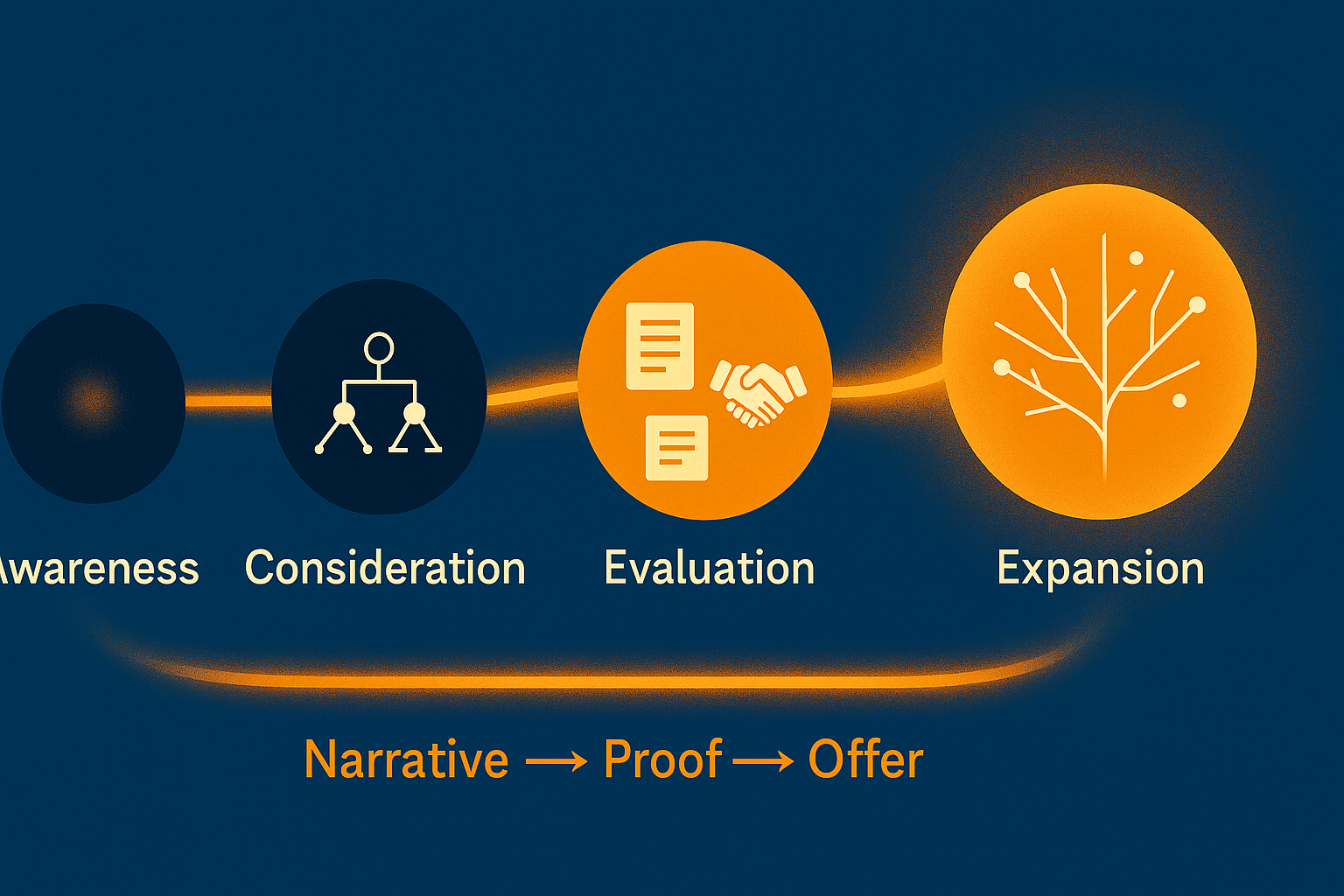
Most B2B nurture programs fail for one simple reason: they treat every lead like a buyer and every email like a pitch. Real buyers move... Continue reading

Every action your users take is a signal. A click, a scroll, a cart addition, a trial login — all of these micro-events reveal intent,... Continue reading

Customer Relationship Management (CRM) platforms have evolved from contact databases into powerful engines of growth. Yet many organizations still treat them as digital Rolodexes, logging... Continue reading

For years, email has been treated as a publishing channel — a place for long newsletters, curated content, or brand updates. While these still have... Continue reading

Email remains one of the most effective channels for customer engagement and revenue generation. Yet, as inboxes grow more crowded and platforms tighten their rules,... Continue reading

For decades, marketers have relied on demographics as the foundation for segmentation: age, gender, income, geography. While these categories once offered useful shortcuts, they’re increasingly... Continue reading

In high-growth companies, marketing teams often obsess over acquisition while underestimating the compounding effect of customer lifecycle design. A prospect who converts once can generate... Continue reading
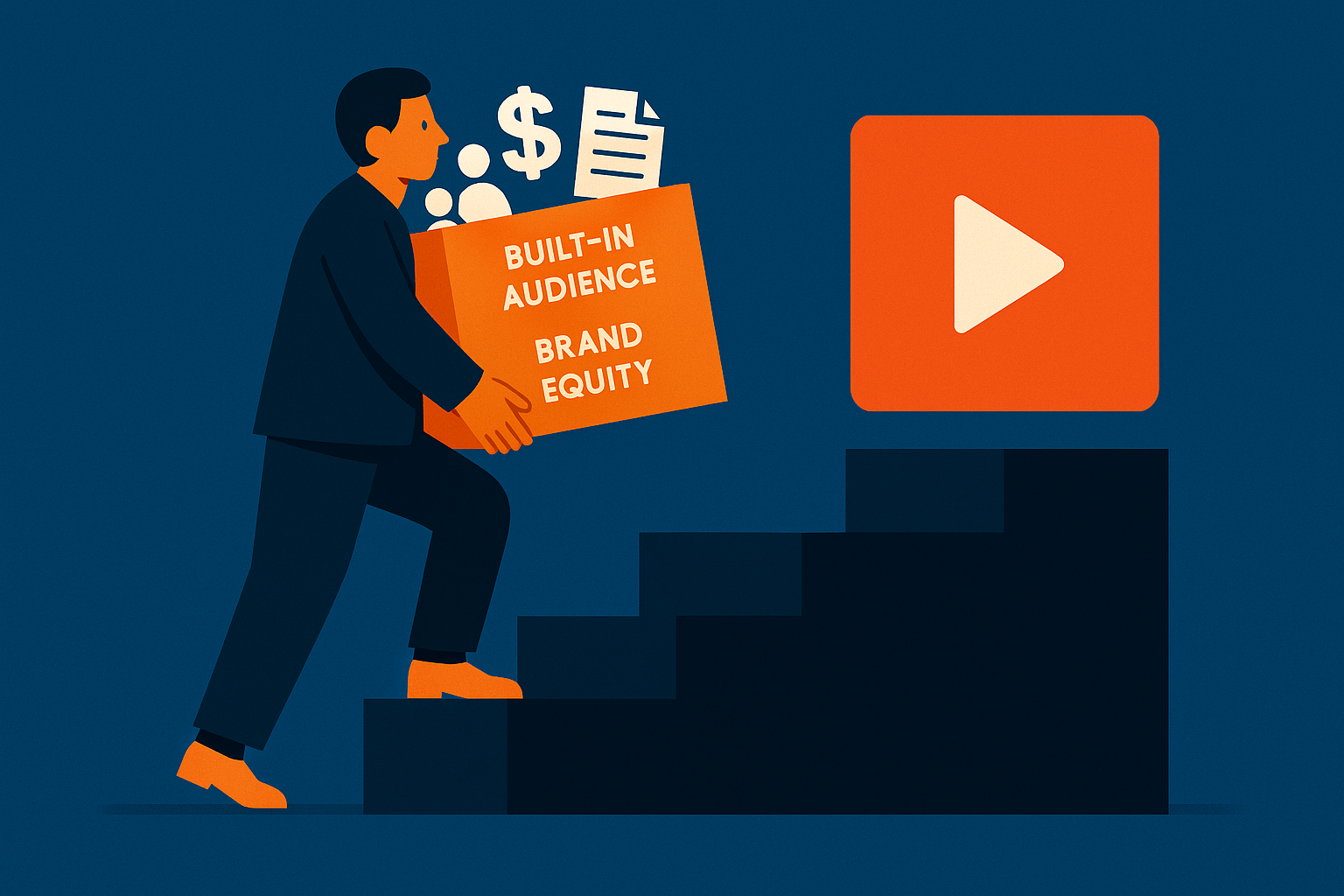
When businesses expand to new digital platforms, the fear of “starting over” often becomes a roadblock. Teams worry about building followers from scratch, generating awareness... Continue reading

When most brands think about employee advocacy, they imagine pre-approved posts, canned hashtags, and scripted talking points. The intent is good—amplify reach by turning staff... Continue reading

Every marketer knows the power of social listening. With the right tools, you can track mentions, monitor sentiment, and stay ahead of industry trends. But... Continue reading
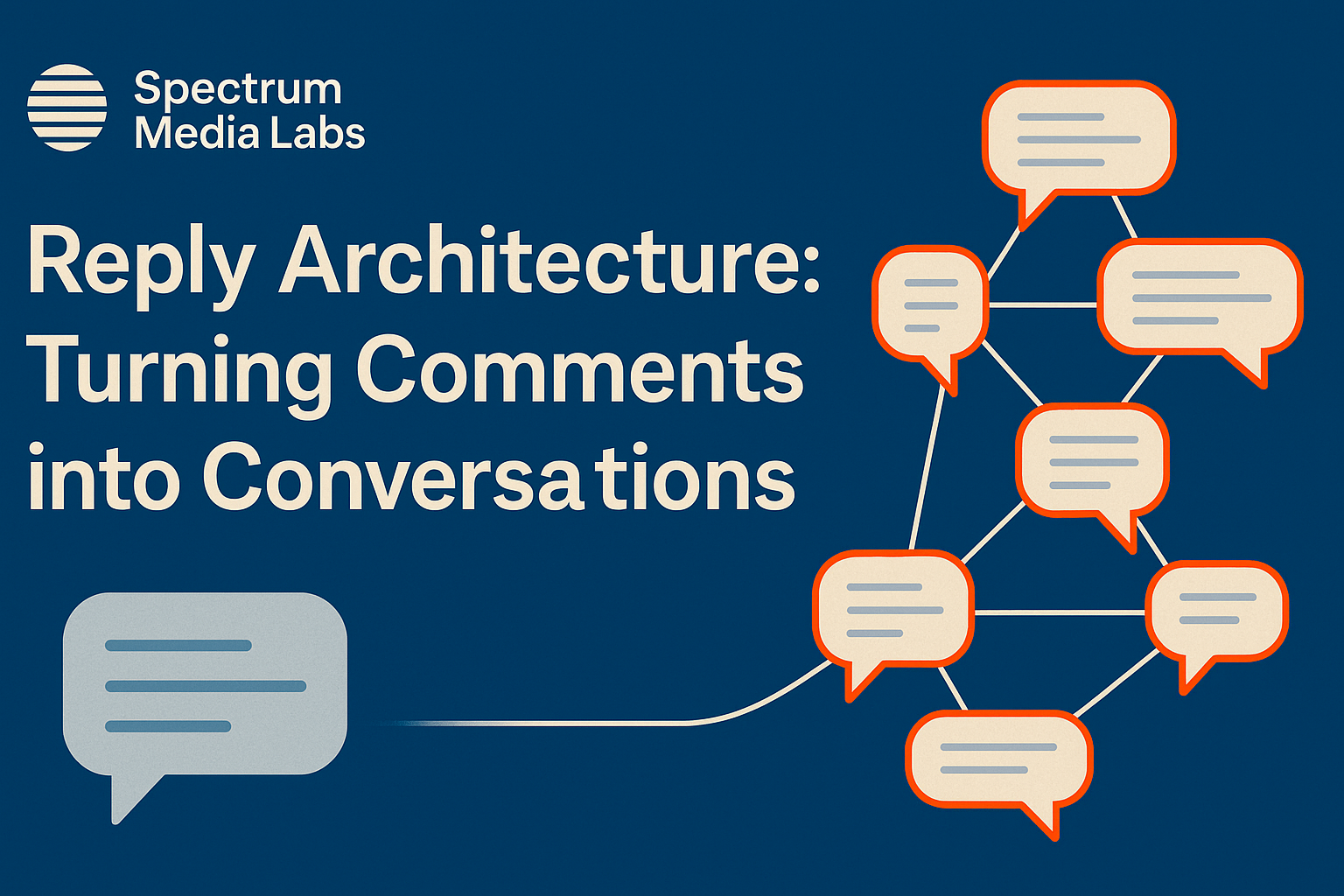
Marketers obsess over impressions, clicks, and conversions, but often miss one of the most underutilized growth engines sitting in plain sight: the comments section. Every... Continue reading
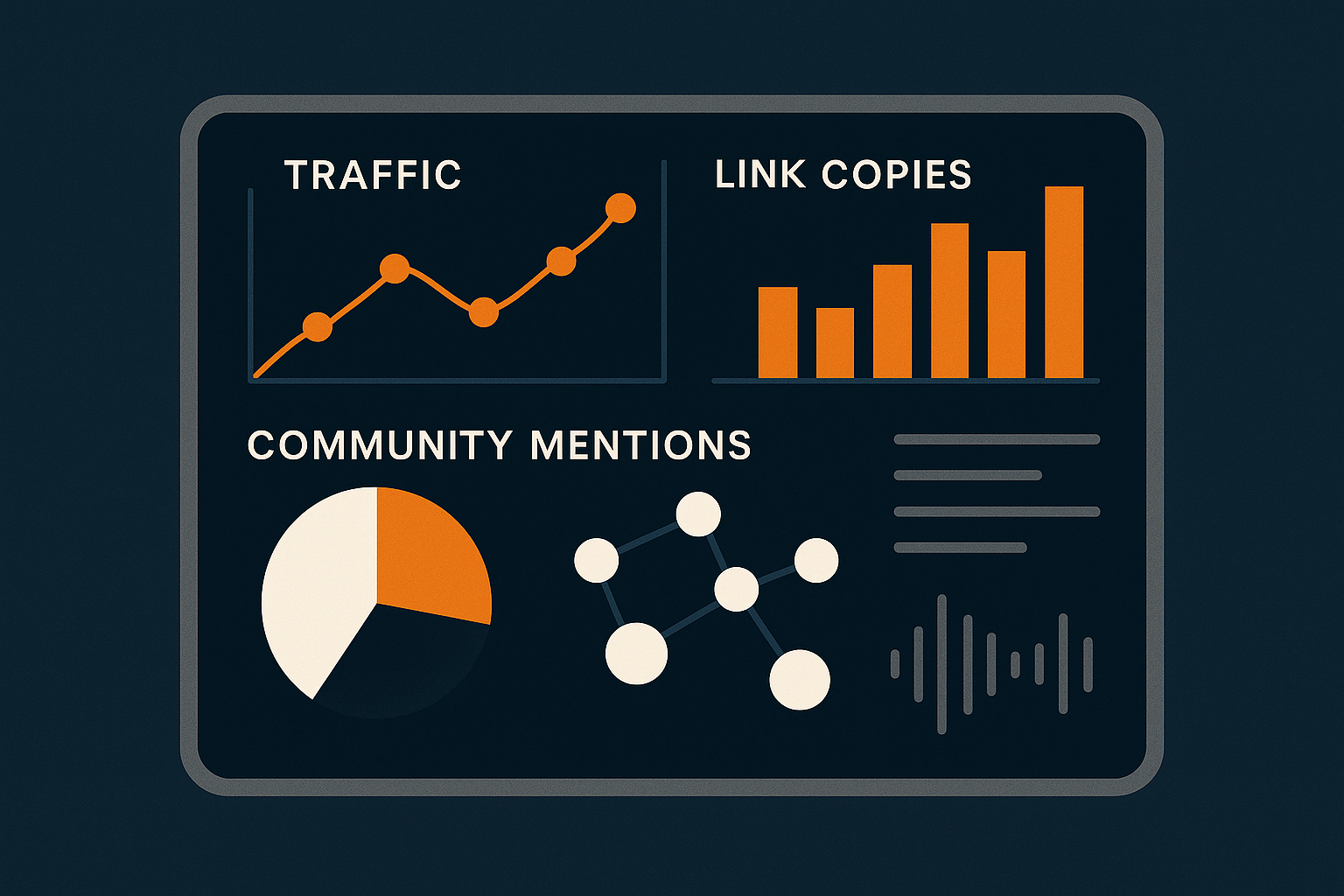
For years, marketers have been told that “what can’t be measured doesn’t matter.” Yet some of the most powerful drivers of growth today—private shares, closed... Continue reading

For more than a decade, social media advertising has followed a familiar formula: brands buy reach, optimize for clicks, and scale campaigns based on performance... Continue reading
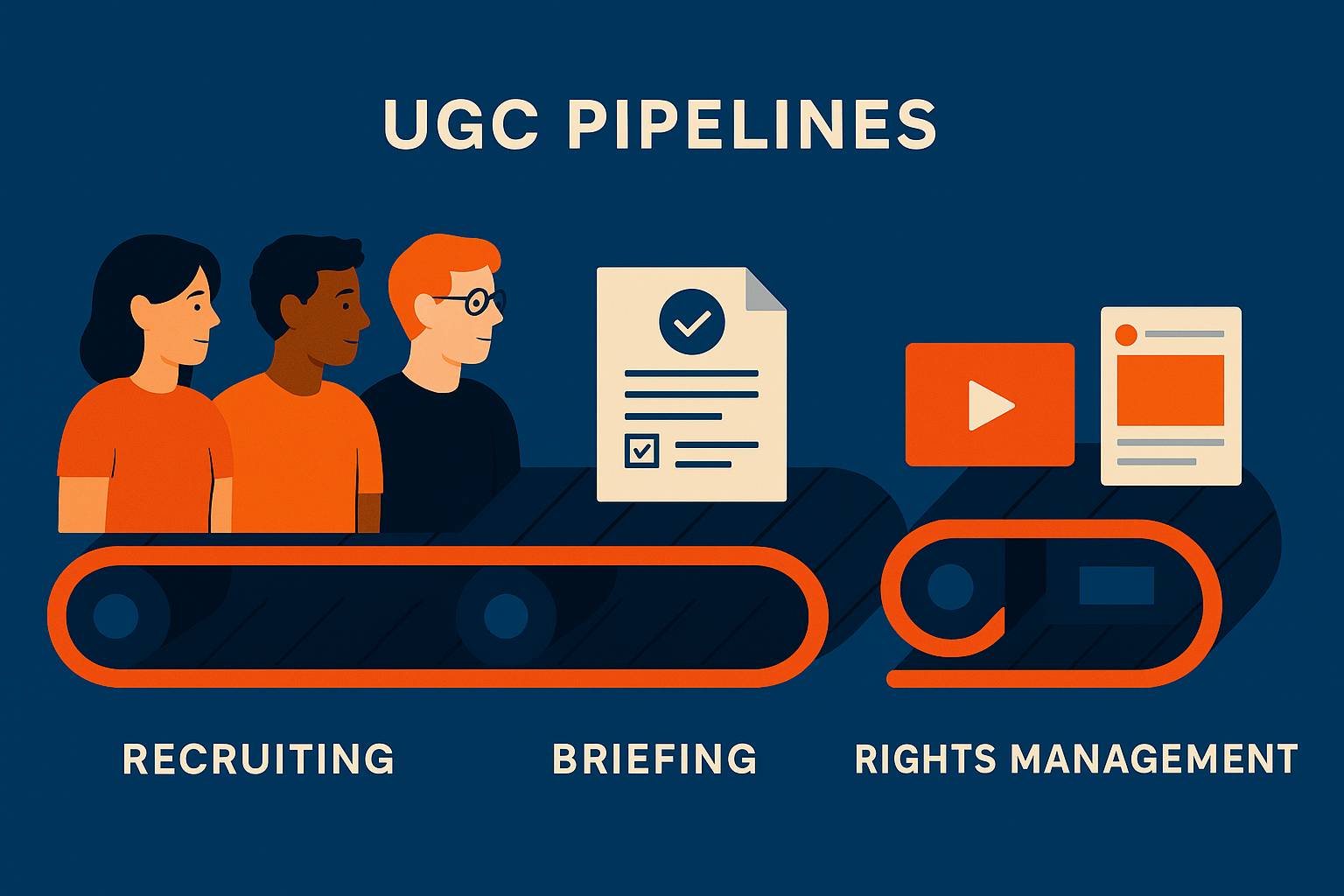
UGC Pipelines: Beyond One-Off Collaborations User-generated content (UGC) has moved from being a “nice-to-have” marketing tactic to a central engine of scalable growth. Brands no... Continue reading
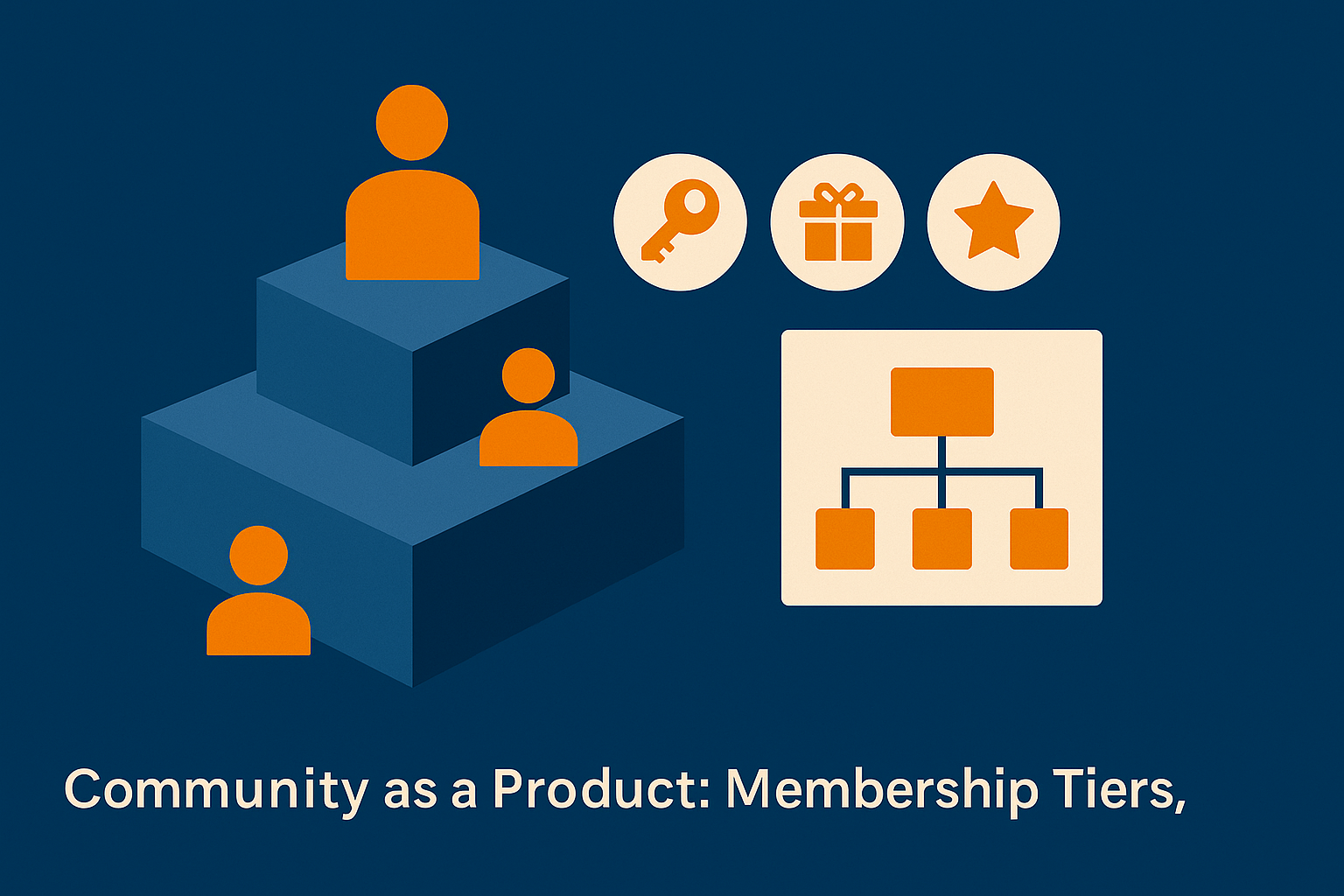
In the last decade, many brands have added “community” as an afterthought: a Slack group, a Discord server, or a Facebook page to host conversations.... Continue reading

Marketers don’t win social by posting more. They win by speaking the platform’s native language. Audiences scroll at the speed of instinct; the thumb decides... Continue reading

Every brand today operates in networks, not in isolation. Customers, partners, influencers, and employees form clusters of relationships that determine whether your message spreads or... Continue reading

When people hear “retail media,” they often picture large e-commerce platforms like Amazon, Walmart, or Target selling ad space to consumer brands. For CPG marketers,... Continue reading
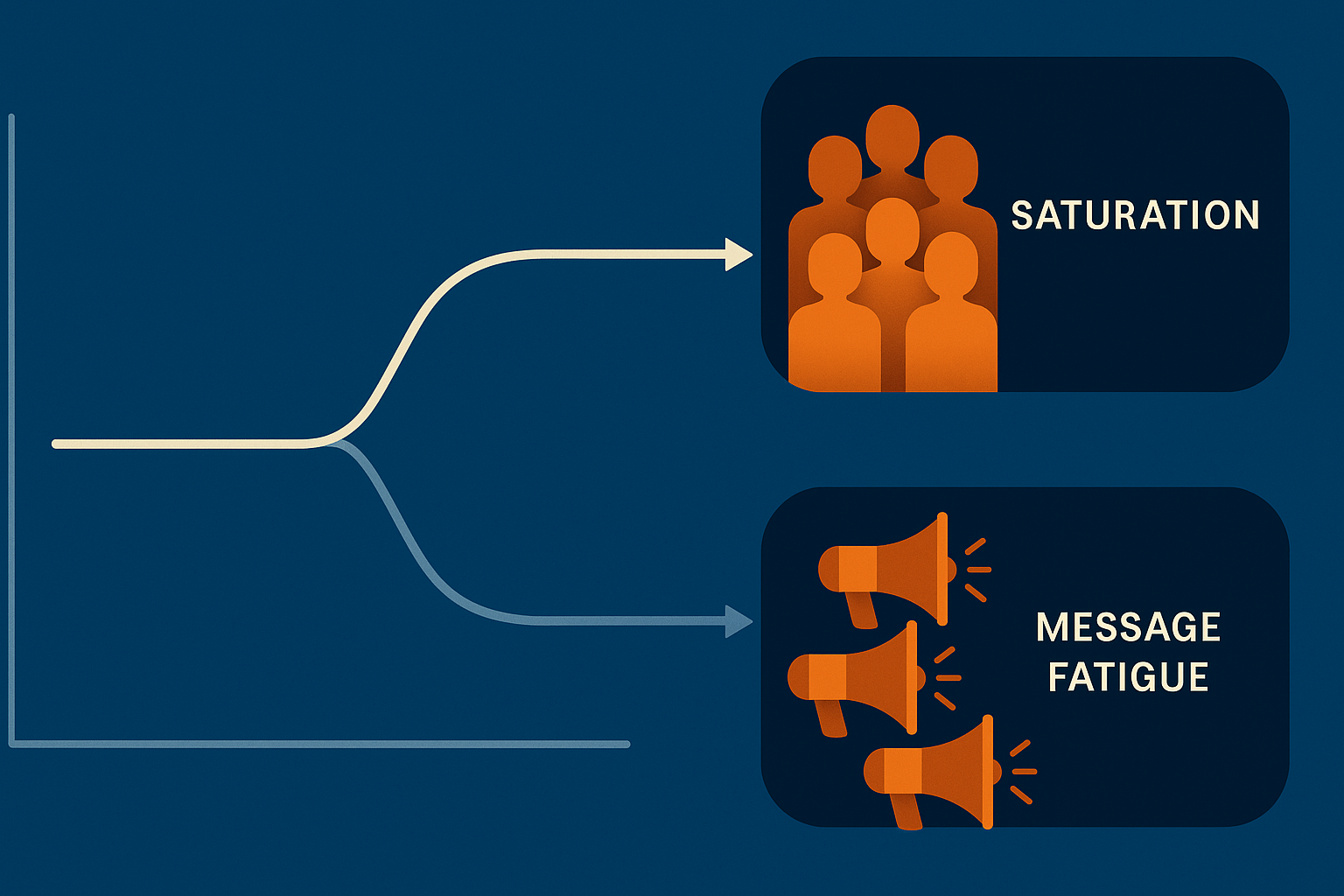
Every marketer has seen it: the campaign that once fueled growth suddenly stops moving the needle. Spend remains steady, impressions flow in, and yet conversions... Continue reading
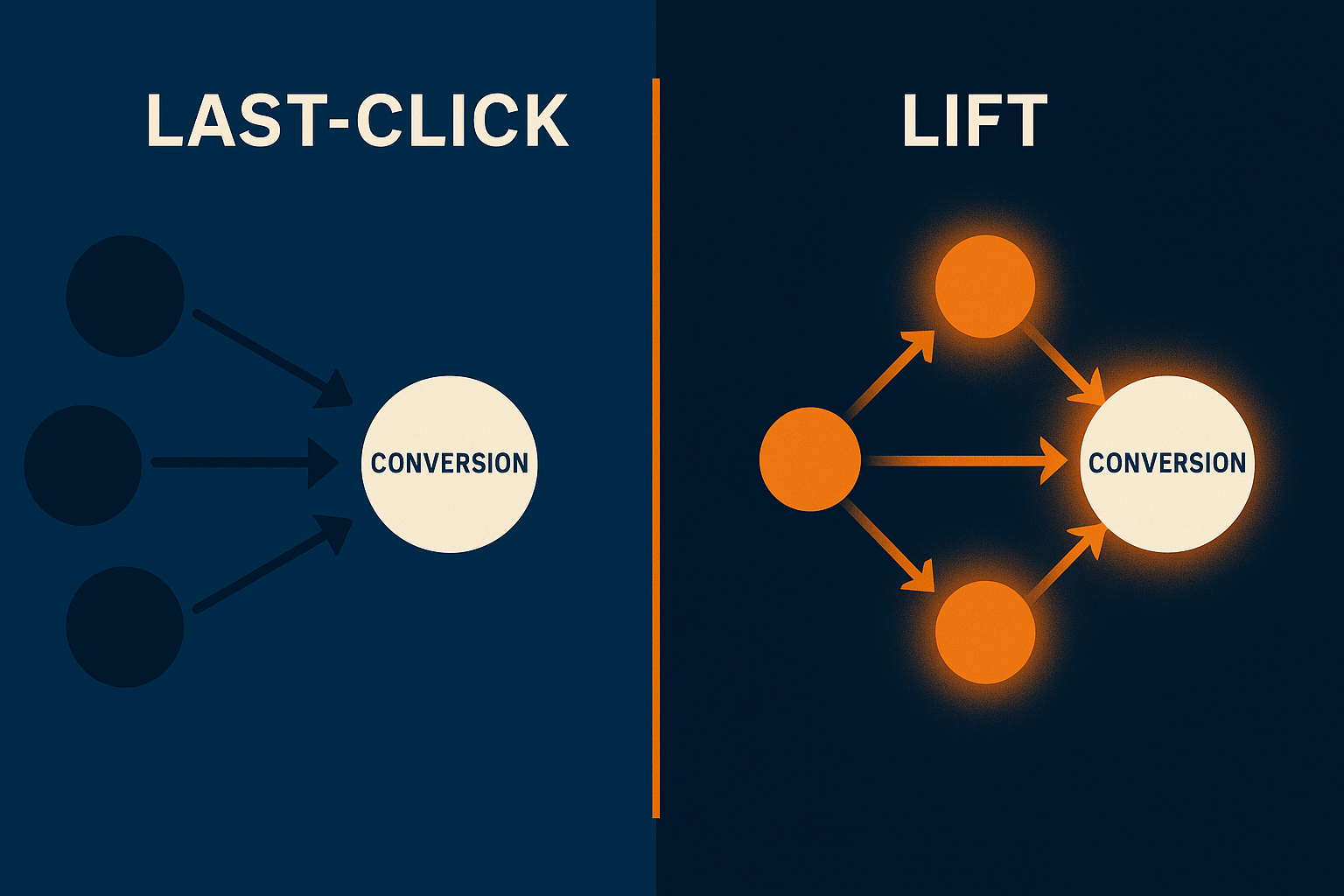
Attribution is one of the most contentious topics in marketing. Platforms present glossy dashboards with perfect ROAS, agencies defend their channel, and finance teams demand... Continue reading

Retargeting is one of the most powerful tools in performance marketing. Few tactics can match its ability to re-engage warm audiences and convert intent into... Continue reading

Marketers are constantly told to “diversify.” More channels, more placements, more formats. The logic is sound: you spread risk, reach broader audiences, and hedge against... Continue reading

Marketing budgets are under more scrutiny than ever. CFOs want predictability, CMOs want growth, and channel managers want enough spend to test new ideas. Yet... Continue reading

Performance marketers are trained to chase revenue. Yet in many businesses, revenue is invisible at the moment of acquisition. A B2B SaaS deal may close... Continue reading
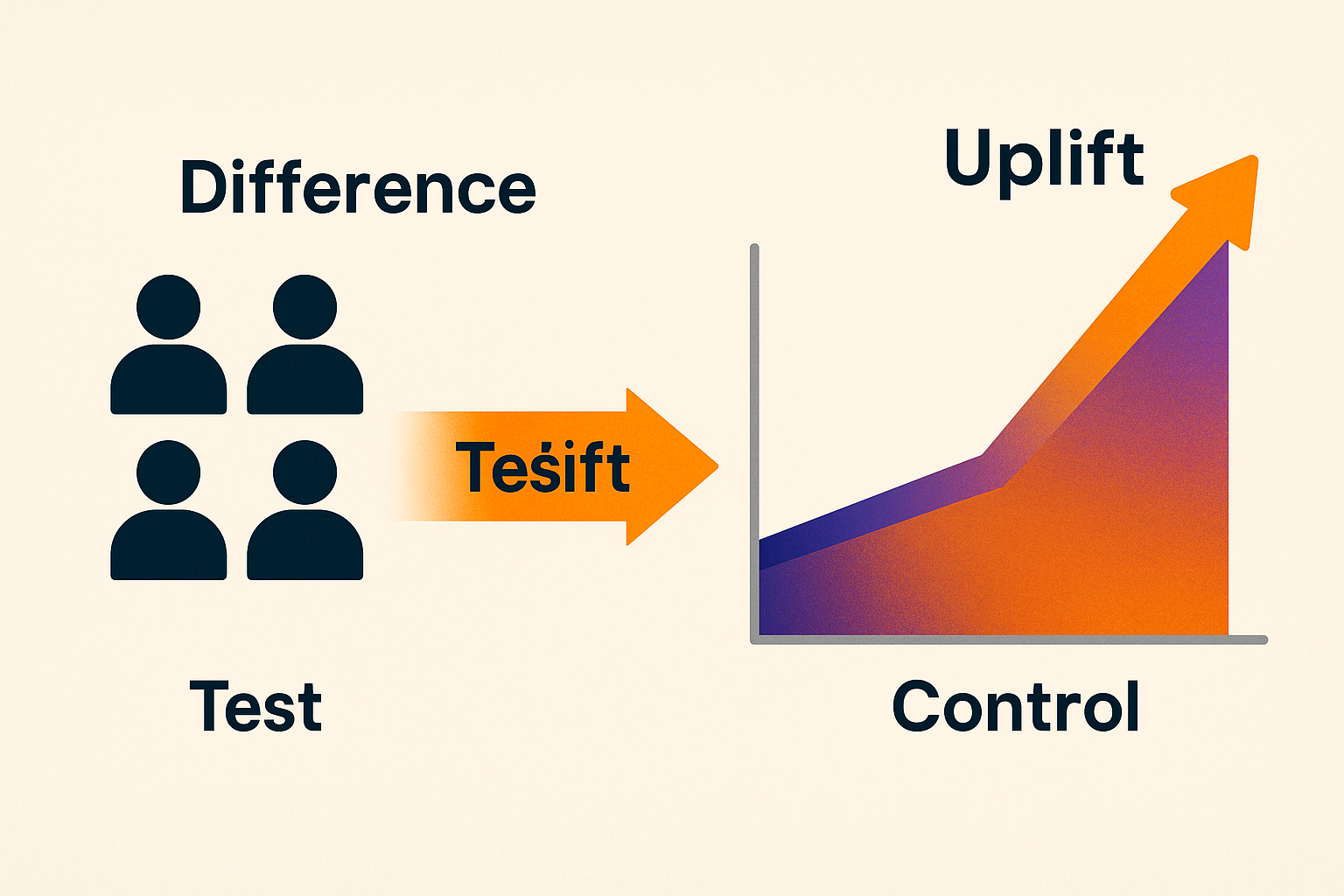
Marketing platforms love to take credit. Dashboards show flawless ROAS, last-click reports tell a comforting story, and lift studies conveniently appear only when they favor... Continue reading

Third-party cookies are fading into the rearview mirror. Between privacy regulation, browser restrictions, and user expectations, the era of cheap, anonymous targeting is over. Yet... Continue reading

For years, media buying has been seen as a numbers game. Marketers optimized campaigns by tweaking bids, chasing lower CPMs, and experimenting with budget allocations.... Continue reading
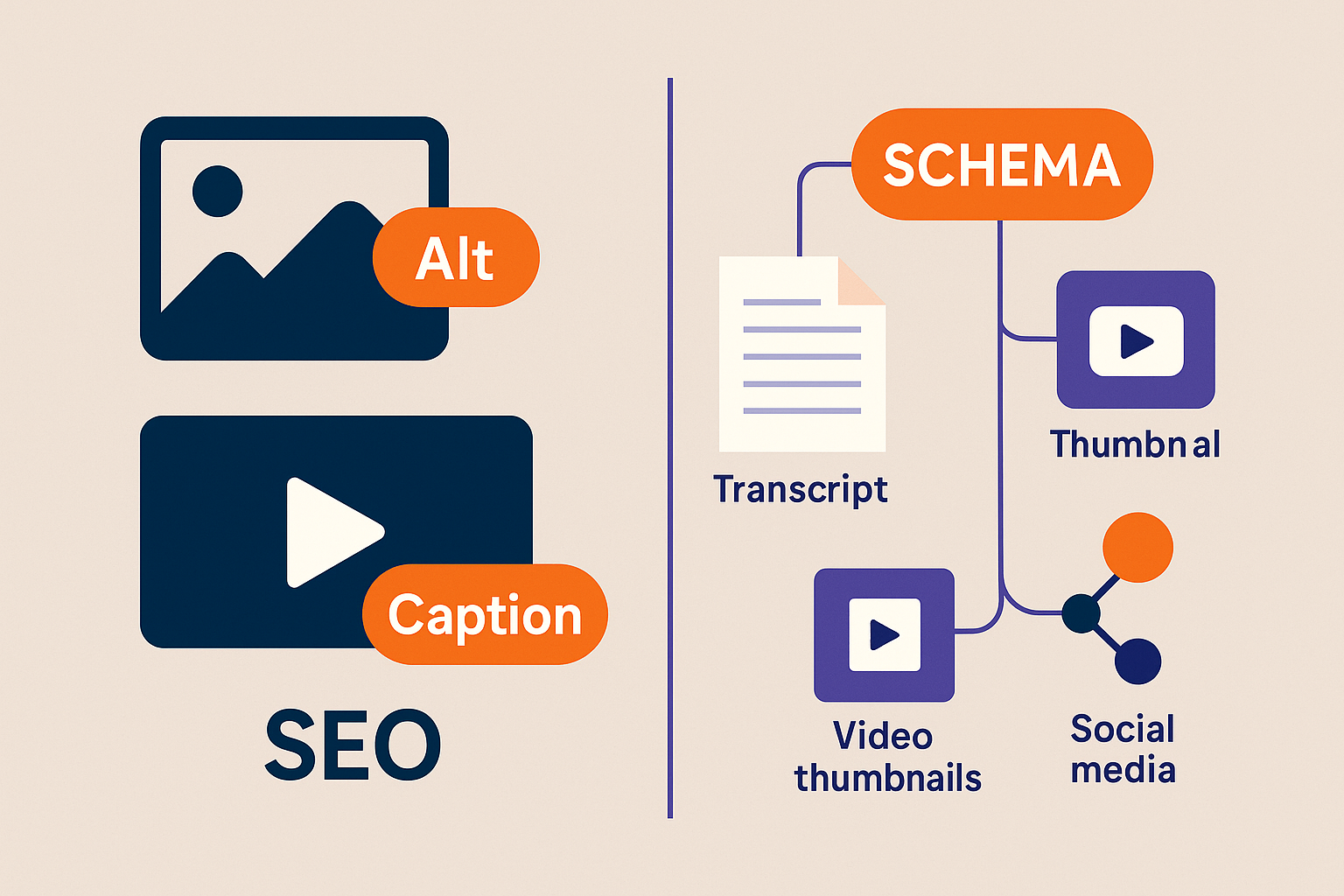
For years, conversations about image and video SEO stopped at the basics: add alt text, write captions, compress files. These fundamentals matter — but they... Continue reading

One of the most frustrating SEO challenges is watching a once high-performing article lose traffic. The instinct is often to “rewrite it from scratch.” But... Continue reading

Every marketer has faced it: you inherit a site that’s a technical nightmare. Pages crawl slowly, broken links lurk everywhere, analytics are a mess, and... Continue reading

Most service businesses compete in one of two ways: they either try to dominate their local market or carve out a niche specialization. But the... Continue reading

For most companies, product documentation lives in a quiet corner of the website — hidden behind support portals, stripped of personality, and optimized only for... Continue reading

SEO isn’t static. Even if your page ranks today, tomorrow the search engine results page (SERP) may look completely different. Algorithms shift, competitors adapt, and... Continue reading

Internal linking is often treated as an afterthought — a last-minute SEO checklist item to connect pages with a handful of anchor texts. But in... Continue reading

For years, programmatic SEO has been associated with bloated landing pages, templated text, and thin content that exists solely to game algorithms. But when done... Continue reading

For years, SEO strategy revolved around ranking for snippets, competing for featured answers, and optimizing page one visibility. But with Google’s Search Generative Experience (SGE)... Continue reading
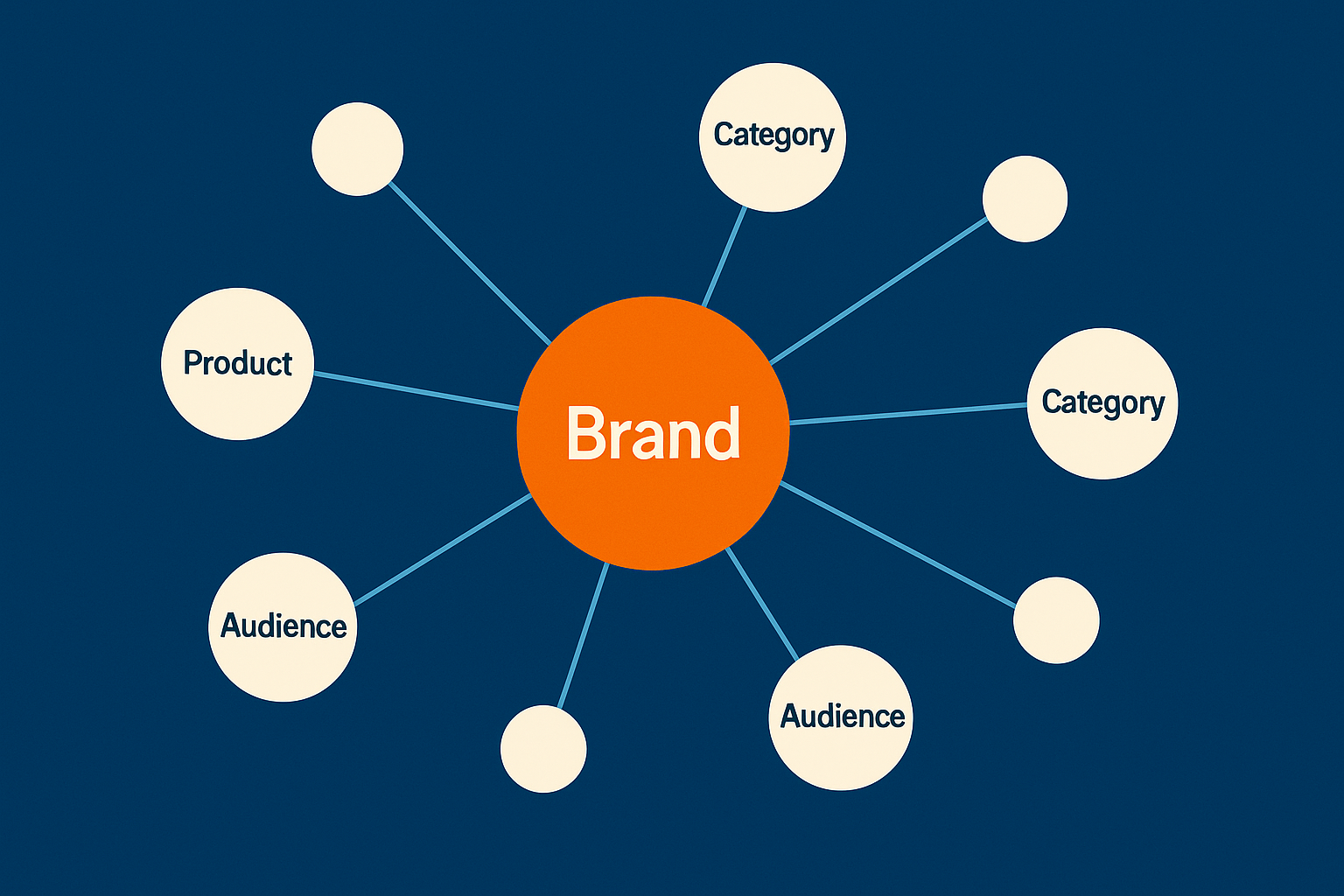
For more than two decades, SEO revolved around keywords. Marketers obsessed over search volume, density, and long-tail variations. But the algorithms have evolved — and... Continue reading

For years, “repurposing content” has meant slicing a blog post into tweets, or turning a webinar into a short video. Useful? Sure. Scalable? Not really.... Continue reading

In the race to publish faster, many teams mistake opinion for expertise. A strong point of view is essential, but without editorial rigor, opinion risks... Continue reading
Most marketers still measure success by visible clicks, shares, and impressions. But some of the most powerful distribution happens in places you can’t track: WhatsApp... Continue reading

In content marketing, most teams still obsess over creation — new articles, new videos, new campaigns. But the reality of 2025 is clear: content abundance... Continue reading

Most brands still treat content and product as two separate worlds. Content is for attracting traffic and generating leads; product is for solving problems once... Continue reading

“Thought leaderships” has become one of the most overused and misunderstood terms in marketing. Scroll through LinkedIn and you’ll find endless posts labeled as thought... Continue reading

In an era where generative AI can spin up thousands of words in seconds, the question for brands is no longer how much content you... Continue reading

Content marketers often look outward for inspiration: competitor blogs, keyword tools, or the latest LinkedIn trends. But the richest source of content ideas is already... Continue reading

For the past decade, content marketing has been obsessed with volume. The logic was simple: the more you publish, the more keywords you rank for,... Continue reading
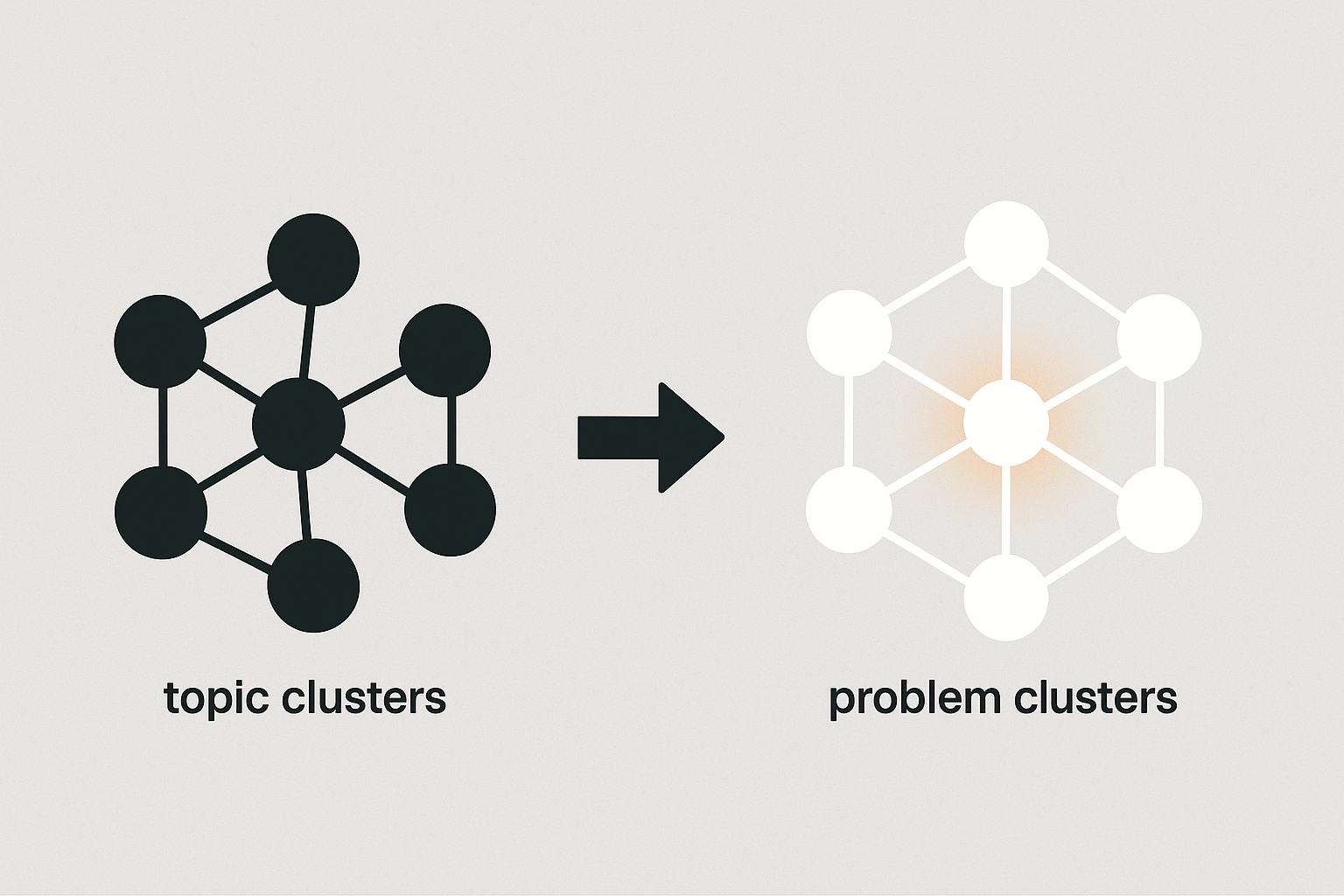
For years, content marketing teams have organized their calendars around topic clusters: a central pillar page surrounded by interlinked articles on related subtopics. It’s a... Continue reading

In creative teams, the word “constraint” often sounds like a threat. Creators want freedom, flexibility, and space to experiment. But paradoxically, the most liberating thing... Continue reading

Most digital brands still think in two dimensions: visuals and words. Logos, colors, typography, copy. But in 2025, the online environment is no longer static.... Continue reading

Every strong brand eventually faces the same question: Should we expand into new categories? Growth-hungry executives see adjacency as the logical next step. If customers... Continue reading

Breaking into a market as a new player is a credibility problem before it’s a growth problem. You may have a great product, a sharp... Continue reading

Every brand that scales eventually faces the same paradox: the need for consistency and the risk of stagnation. Design systems bring order to chaos —... Continue reading

A great name has always been a powerful asset. But in 2025, naming is no longer just about creativity or linguistic elegance. It’s about navigating... Continue reading

Every startup begins with a founder story. A moment of frustration, a flash of insight, a decision to build something better. It’s the origin myth... Continue reading

Marketers talk a lot about funnels, but funnels are abstractions. Real people don’t move neatly from awareness to consideration to purchase. They move in loops,... Continue reading

Marketers love archetypes. Hero, Rebel, Sage, Creator — they look great on slides and add drama to brand workshops. But too often, archetypes get reduced... Continue reading

When most people hear the word brand, they think of logos, colors, and taglines. But a brand is not a wrapper around the business —... Continue reading

Most agencies and startups equate lead generation with ad spend. Paid media feels like the fastest way to drive pipeline: set a budget, run campaigns,... Continue reading
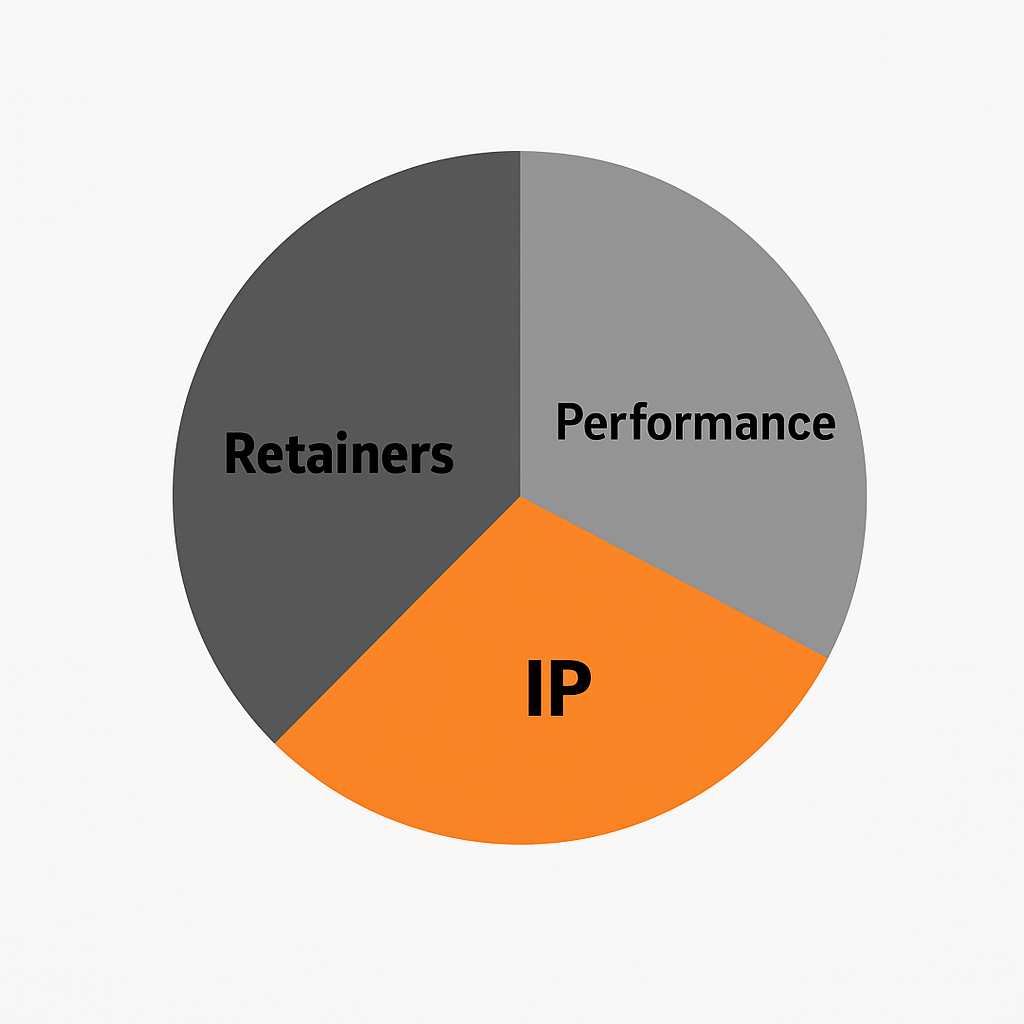
For agencies, revenue strategy is more than just setting prices. It’s about designing a mix of revenue streams that balances stability with upside, cash flow... Continue reading

Most companies assume that to win market share, they need to undercut competitors on price. It feels intuitive: if you’re the new entrant, shouldn’t you... Continue reading

The hardest part of any go-to-market strategy is the beginning. You’ve launched the product, hired your first marketer, or set aside budget for campaigns —... Continue reading

Every service business eventually confronts a strategic question: Do we bundle or unbundle our offerings?Should you sell a long-term retainer that promises stability, a tightly... Continue reading

In SaaS, “land-and-expand” is a well-known play: secure an initial contract, prove value, and then grow revenue inside the account through upsells, cross-sells, or expanded... Continue reading
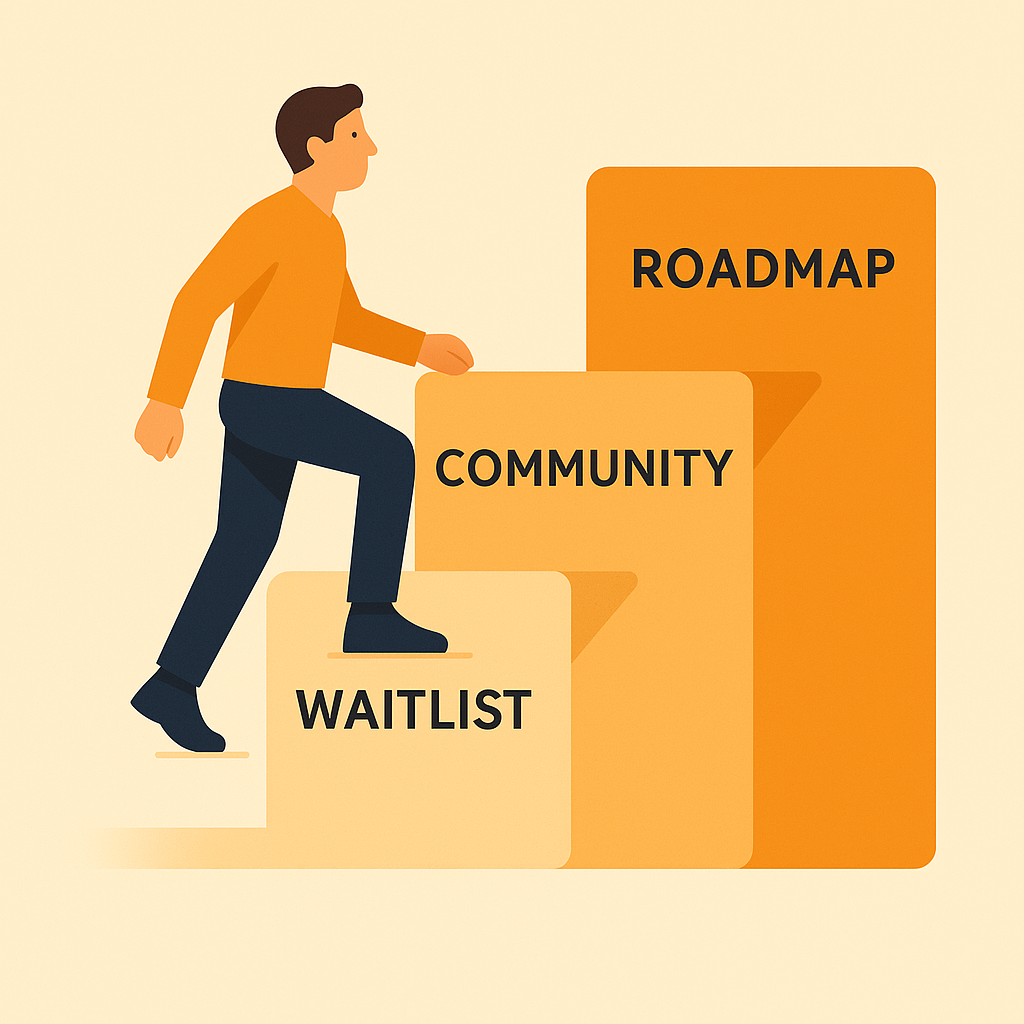
The most successful launches don’t begin on launch day. They begin months earlier, when no product is visible and no campaign is live, yet anticipation... Continue reading

Most startups and even seasoned marketers rush into paid acquisition far too early. They burn through budget chasing impressions, clicks, and conversions only to discover... Continue reading

Every founder claims to “test” their go-to-market strategy, but most confuse activity with experimentation. They launch campaigns, run ads, or cold email prospects and then... Continue reading
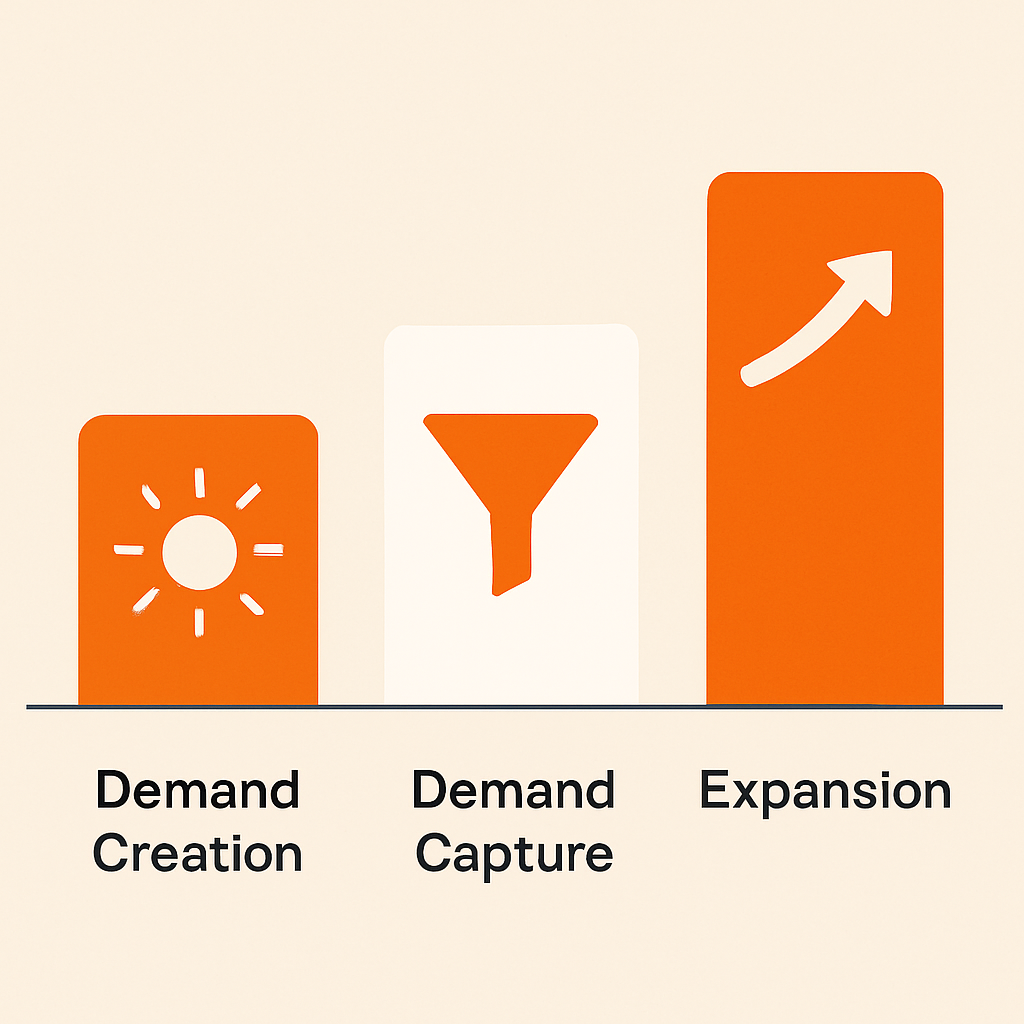
Go-to-market strategy is one of the most misunderstood aspects of building a company. Founders often treat it as a single launch moment — a press... Continue reading

In marketing, the temptation of the quick win is irresistible. A new channel opens, a competitor launches a campaign that suddenly looks effective, or a... Continue reading

Every marketing team eventually faces the same problem: there are more ideas than there is time. New platforms emerge weekly, competitors launch campaigns that demand... Continue reading

In business strategy, the word moat has become shorthand for defensibility — the reason competitors can’t easily replicate your success. Warren Buffett popularized the term... Continue reading

The modern marketplace is louder than ever. Every SaaS startup, creative agency, and consumer brand shouts its way into LinkedIn feeds, inboxes, and Instagram ads.... Continue reading

Pricing is one of the most powerful levers a business can pull, yet it’s often treated as an afterthought. Founders obsess over product features, growth... Continue reading

In B2B strategy, most conversations start with funnels. Companies design awareness stages, lead magnets, nurturing flows, and conversion triggers. But there’s a deeper, more fundamental... Continue reading

Most B2B companies frame their positioning around products: “We automate workflows, we reduce costs, we improve reporting.” But customers don’t wake up in the morning... Continue reading

In a fragmented digital landscape, businesses often mistake “publishing everywhere” for “being omnipresent.” They take a single offer — a product discount, a new service,... Continue reading

One of the most common fears among business leaders is narrowing their focus. Choosing a single Ideal Customer Profile (ICP) often feels like rejecting opportunities:... Continue reading

In today’s hyper-competitive landscape, being broad is being invisible. Countless companies attempt to win attention by showcasing their versatility: “We design websites, manage ads, write... Continue reading

Why most creative testing fails Teams rarely suffer from a lack of ideas; they suffer from a lack of a system that turns insights into... Continue reading

AI Orchestra in Marketing: How to Build a Stack That Saves $100k a Year (Without Breaking Your Team)
Executive summary Most “AI in marketing” fails not because the tools are weak, but because the system around them is missing. This article offers a... Continue reading

Why “busy” doesn’t equal “effective” Most teams don’t suffer from a shortage of tasks; they suffer from a shortage of systems. If your calendar is... Continue reading

At first glance, it looks like a marketing issue. Leads aren’t converting. Sales cycles are dragging. CAC is rising. So the default reaction is to... Continue reading

At first glance, your marketing funnel seems solid. The content is written in clear and fluent English. The visual design feels modern and clean. The... Continue reading

Let’s begin with an uncomfortable truth that many still resist. Your brand does not live in your logo.It does not reside in the typography or... Continue reading

Let me guess. You’re running a B2B company. You’ve invested in LinkedIn ads, maybe experimented with webinars, polished your pitch decks, and posted your fair... Continue reading

Let’s talk honestly. Back in 2015, SEO felt like a math problem with a clear formula: choose a keyword, place it in the right tags,... Continue reading

Let me guess. You spent months building a marketing strategy. You mapped out your target segments, nailed your positioning, budgeted every campaign down to the... Continue reading

Download our free 1-Page Marketing Strategy Starter Kit Most small businesses aren’t failing because of bad products.They’re stuck because of a foggy strategy, scattered messaging,... Continue reading

In a world obsessed with ads, funnels, and growth hacks, content often gets unfairly relegated to the sidelines. It’s treated as filler. Something “we’ll get... Continue reading

Marketing is the lifeblood of any business, yet countless companies struggle to see meaningful results despite investing heavily in campaigns, tools, and tactics. If your... Continue reading