
Introduction
“Micro or macro?” is the wrong first question. Better: what outcome are we buying, on which platform, for which audience, and how will we measure it? Micro creators (typically 10k–100k followers) tend to deliver niche trust and efficient cost per action. Macro creators (500k+ or celebrity) deliver fast reach, press value, and cultural momentum. The best programs use a mix, wired to the right goals and clean measurement. This guide gives you decision rules, budget math, and a 30‑day test plan you can run this quarter.
Definitions (Working Ranges—Adjust by Market)
- Nano: 1k–10k followers; hyper‑local; highest reply rates; low production overhead.
- Micro: 10k–100k; niche operators; consistent comments from real peers; affordable licensing.
- Mid‑tier: 100k–500k; breakout voices; useful for category reach without celebrity pricing.
- Macro: 500k–5M; audience breadth; PR value; higher production and approvals.
- Mega/Celebrity: 5M+; mass reach and brand halo; tight legal and scheduling.
Size is a proxy. Audience fit (overlap with your ICP) and proof of influence (past performance in your category) matter more.
Match Goals to Creator Size (Cheat Sheet)
| Goal | Best Fit | Why | Secondary Picks |
|---|---|---|---|
| Brand lift / awareness | Macro/Mega | Fast reach, press/social proof | Mid‑tier for frequency |
| Category leadership / narrative | Macro + a data/story hook | Earned media, perception shift | Micro experts to seed depth |
| Performance (CPA/ROAS) | Micro/Nano | Niche trust, action‑oriented content | Mid‑tier creators who operate in‑category |
| Product education / onboarding | Micro/Mid‑tier | Time for demos, comments, Q&A | Brand handle content + creator whitelisting |
| Community seeding | Nano/Micro | Real conversations, UGC volume | Partner with community orgs |
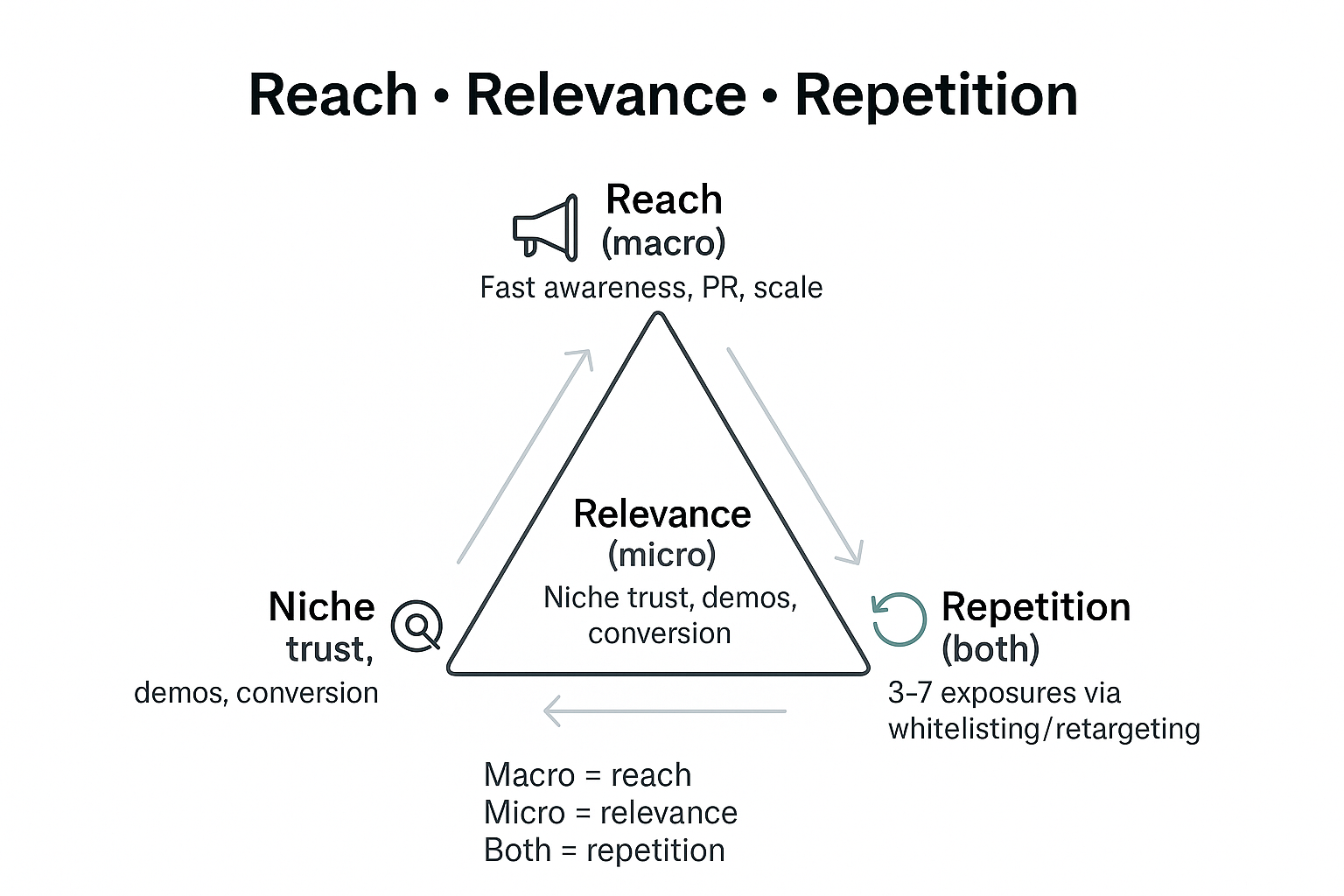
The Three Levers: Reach × Relevance × Repetition
- Reach (unique eyes within your ICP). Macros can produce 1–5M impressions quickly.
- Relevance (fit + credibility). Micros often outscore with tighter niches and comments that look like your buyer.
- Repetition (frequency). It usually takes 3–7 exposures to move from awareness to action—cheap repetition favors micros.
Design principle: Buy reach from macro, relevance from micro, and repetition from both via whitelisting and retargeting.
Cost & Outcome Math (Sanity Checks)
Use these back‑of‑envelope numbers to compare options. Replace with your own historicals ASAP.
Upper‑Funnel (CPM & Reach)
- Macro effective CPM from paid + organic lift: $8–$25 (varies widely by niche/region).
- Micro network (10 creators × 30–80k each) often yields $5–$12 eCPM once you include whitelisting and targeted paid.
Mid/Lower‑Funnel (CPC/CPA)
- Micro CPA benchmarks (clean tracking, new‑to‑file): $12–$40 for consumer apps/DTC; $30–$120 for higher AOV.
- Macro CPA can work when the audience is aligned—but expect higher variance and higher floors.
Licensing/Whitelisting (Don’t Forget Rights)
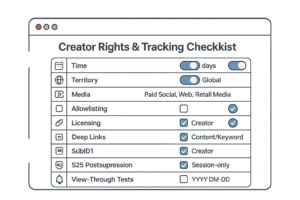
Budget +25–50% of creation fee for 90‑day paid social license; extra for web/display/retail; whitelisting access often flat/month.
Decision rule: If macro CPM is ≤1.5× your micro eCPM and the audience fit is strong, macro may be the efficient reach buy.
Creative & Offer: Why Micros Often Win on Conversion
- Operators over entertainers: micros tend to be practitioners; demos feel like help, not ads.
- Comment gravity: question→answer threads lift intent; macros seldom reply at scale.
- Offer fit: micros can tailor use‑case and codes by sub‑segment (e.g., “agency SOP templates”).
Macro edge: cultural moments, social proof, and PR. Use macros to launch a narrative; use micros to carry it.
Platform Nuance (2025 Reality)
- TikTok/Shorts/Reels: algorithmic discovery levels the field—hook in 0–2s, on‑screen text, burned‑in captions. Creator handle identity can dramatically drop CPMs; test creator‑handle vs brand‑handle with the same asset.
- YouTube (long + Shorts): macros for long‑form storytelling and search shelf‑life; micros for mid‑funnel tutorials.
- Twitch/Discord/Reddit: niche trust > follower counts; pick operators with moderating experience.
Measurement: Keep It Clean
- Track with first‑party click IDs, deep links, and SubIDs (creator and content).
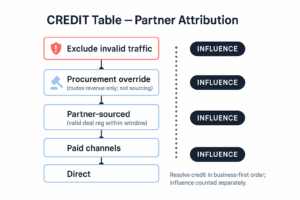
- Pay on new‑to‑file and qualified events; suppress coupon/toolbar hijacks with last‑click exclusions.
- Read both attribution and incrementality (geo splits, short blackouts).
- Quality board: refund/chargeback rates by creator; LTV deltas.
KPI map
- Awareness: reach, aided recall, search lift.
- Consideration: view‑through rate, time‑watched, CTR, add‑to‑cart/start‑trial.
- Action: CPA/ROAS, new‑to‑file %.
Mix Patterns That Work
- Macro spark + Micro carry
- Launch with 1–2 macro creators to set the story and earn press.
- Follow with 10–30 micros across sub‑segments; whitelist best‑performers for frequency.
- All‑micro network
- 20–50 micros staggered over 6–8 weeks; shared brief; rotating hooks; heavy comment QA.
- Use a creator leaderboard to feed budget to winners.
- Expert anchors + community chorus
- Two subject‑matter experts (mid‑tier) produce deep demos.
- Nanos and customers stitch or duet with “how I use it” clips.
Risk & Brand Safety (Reality, Not Fear)
- Disclosures: FTC/ASA + platform tools (paid partnership toggles).
- Exclusivity: define categories/time windows (e.g., no direct competitors ±60 days).
- Morals clause: pause within 24h for cause; pro‑rata fees.
- Music/asset rights: commercial use only; keep proofs on file.
- Comments/moderation: plan coverage for macro posts; document escalation.
30‑Day Test Plan (From Zero to Signal)
Week 1 — Design
- Pick one audience, one offer, two platforms.
- Recruit 2 macro or mid‑tier + 12 micro creators.
- Draft a single brief; set disclosure, rights, and tracking rules (deep links + SubIDs + codes).
Week 2 — Produce
- Each creator films 2 concepts (demo + myth‑bust); supply caption templates and alt text.
- Secure 90‑day paid social license; set up whitelisting for 6 creators.
Week 3 — Launch
- Organic posts + dark ads (brand vs creator handle A/B).
- Budget to learning phase; cap frequency; exclude purchasers.
- Track CPA, new‑to‑file %, and early LTV signals.
Week 4 — Read & Scale
- Move budget to top 30% of creators and best concept.
- Extend rights on winners; rotate hooks every 7–14 days.
- Write a 1‑page readout: CPM/CPA deltas, comment insights, next bets.
Playbook Snippets (Copy/Paste)
Creator brief opener
“Our audience is [ICP] struggling with [job]. Two angles that work: [demo] and [myth‑bust]. Hook in 2 seconds, show a concrete outcome, end with one CTA. Please add burned‑in captions; we’ll supply alt text.”
Rights block
“90‑day paid social license (Meta/TikTok/YouTube) with editing for cut‑downs and translations. Whitelisting access during the same term. No TV/CTV unless extended.”
Measurement line
“Credit on new‑to‑file only; last‑click with coupon/toolbar exclusion. Unique code + SubIDs required. We’ll read incrementality via geo splits.”
FAQs
Are macros always expensive and micros always cheap? Not always. Mid‑tier specialists can price reasonably and outperform. Some micros command premium rates when they own a hard niche.
Should we ever do macro‑only? For brand moments or launches with PR pegs, yes—then feed the creative into paid.
How many micros make a macro? Often 10–30 micros match one macro’s reach, with better comment quality and CPA, but require more ops.
What about B2B? Choose operators (consultants, devs, analysts). Fewer creators, deeper content, and more demos.
Conclusion
Micro vs. macro isn’t a debate; it’s a design choice. Buy macro when you need fast, public reach and narrative shifts. Buy micro when you need credible demos and efficient actions. Most brands need both, in a sequence: macro to spark, micro to carry, paid to scale, and measurement to keep everyone honest.
Add comment