
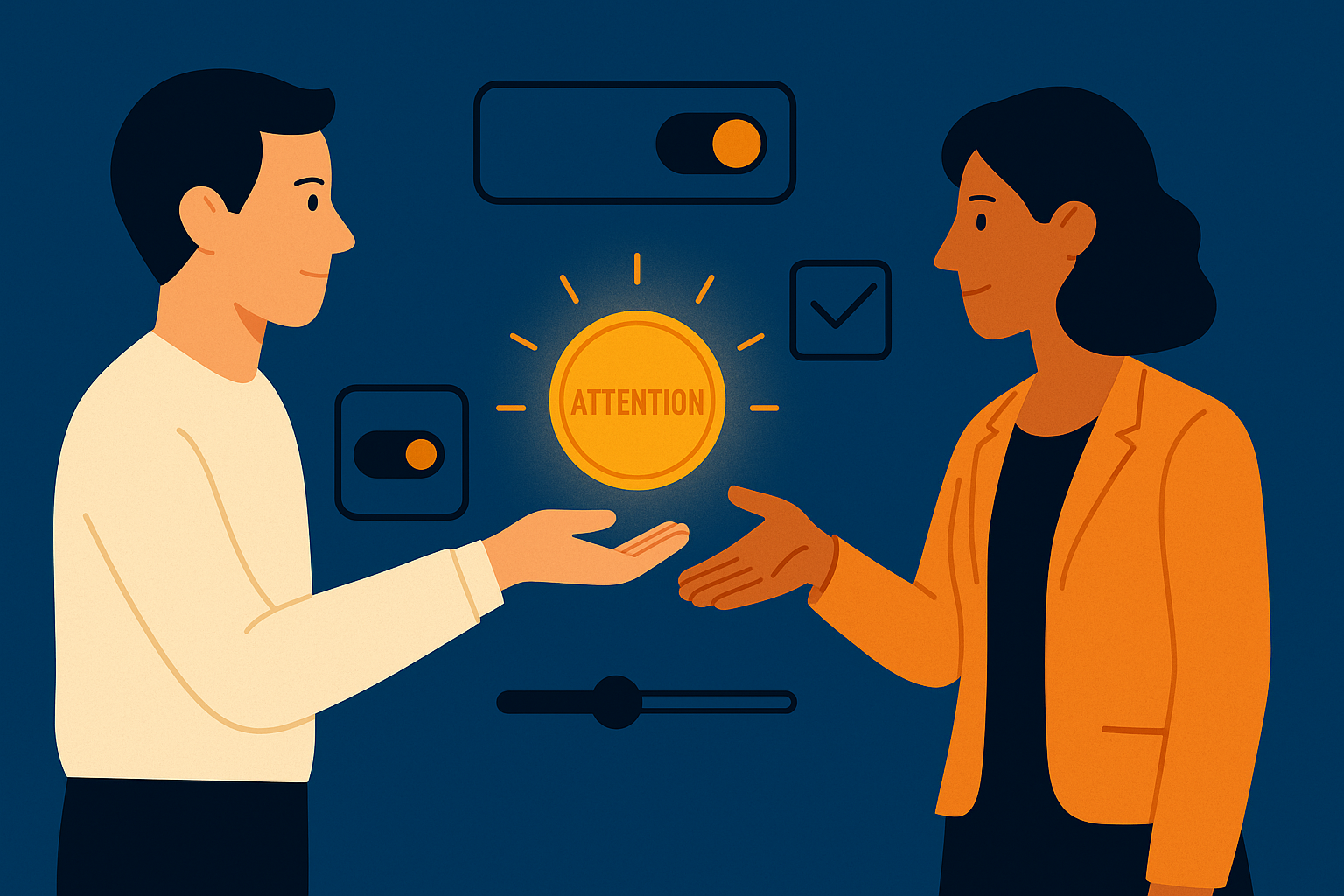
In 2025, attention has become the rarest and most valuable asset in marketing. Consumers are not only selective with their wallets but also with their time, inbox space, and mental energy. Every notification, email, or in-app message is competing for finite attention, and brands that treat this resource carelessly are paying the price in unsubscribes, spam complaints, and disengagement.
The solution is not simply “sending fewer messages.” It’s about giving users meaningful control through preference centers that respect attention as a form of currency. When designed well, these systems don’t just prevent churn—they actively deepen trust and strengthen customer relationships.
Why Most Preference Centers Fail
Many preference centers are designed reactively, as an afterthought when opt-out rates climb. As a result, they are often:
- Hidden or hard to find
- Overly technical, listing confusing categories
- Too limited, with binary “all or nothing” options
- Static, failing to evolve as user needs change
This creates frustration. Instead of empowering customers, these designs reinforce the idea that brands want to maximize their own output, not optimize the customer’s experience.
Respecting Attention as a Currency
The mindset shift is critical: attention is not free. Just as we wouldn’t expect customers to hand over money without value in return, we shouldn’t expect them to give attention without meaningful reciprocity.
To respect this exchange, preference centers should embody three principles:
- Transparency – Explain what each channel delivers and why it matters.
- Flexibility – Allow users to adjust frequency, topics, and formats.
- Reciprocity – Highlight the value the user receives by opting in (exclusive access, utility-driven content, relevant offers).
Elements of a Modern Preference Center
A preference center worth using should go beyond “unsubscribe” and become a personalization hub. Features can include:
- Frequency controls (weekly digest vs. real-time updates)
- Channel selection (email, SMS, app push, social DMs)
- Topic preferences (product updates, educational content, industry insights, offers)
- Format preferences (short news briefs, long-form guides, video vs. text)
- Pause options (temporary opt-out for vacations or busy seasons)
- Feedback loops (“Why did you unsubscribe?” insights built directly into the flow)
Business Benefits Beyond Compliance
A well-designed preference center reduces spam complaints and regulatory risks, but its benefits are much larger:
- Higher long-term engagement rates
- Richer data on what content resonates
- Increased trust and brand equity
- Lower list churn and acquisition costs
In essence, preference centers can become retention engines when they’re designed to genuinely serve users.
Designing for 2025 and Beyond
As privacy regulations tighten and consumers grow savvier, the brands that thrive will treat attention as the scarcest resource. Future-ready preference centers will integrate AI-driven personalization, predictive timing (choosing the right moment to engage), and adaptive design that evolves with each user’s behavior.
The result is not fewer messages, but smarter, mutually valuable conversations—built on respect, choice, and trust.



Add comment