
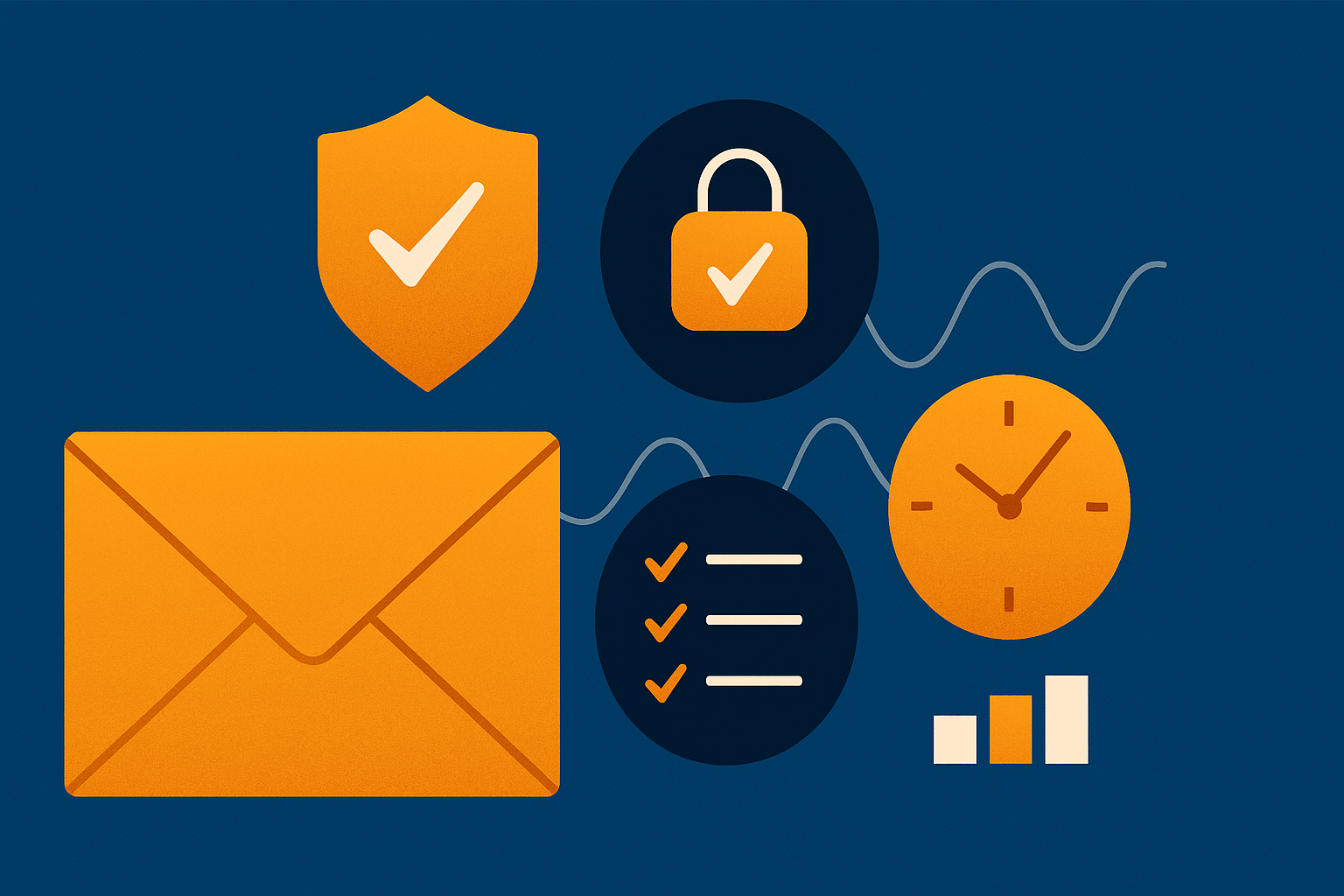
Email remains one of the most effective channels for customer engagement and revenue generation. Yet, as inboxes grow more crowded and platforms tighten their rules, deliverability has become the defining factor of success. In 2025, the mechanics of “getting into the inbox” are no longer optional hygiene tasks — they are strategic levers for growth. Three pillars dominate the landscape: authentication, list hygiene, and cadence.
Why Deliverability Matters More Than Ever
A campaign that doesn’t land in the inbox doesn’t exist. Open rates, click-throughs, and conversions all rely on strong deliverability. And while creative headlines or clever personalization can boost performance, they are irrelevant if your emails end up in spam folders. In today’s environment of stricter filters, brand reputation, and evolving authentication standards, marketers must treat deliverability as part of their core marketing system, not a back-office chore.
Pillar 1: Authentication
By 2025, protocols like SPF, DKIM, and DMARC are non-negotiable. These standards assure inbox providers that you are a verified sender, protecting both your brand and your recipients.
- SPF (Sender Policy Framework): Confirms your server is authorized to send mail for your domain.
- DKIM (DomainKeys Identified Mail): Adds a digital signature to verify that your message hasn’t been tampered with.
- DMARC (Domain-based Message Authentication, Reporting, and Conformance): Provides a policy framework that tells inboxes how to handle unauthenticated mail.
Forward-thinking brands also explore BIMI (Brand Indicators for Message Identification) to display their logo directly in inboxes, reinforcing trust visually.
Pillar 2: List Hygiene
A bloated or outdated list is one of the fastest ways to sink deliverability. Providers like Gmail and Outlook track engagement closely; inactive or bounced addresses harm your sender reputation.
- Regular cleaning: Remove hard bounces, invalid addresses, and inactive users.
- Engagement-based segmentation: Send more to your most active users and re-engage or suppress dormant ones.
- Clear opt-ins: Avoid risky purchased lists and focus on transparent permission-based growth.
The goal isn’t to maximize list size — it’s to maximize list quality.
Pillar 3: Cadence
Cadence is the rhythm of communication. Too frequent, and you risk fatigue and spam complaints. Too infrequent, and your audience forgets you. The solution lies in balancing frequency with value.
- Consistency beats bursts: Maintain a steady flow rather than overwhelming surges.
- Behavior-driven triggers: Automate sends based on customer actions rather than arbitrary schedules.
- Respect time zones and preferences: Optimize delivery windows to align with recipient behavior.
Cadence, when done well, feels less like marketing and more like an ongoing dialogue.
Looking Ahead: Deliverability as Strategy
Deliverability in 2025 requires cross-functional ownership. It’s not just the email team’s problem — it involves IT for authentication, marketing for strategy, and analytics for optimization. Companies that treat deliverability as a product of trust — not a technical afterthought — will see higher ROI and stronger customer relationships.


Add comment