
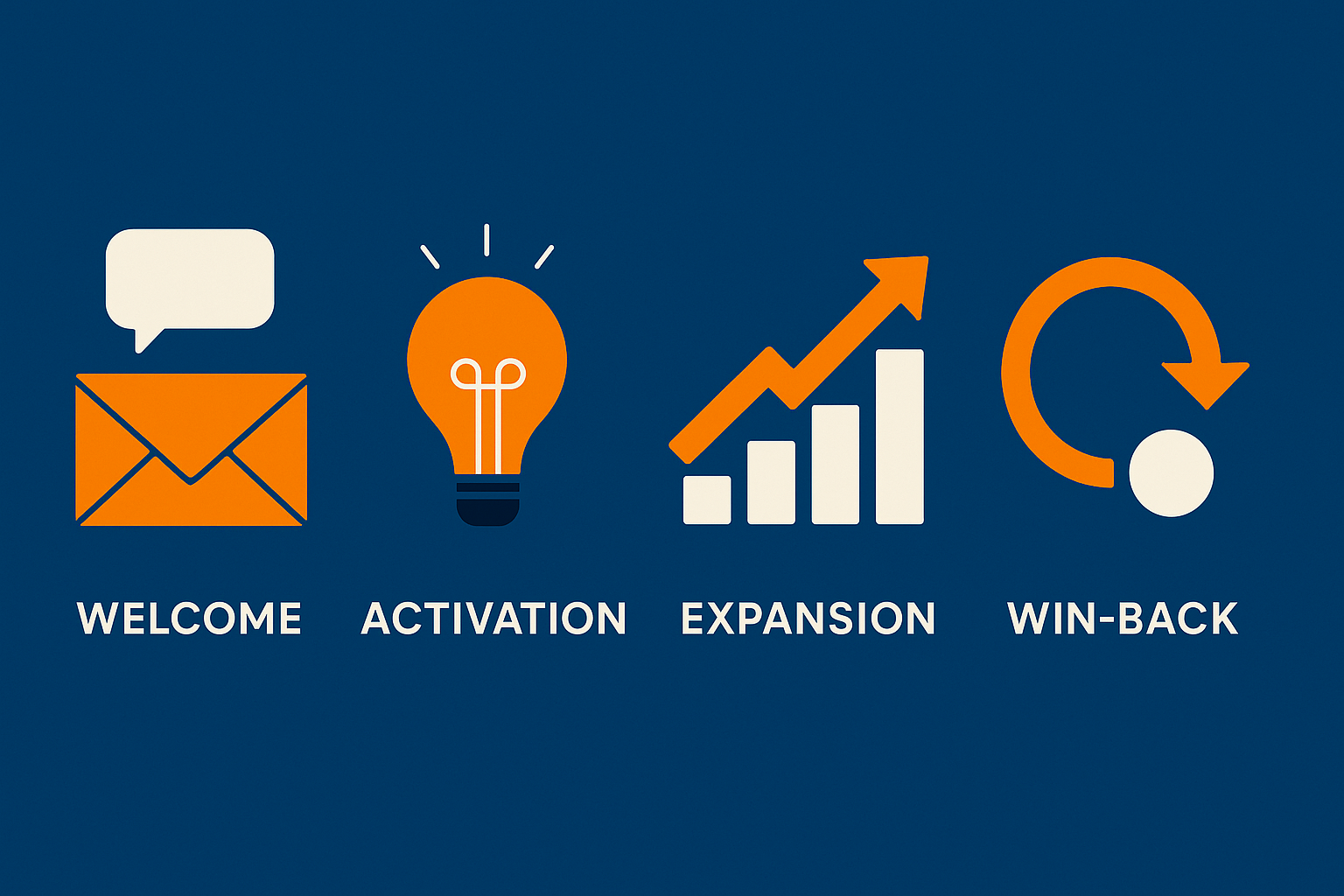
In high-growth companies, marketing teams often obsess over acquisition while underestimating the compounding effect of customer lifecycle design. A prospect who converts once can generate far more value if guided through carefully orchestrated touchpoints — from onboarding to expansion to reactivation. Lifecycle blueprints are not campaigns; they are living systems that align brand, product, and revenue around predictable stages of customer behavior.
Why Lifecycle Thinking Matters
Acquisition costs are rising, targeting is fragmented, and attention spans are shrinking. Brands that fail to maximize the lifetime value of existing customers inevitably overspend on new leads. Lifecycle blueprints address this imbalance by shifting focus from “front door marketing” to long-term engagement. The result is more stable revenue and a deeper moat against competitors.
Stage 1: Welcome
The welcome phase sets the tone for the relationship. It’s not about bombarding new customers with features but about clarifying value. A strong welcome sequence:
- Reinforces the brand promise.
- Onboards with minimal friction.
- Encourages first meaningful use.
The KPI here isn’t email open rates — it’s time-to-value.
Stage 2: Activation
Activation bridges intent and habit. This is where customers decide whether they’ll truly adopt your product or service. Effective tactics include:
- Personalized nudges based on behavior.
- Social proof and community validation.
- Tiered rewards for early milestones.
The key metric? Activation rate — the percentage of new customers who achieve a defined success action.
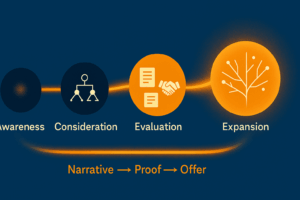
Stage 3: Expansion
Once trust is built, expansion begins. This stage is where cross-sells, upsells, and adjacent offerings feel like a natural extension of the customer journey. The blueprint here emphasizes:
- Data-driven segmentation (who’s ready to expand, and when).
- Value framing (showing benefits, not features).
- Timing (introducing new offers at the moment of peak engagement).
Metrics shift toward average revenue per customer and share of wallet.
Stage 4: Win-Back
Churn is inevitable — but abandonment is not permanent. A structured win-back strategy differentiates between customers who are dormant versus those who are lost for good.
- Use behavior-triggered campaigns for dormant users.
- Frame return offers as value refreshers, not discounts.
- Showcase product evolution since they left.
The focus is not on volume but on recovered value.
Putting It All Together
A lifecycle blueprint is most powerful when automated but never generic. Each stage should adapt dynamically to customer signals. For example, a SaaS company may combine in-app triggers with lifecycle emails, while a service brand might use account managers and automated check-ins. The unifying factor is orchestration across teams — marketing, sales, product, and customer success working from the same playbook.

Add comment