
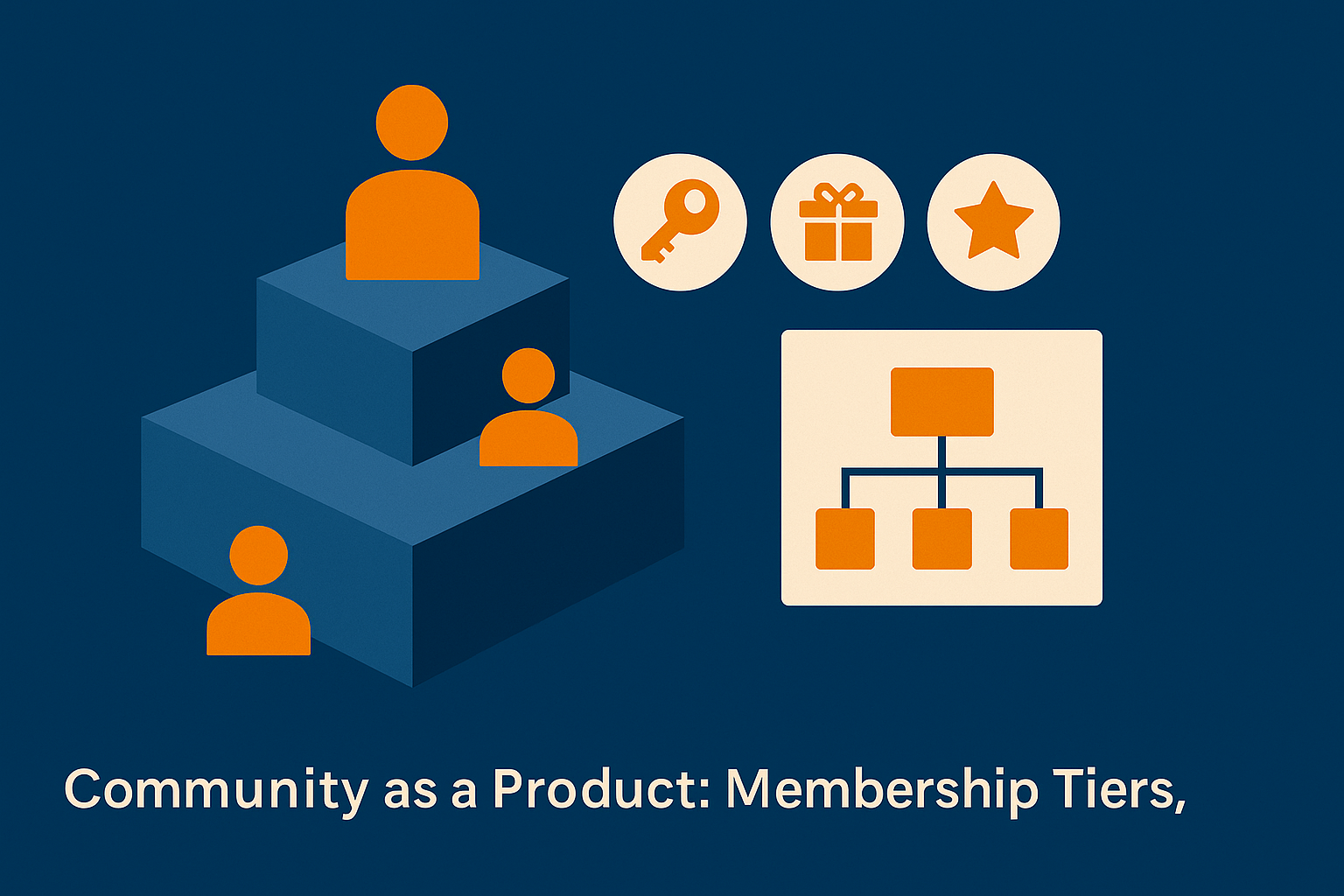
In the last decade, many brands have added “community” as an afterthought: a Slack group, a Discord server, or a Facebook page to host conversations. But communities that truly drive growth don’t live in the shadows of marketing—they are designed, managed, and scaled as products in their own right.
Thinking of community as a product reframes the role it plays. A product has features, pricing, governance, and a roadmap. A strong community should too. This mindset allows brands to design communities that create real value for members and sustainable impact for the business.
Why Treat Community Like a Product?
- Clarity of Value
Just as products need a clear value proposition, communities must define why members join, stay, and contribute. - Sustainable Growth
Product thinking brings discipline: segmentation, feedback loops, and iteration, avoiding the “ghost town” problem. - Revenue Alignment
Membership tiers and perks allow communities to become direct revenue streams instead of cost centers.
Membership Tiers: Creating Layers of Value
Communities thrive when they balance accessibility with exclusivity. One-size-fits-all spaces often collapse under uneven engagement. Tiers create clear expectations.
- Free/Open Tier
- Low barrier to entry.
- Purpose: awareness, funnel growth, and engagement at scale.
- Features: access to public forums, newsletters, or light networking.
- Core/Contributing Tier
- Requires sign-up, small fee, or participation commitment.
- Purpose: deeper discussion and peer-to-peer support.
- Features: expert AMAs, templates, curated events.
- Premium/Executive Tier
- High-ticket membership or invite-only.
- Purpose: elite networking, mentorship, influence.
- Features: private retreats, advisory boards, governance roles.
By structuring communities like products, brands can balance inclusivity with focus and provide differentiated value.
Perks: The Currency of Community
Perks aren’t just giveaways; they are the core features of the community. They should map directly to the motivations of members:
- Access perks: exclusive events, early product betas, insider content.
- Status perks: visible recognition, badges, moderator privileges.
- Utility perks: templates, discounts, tools that save time or money.
- Impact perks: opportunities to co-create, vote, or contribute to thought leadership.
A strong perk system makes the community sticky. Members don’t just show up for conversation; they stay for enduring value.
Governance: Building Trust Through Structure
No product survives without rules, and neither do communities. Governance ensures fairness, safety, and alignment.
- Clear guidelines: Define what behaviors are encouraged and what’s off-limits.
- Moderation models: Decide between centralized moderation, community-led councils, or hybrid approaches.
- Transparency: Publish decision-making processes, from who gets promoted to how funds are used.
- Feedback loops: Mechanisms for members to shape the roadmap.
Governance is often the missing ingredient. Without it, communities drift, lose credibility, or collapse under conflict. With it, they compound trust and become self-sustaining.
Case Example
A design SaaS platform launched a free Slack channel that quickly grew to 20,000 members but became noisy and unmanageable. By restructuring it into tiers—open forums for anyone, paid cohorts for working sessions, and an invite-only executive council—they regained focus. Governance councils decided event topics and membership policies. Engagement increased, churn decreased, and the community became a six-figure revenue line.
Final Thought
Community is no longer just a marketing add-on. When designed as a product, with clear tiers, meaningful perks, and strong governance, it becomes a moat. Members don’t just consume content—they co-own the experience.
The strongest communities aren’t just audiences; they are ecosystems that scale brand trust and unlock collective growth.




Add comment