

Retargeting is one of the most powerful tools in performance marketing. Few tactics can match its ability to re-engage warm audiences and convert intent into revenue. But when abused, retargeting quickly becomes the villain: annoying, creepy, and wasteful.
The challenge is simple: how do you maximize retargeting performance without alienating users? The answer lies in applying discipline around three levers — frequency, sequencing, and caps.
Why Respect Matters in Retargeting
Users today are not passive. They recognize retargeting, and when it’s done poorly, they punish brands with ad fatigue, negative brand perception, and even ad blocking.
Respectful retargeting is not just an ethical stance — it’s a performance strategy. By controlling exposure and delivering value at the right moment, you extend the lifespan of your audiences and maintain efficiency.
Lever 1: Frequency
Frequency = how many times a user sees your ad within a given period.
- Too low: users forget you.
- Too high: users get annoyed, tune out, and your CPM rises with no lift in conversions.
Best practices:
- Start with caps of 2–3 impressions per user per day.
- Monitor CTR decay: if CTR drops >50% after 4 exposures, scale back.
- Segment by funnel stage: top-funnel audiences can tolerate slightly more; bottom-funnel needs fewer but higher-quality touches.
Lever 2: Sequencing
Sequencing = the order in which a user sees different creatives.
Instead of blasting the same ad repeatedly, retargeting should tell a story:
- Ad 1: Reminder / Soft touch
– Acknowledge prior interaction (visited site, added to cart). - Ad 2: Proof / Social validation
– Reviews, testimonials, or UGC to build trust. - Ad 3: Offer / Urgency
– Limited-time discount, bundle, or shipping offer.
Sequenced retargeting respects user attention and keeps the narrative fresh.
Lever 3: Caps
Caps = the maximum exposure allowed over a defined period (e.g., week or month).
- Weekly caps: Prevent short-term overexposure.
- Lifetime caps: Avoid showing ads indefinitely to non-converting users.
- Channel-specific caps: Coordinate between platforms (Meta, Google, programmatic) so users aren’t hit 20 times a day across silos.
Pro tip: Treat caps as part of brand safety. No user should see 50+ ads from you in a month, even if platform algorithms try to push it.
Operationalizing Respectful Retargeting
- Centralize audience management: Use tools like CDPs or marketing hubs to coordinate caps across platforms.
- Test creative refresh cycles: Swap in new creatives every 2–3 weeks to fight fatigue.
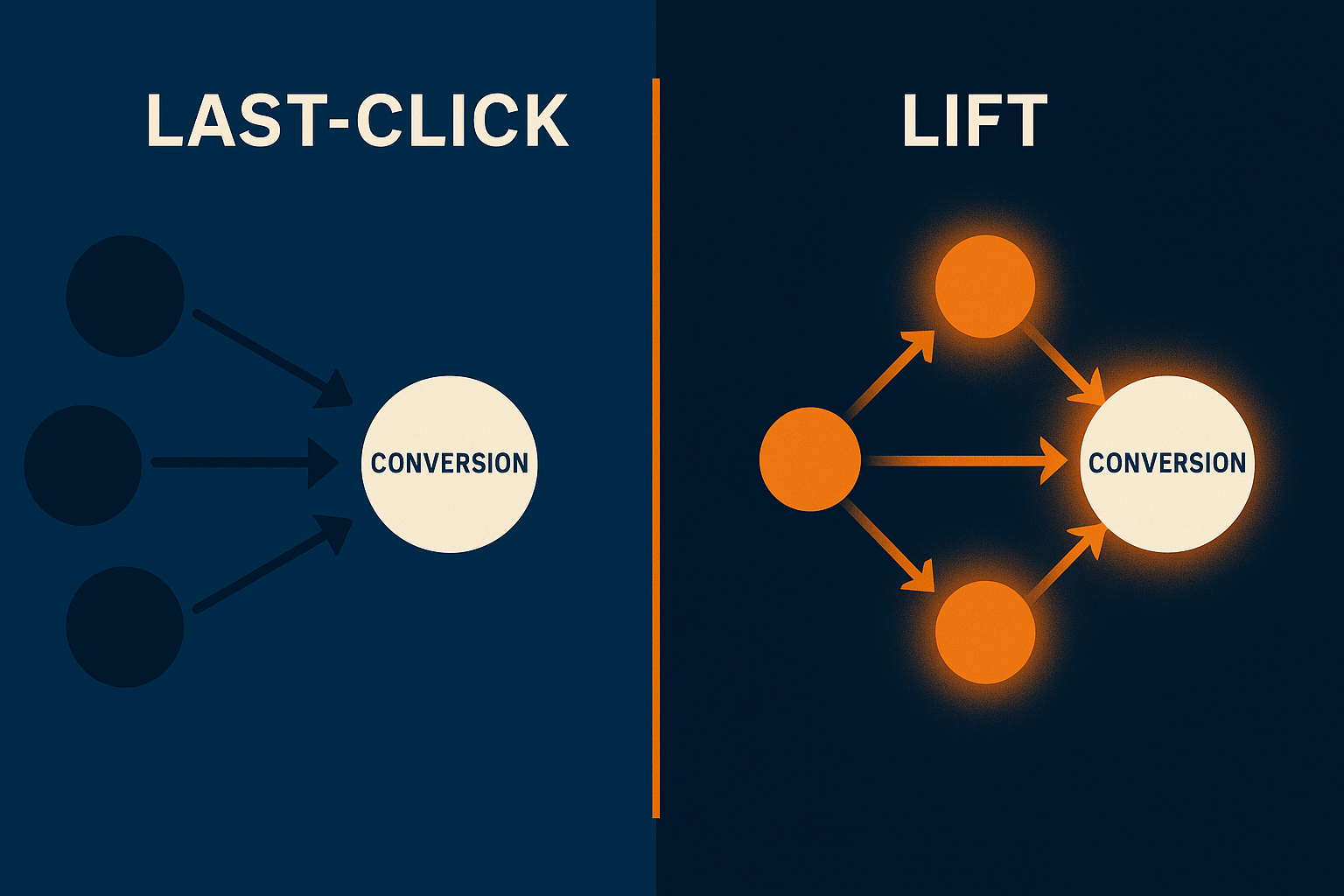
- Measure efficiency by incremental lift, not just CTR. Retargeting often cannibalizes organic conversions — use holdout groups to measure true impact.
Case Example
A mid-market e-commerce brand noticed retargeting ROAS declining despite increased spend. Analysis showed frequency averaging 9 impressions per day, with most conversions happening after just 2 exposures.
By lowering daily caps to 3, introducing sequenced creatives, and applying a 30-day lifetime cap, the brand cut wasted impressions by 40% and lifted incremental ROAS by 25%.
Final Thought
Retargeting is not about hammering users until they break. It’s about nudging them along a journey with respect.
When marketers apply discipline through frequency, sequencing, and caps, they don’t just protect brand perception — they also unlock sustainable performance.
The respectful approach is the profitable one.




Add comment