
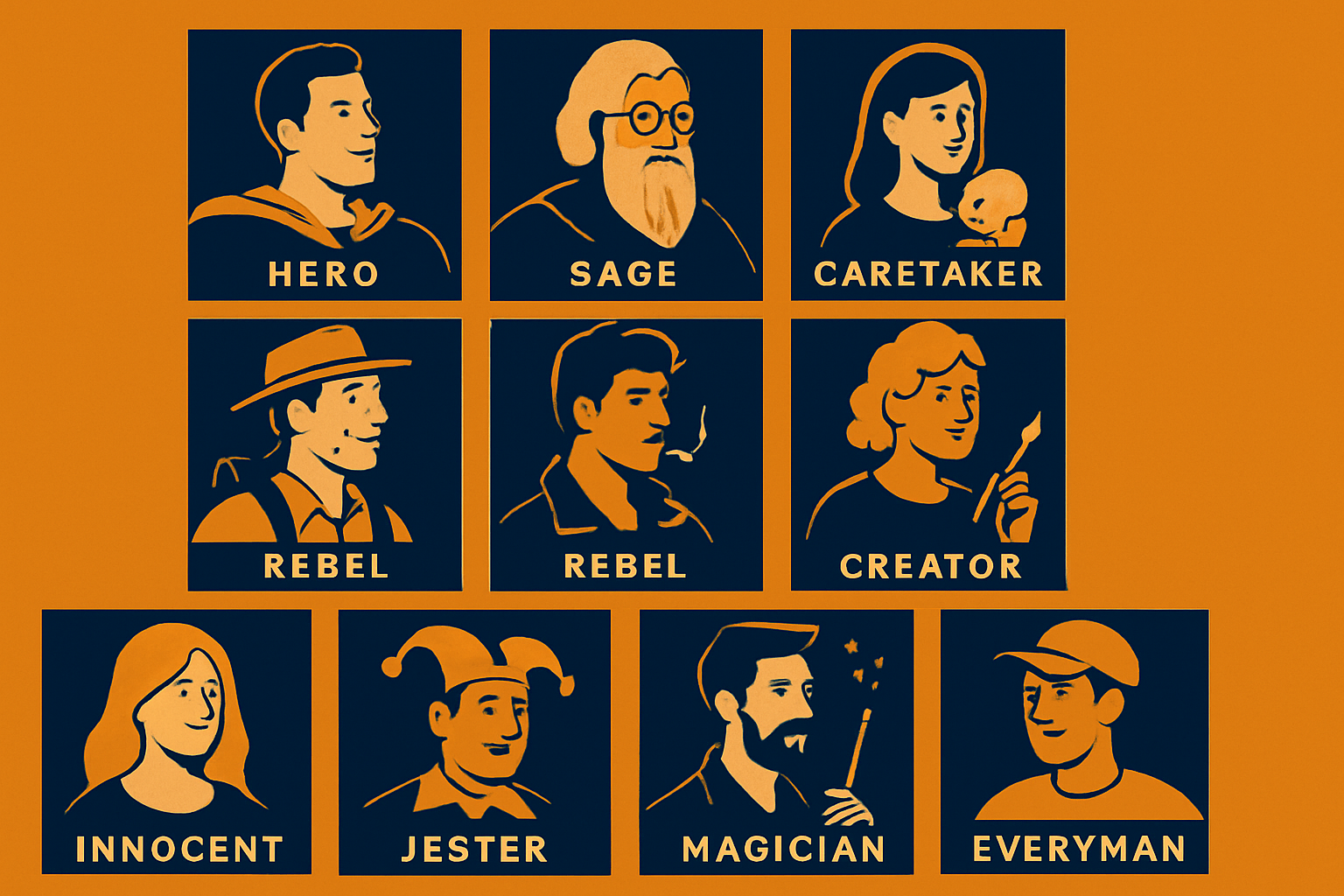
Marketers love archetypes. Hero, Rebel, Sage, Creator — they look great on slides and add drama to brand workshops. But too often, archetypes get reduced to aesthetics: a color palette here, a tone of voice there, a clever campaign tagline. The result? Beautiful brand books that never translate into sales.
Archetypes are not costumes; they are strategic levers. When properly applied, they inform positioning, shape offers, and drive purchasing decisions. The brands that actually sell through archetypes aren’t the ones who use them as storytelling fluff — they’re the ones who operationalize them as part of their go-to-market system.
Why Archetypes Matter in Commerce
Archetypes are powerful because they tap into universal human psychology. They frame not just how a brand looks, but what role it plays in the buyer’s story. Buyers don’t want a product; they want a guide, an ally, a tool for their own transformation. Archetypes tell them what kind of relationship to expect.
- The Caregiver signals reliability and security (insurance, healthcare, education).
- The Explorer signals freedom and discovery (travel, outdoor gear, mobility apps).
- The Magician signals transformation (beauty, wellness, SaaS automation).
When archetypes are activated properly, they don’t just resonate emotionally — they reduce friction in the buying decision by clarifying what the brand promises.
The Trap of Aesthetic Archetyping
Most companies stop at surface expression:
- The Rebel gets edgy fonts.
- The Hero gets bold colors.
- The Sage gets quotes from thought leaders.
This is branding theater. It doesn’t shape pricing, product design, or sales strategy. Buyers see through the mismatch when the message doesn’t align with the experience.
Archetypes That Drive Sales
To make archetypes commercially powerful, you need to translate them into behavioral drivers:
1. Archetype → Positioning
The Rebel doesn’t just look rebellious; they price disruptively, challenge industry norms, and frame competitors as outdated.
2. Archetype → Offer Design
The Caregiver can productize security (warranties, guarantees, 24/7 support) that reduce perceived risk.
3. Archetype → Customer Journey
The Explorer builds campaigns that emphasize trial, variety, and optionality — lowering friction for those who fear getting “trapped.”
4. Archetype → Sales Playbooks
The Sage arms sales teams with whitepapers, frameworks, and authority-building tools, positioning expertise as the product itself.
Operationalizing Archetypes in Daily Business
- Codify the Promise: What transformation does the archetype represent for the buyer?
- Map the Levers: How does this influence product, pricing, messaging, and channels?
- Audit Consistency: Does every touchpoint — from onboarding emails to invoices — reflect the archetype’s logic?
- Train Teams: Archetypes aren’t just for marketing; sales, ops, and service teams must embody them.
Examples in Practice
- Harley-Davidson (Rebel): Doesn’t just look rebellious; it structures its community and ownership experience around rejecting conformity.
- Apple (Creator/Magician blend): Offers aren’t cheaper or faster; they embody the idea of unleashing creativity and transformation.
- Airbnb (Explorer): Experience design, from product search to local hosts, reinforces discovery and belonging.
These brands don’t wear archetypes as costumes — they live them in commerce.
Final Thought
Archetypes are not theater. They are operating logic. Used well, they guide offers, pricing, campaigns, and customer experiences that actually sell.
If your archetype only shapes your logo and Instagram captions, it’s a missed opportunity. But if it shapes how you package, price, and deliver, it stops being aesthetic — and starts being strategic.






Add comment