

Taking your business global is one of the most exciting milestones for any company. However, the transition from a local player to an international brand is fraught with operational and marketing challenges. Simply running your website content through a machine translator and launching targeted ads is a surefire way to burn your marketing budget.
True global expansion requires localization—the comprehensive process of adapting your entire digital presence to resonate culturally, technically, and functionally with a new target audience.
Before you flip the switch on your international campaigns, run your website through this ultimate readiness checklist to ensure a seamless user journey and maximum conversion rates.
1. Technical Infrastructure & SEO Readiness
Your website’s architecture must be built to handle international traffic while signaling to search engines exactly which version of your site to show to specific regions.
- Optimized URL Structure: Have you decided between Country Code Top-Level Domains (ccTLDs like
.fr,.de), subdomains (fr.yoursite.com), or subdirectories (yoursite.com/fr/)? Subdirectories are often the most effective for consolidating SEO authority. - Flawless Hreflang Implementation: Are your
hreflangtags correctly implemented? These HTML attributes are crucial. They tell Google which language and regional version of a page to serve to a user, preventing duplicate content penalties and ensuring relevant search results. - Server Location and CDNs: Is your site loading fast globally? If your server is in the US, a user in Europe might experience high bounce-inducing latency. Implement a Content Delivery Network (CDN) to ensure lightning-fast load times worldwide.
2. Linguistic & Cultural Adaptation
Translation replaces words; localization translates meaning, context, and emotion. Your messaging needs to hit the right psychological triggers in every region.
- Beyond Literal Translation: Have native-speaking professionals reviewed your copy? Idioms, marketing slogans, and calls to action (CTAs) rarely translate word-for-word. What sounds persuasive in English might sound aggressive or nonsensical in another language.
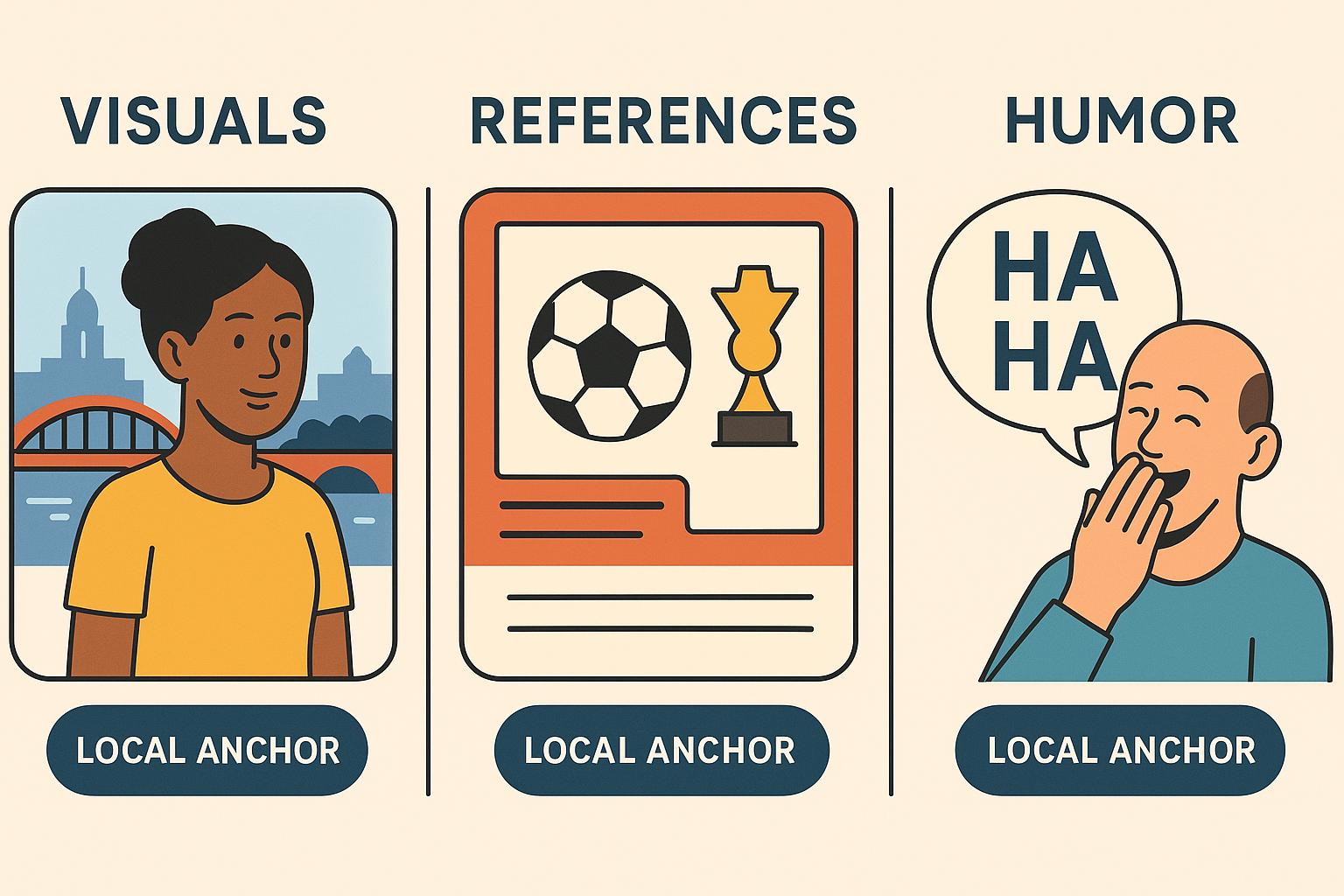
- Cultural Nuances and Visual Assets: Are your images, colors, and icons culturally appropriate? For example, the color red signifies danger or debt in some Western cultures, but represents luck and prosperity in many Asian markets. Ensure your visuals reflect the local demographics and cultural norms.
- Adapted Tone of Voice: Does your brand voice align with local expectations? Some cultures expect highly formal corporate communication, while others respond better to a casual, conversational tone.
3. UX/UI and Formatting Considerations
Your design needs to be flexible enough to accommodate different linguistic structures and formatting standards without breaking the user interface.
- Text Expansion and Contraction: Is your UI elastic? Translating from English to German can result in text expanding by up to 30%, which can easily break your buttons, menus, and layout. Conversely, translating to Asian languages might shrink the text, leaving awkward white spaces.
- Right-to-Left (RTL) Support: If you are entering Middle Eastern markets (e.g., Arabic, Hebrew), is your website architecture capable of flipping the layout to support RTL reading?
- Local Formatting Standards: Have you localized the «boring» details? Ensure that dates (MM/DD/YYYY vs. DD/MM/YYYY), times (12-hour vs. 24-hour clock), weights, measures, and phone number formats match local standards.
4. E-commerce and Conversion Optimization
If you are selling directly through your website, the checkout process must feel entirely native to the foreign buyer.
- Local Currencies and Pricing Strategies: Are prices displayed in the local currency? Don’t force users to calculate exchange rates mentally. Furthermore, research local purchasing power to ensure your pricing strategy is competitive in that specific region.
- Preferred Payment Gateways: Do you offer the payment methods your new customers actually use? While credit cards are king in the US, direct bank transfers (like iDEAL in the Netherlands) or digital wallets (like WeChat Pay in China) dominate other markets. A lack of preferred payment options is a leading cause of cart abandonment.
5. Legal and Compliance Requirements
Operating internationally means navigating a complex web of local regulations. Non-compliance can lead to severe fines and a loss of brand trust.
- Data Privacy Laws: Is your site compliant with regional data protection regulations like the GDPR in Europe or the CCPA in California? Your cookie banners and data collection forms must be updated accordingly.
- Terms of Service and Policies: Have your legal documents (Terms and Conditions, Return Policies, Privacy Policies) been reviewed and adapted to align with local consumer protection laws?
The Bottom Line
Entering a new market is a test of your company’s operational maturity. A fully localized website is not just a «nice-to-have»—it is the foundation of your international growth strategy. By rigorously checking these technical, cultural, and functional elements, you ensure that your brand speaks to your new audience with confidence and clarity.






Add comment