
Big-budget roadshows are nice. But small teams win field marketing by curating rooms, not renting rooms. Executive dinners, practitioner roundtables, and community meetups can outperform trade shows on pipeline—if you design them like products: one job, tight ICP, and ruthless before–during–after discipline. Here’s the SpectrumMediaLabs playbook to run high-signal offline/virtual-offline events with lean crews and real revenue impact.
Why small-format field events work
- High intent: self-selected peers show up to solve specific problems.
- Trust by osmosis: prospects borrow credibility from customers and partners at the table.
- Shorter cycles: live conversations collapse weeks of email into one hour.
- Content flywheel: you leave with FAQs, objections, and (with permission) quotes.
One rule: each event must have a single commercial job—net-new pipeline, deal acceleration, or expansion. Everything else is bonus.
Pick the right format for the job
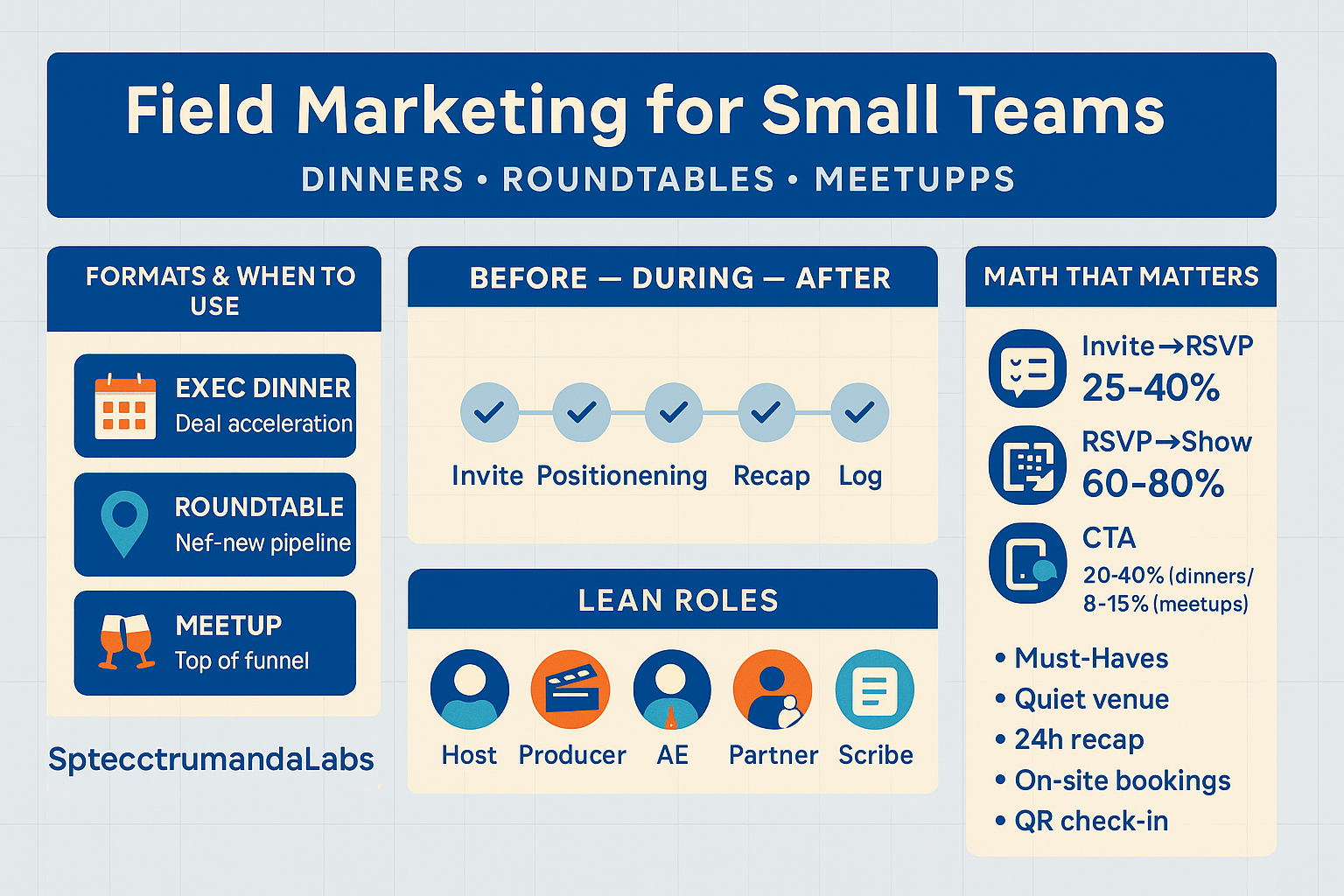
Executive dinner (10–14 people, 2 hours)
- Best for: deal acceleration, late-stage validation, expansion.
- Promise: candid benchmarks with peers + one tactical takeaway.
- No slides. Hosted conversation, two short prompts, curated seating.
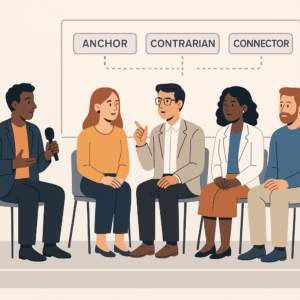
Practitioner roundtable (6–10 people, 75–90 minutes, in-person or virtual-in-person)
- Best for: net-new pipeline in precise ICP; product feedback.
- Promise: swap playbooks + hands-on teardown of one problem.
- Artifacts: shared doc/board you can send same day.
Community meetup (30–80 people, 90–120 minutes)
- Best for: top-of-funnel lift and recruiting champions.
- Promise: 2–3 lightning talks, one live demo, one workshop station.
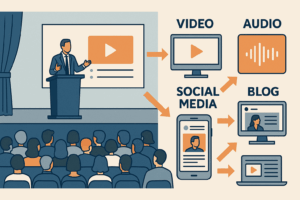
- Capture: film talks; publish a recap with timestamps.
Capacity math (realistic targets)
Use these baselines to back-solve invites and budget.
- Invite→RSVP: 25–40% when curated and personalized.
- RSVP→Show: 60–80% with calendar + SMS reminders.
- Attendee→Primary CTA (booked diagnostic within 7 days): 20–40% for dinners/roundtables; 8–15% for meetups.
- CTA→Qualified Opportunity: 40–60% (ICP gated).
Example (dinner): Need 8 attendees. Invite 25 ICP contacts → 8–10 RSVPs → 6–8 show. Expect 2–3 meetings booked on-site, 2–3 within a week.
Roles (lean crew) & RACI
- Host (A/R): opens, sets tone, steers conversation, does intros.
- Producer (R): venue, RSVPs, seating, check-in, photos/consent, bill.
- AE(s) (R): table notes, booking next steps, follow-ups.
- Partner/CX guest (C): social proof; 5-min story.
- Scribe (R, can be AE): action items + recap draft same night.
SLA: Every attendee leaves with one next step and receives a recap within 24 hours.
Before–During–After: the operating system
BEFORE (T-21 → T-1)
ICP & list build
- 30–60 named contacts across 15–25 ICP accounts. Prioritize active intent, open opps, or expansion targets.
Positioning
- Outcome for audience—mechanism.
“Cut short-form edit time by 30%: dinner + teardown with media ops leads.”
Invite sequence (plain text, from the host)
- T-14: Personal invite (“we have 12 seats”), outcome, who’s coming, zero-pitch rule.
- T-10: Soft nudge + ask for dietary needs.
- T-7: Finalize seating; send calendar hold.
- T-2: Logistics SMS/WhatsApp with venue map; ask for one question they want answered.
Venue & table design
- Private room or quiet section; 1 table for 8–12.
- Place cards grouped by role/company stage to encourage cross-pollination.
- No deck. One A4 prompt sheet at each setting.
Compliance & consent
- Confirm gifting limits; per-person cap logged.
- Ask consent before photos; record only ambient/at-table (no stealth snaps).
DURING (Day 0)
Run-of-show (dinner, 120 minutes)
- 00:00–00:10 Arrival & intros (first names, role, 7-word “what you’re solving”).
- 00:10–00:20 Host framing (problem flip + ground rules: candor, brevity, no pitching).
- 00:20–00:50 Prompt 1: “Where does your production pipeline actually jam?” (go around, 60s each).
- 00:50–01:10 Interlude (orders, sidebar connects).
- 01:10–01:40 Prompt 2: “Show one screen/process that saved you the most time.” (live teardown if possible).
- 01:40–01:55 Offers & next steps (two specific options; QR codes on table).
- 01:55–02:00 Close & thanks (group photo if consented).
Host tactics
- Keep contributions <60s; invite quieter voices first.
- Redirect pitches: “Let’s park vendor details—what changed your process?”
- Book two diagnostics on the spot, not later.
AFTER (T+1 → T+14)
Within 24 hours
- Send recap with 5 bullets (themes), anonymized benchmarks, links, and the one CTA they picked.
- Introduce guests who asked to connect (double opt-in).
- Log notes to CRM with
Campaign: SML Field – City – YYYY-MM.
Within 7 days
- Hold scheduled diagnostics; attach outcomes to opps.
- Publish a sanitized “What we learned” post (no names; all value).
- For meetups: release clipped talks (90–180s each) with captions.
Within 14 days
- Close the loop: what pipeline moved, what to repeat/change (venue, prompt, mix).
Tooling that keeps it simple
- Guest list & comms: Airtable/Notion + templates; pipeline tags synced to CRM.
- RSVP & reminders: Calendly (group event) or Tally + Zapier; ICS + SMS.
- Check-in: QR to a short form (
Attended? y/n,Next step, notes). - Booking links: vanity URLs/QRs per AE (attribute meetings cleanly).
- Content capture: phone lav mics + tripod for meetups; consent form via QR.
Partner leverage (pipeline multiplier)
- Co-host with a complementary vendor or customer with genuine story.
- Split the room: each partner brings 6–8 seats from must-win accounts; alternate intros.
- Shared offer: joint diagnostic or integration check.
- Measure: sourced meetings per partner, influenced opps, win rate; send a one-page report to partners within a week.
Budget: where to splurge vs save
Splurge
- Quiet, controllable venue; private room.
- Good food (felt quality) and enough staff.
- Host/moderator who can actually facilitate.
- Captioning/AV for meetups; a real mic matters.
Save
- Swag (rarely drives outcomes).
- Fancy signage; one tasteful table placard is enough.
- Big bar tabs; cap politely and focus on conversation.
Dinner unit economics (example)
- Venue/food: $1,500 • Misc/fees: $300 • Total: $1,800
- 8 attendees → 3 diagnostics booked → 1.5 qualified opps avg → if ACV $25k and 25% win → $9.4k expected revenue → ROI ~5× (before expansion/brand effects).
Content & prompts (steal these)
Executive dinner prompts
- “What step in your creative pipeline creates the most waste—and how did you cut it by 10%?”
- “Show a ‘receipt’ (screenshot/process) that moved a KPI.”
- “If you had 10% more budget, where would you not spend it?”
Roundtable agenda (75 minutes)
- 0–5: Outcome + rules
- 5–25: Lightning shares (3×5 min, timeboxed)
- 25–55: Group teardown (one artifact)
- 55–70: Offers & commitments
- 70–75: Close + photo/next date
Meetup format (90 minutes)
- 0–5: Welcome + safety/consent
- 5–35: Lightning talks (3×10 min)
- 35–55: Live demo/mini-workshop (hands-on)
- 55–90: Open networking with two conversation stations (prompts on cards)
Templates (copy/paste)
Invite (plain text, dinner)
Subject: 12-seat dinner on cutting creative cycle time (Thu 7pm)
Hi [Name] — we’re hosting a small, off-the-record dinner for media ops leads in [City] on [Date].
Goal: swap the one process change that saved you the most time in 2025 (no slides, no pitches).
Guests include [2 roles/companies]. We have 12 seats; dietary ok.
Interested? I’ll send details and a calendar hold.
—[Host], SpectrumMediaLabs
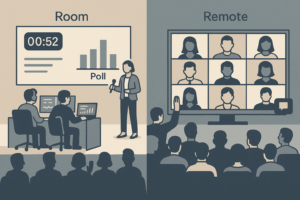
Run-of-show (roundtable, virtual or in-person)
T-10  Arrivals / tech check
T+00  Host sets outcome + rules (no pitches; 60s turns)
T+05  Three lightning shares (pre-picked)
T+25  Group teardown of one artifact (Miro doc open)
T+55  Offers (audit, trial, template) + book slots
T+70  Close; share recap doc link
Recap (attendees)
Thanks for joining last night. Here are the 5 themes we heard:
- … 2) … 3) … 4) … 5) …
Your next step: [Booked for DATE / Pick a slot here].
Resources: [template] [case clip].
We’ll connect you with [Name] (per your OK). Photos attached (consented only).
Seating chart (CSV)
seat,name,company,role,goal,host-notes
1,A. Kim,Acme,Head of Content,Short-form scale,Pair with B2
...
Metrics that matter
- Leading: RSVP count, show rate, % ICP, notes completeness, on-site bookings.
- Lagging (14–45 days): meetings kept, qualified opps, stage velocity vs non-event opps, win rate, ACV, expansion.
- Quality: NPS/CSAT of attendees (1-question pulse), repeat attendance %, partner sourced/assisted.
Keeper rule: if on-site bookings <20% or show rate <60%, fix invite quality, venue control, or offer clarity before scaling.
30/60/90 rollout for SpectrumMediaLabs
Days 1–30 — Pilot
- Pick one city and one ICP slice.
- Schedule one dinner (10–12 seats) and one roundtable (6–8).
- Build invite list, templates, run-of-show, and recap machine.
- Define targets (show ≥70%, on-site bookings ≥25%).
Days 31–60 — Systemize
- Add a partner co-host.
- Stand up Airtable + CRM sync; QR check-in; per-AE booking links.
- Create a prompt library and a recap blog format.
Days 61–90 — Scale
- Add a meetup (30–60 ppl) with two lightning talks; film and caption.
- Publish a quarterly “playbook” from themes; schedule a 3-city cadence.
- Track full-funnel ROI; tune budget (splurge on venue/control, save on swag).
Bottom line
Small teams don’t need expo halls—they need curated rooms with a job. Pick the right format, over-prepare the invite list, host with intention, and treat follow-up like an SLA. Do that, and dinners, roundtables, and meetups become a compounding channel: warmer conversations, faster deals, and a community that keeps showing up.
Add comment