
Introduction
Attribution fuels trust between you and your partners—and trust fuels revenue. But most programs either give away credit too easily (inflated numbers, angry finance) or make it so bureaucratic that reps avoid partners to keep deals moving. This guide shows how to design fair partner credit without friction: clear definitions, a shared data model, business‑first credit rules, and lightweight tests to keep everyone honest.
Why Partner Attribution Breaks (and How to Fix It)
Common failure modes:
- Vague definitions: no distinction between sourced and influenced; affiliate vs. ISV vs. reseller treated alike.
- Channel knife fights: paid search, marketplace, and affiliates all claim the same order.
- Manual evidence chasing: reps swap screenshots in Slack; nothing lands in CRM.
- Comp misalignment: sellers lose quota credit if procurement shifts to a marketplace, so they block it.
Fix: define terms, wire IDs end‑to‑end, agree on a credit table, publish dashboards, and run periodic incrementality tests.
Shared Definitions (Put These on a One‑Pager)
- Partner‑sourced: the first qualified intro or meeting came from the partner (valid deal registration).
- Partner‑influenced: the partner’s actions helped advance the deal (co‑sell calls, technical validation, joint offer), but they didn’t originate it.
- Reseller: partner invoices the customer; you invoice the partner.
- Marketplace (procurement): the PO is routed through a marketplace; does not imply sourcing.
- Affiliate: publisher/creator who earns commission via trackable links/codes; subject to last‑click with exclusions.
- ISV integration partner: product interop; may influence via technical fit or shared customers.
Data Model: The Fields That Make Credit Possible
Mirror this schema in PRM ↔ CRM and your BI tool:
Accountpartner_id, partner_type (ISV/reseller/referral/affiliate/marketplace), integration_present (Y/N), region, segment.
Opportunitysource (direct/partner/paid/marketplace), deal_reg_id, partner_sourced (Y/N), influence (Y/N), influencing_partner_ids (array), marketplace (Y/N), reseller (Y/N), private_offer_id, offer_id/listing_id, discount, take_rate, expected_close, product_mix.
Activityjoint_meeting (Y/N), meeting_count, last_joint_step, next_step_date, owner_functions (AE/SE/PartnerAE/CSM).
Click/Attributionutm_source/medium/campaign, SubID1 (partner), SubID2 (content/keyword), click_id, code_used, session_channel.
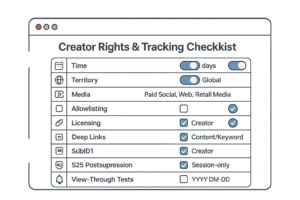
Add a “creditable window” per partner type (e.g., referral 90 days from reg; affiliate session‑only unless content partner).
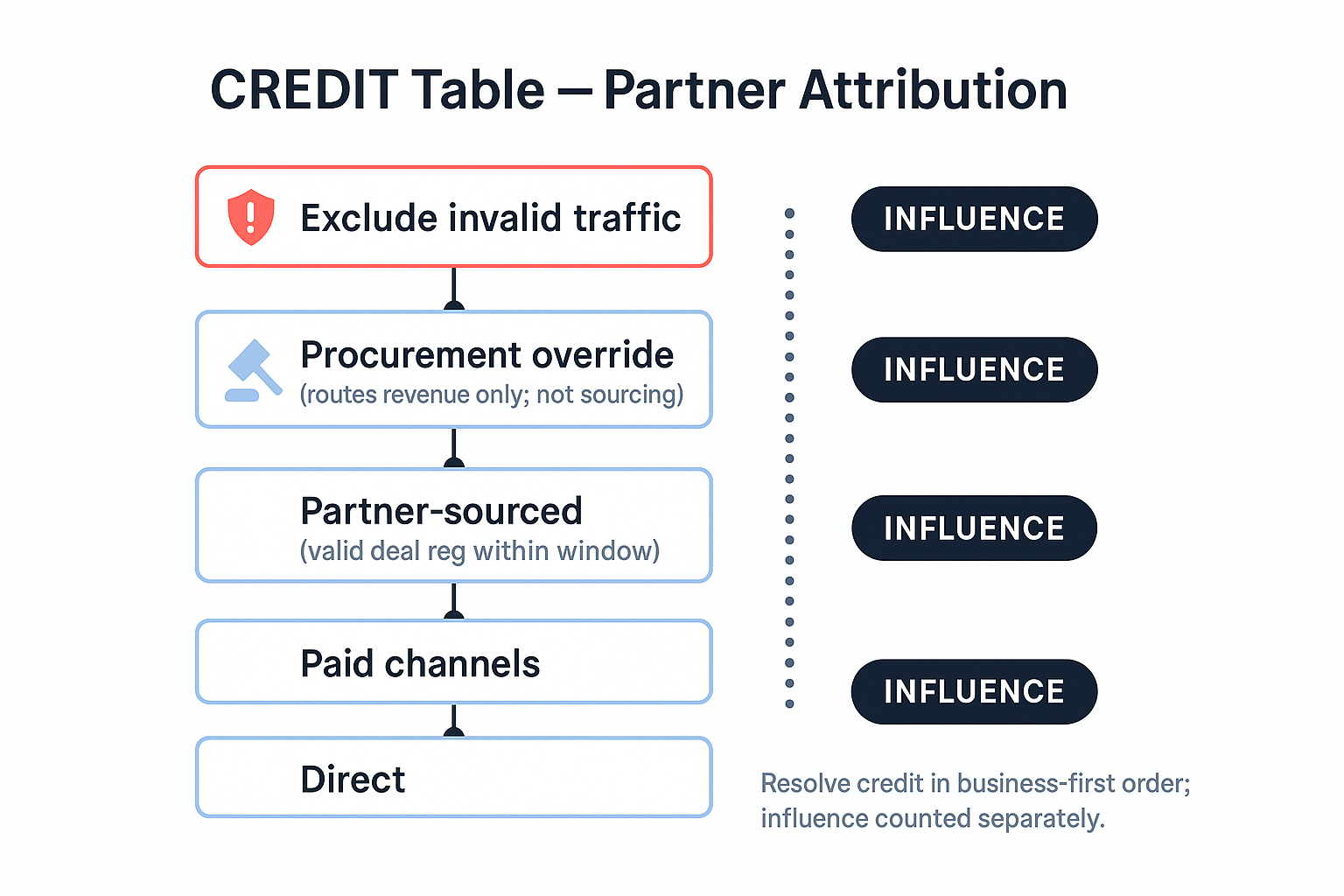
The CREDIT Table (Business‑First Resolution Order)
When multiple channels claim the same deal, resolve credit in this order. Document it and automate in BI.
- Invalid traffic excluded (fraud, forbidden TM+ bidding, toolbars).
- Contracted procurement override (reseller invoice or required marketplace PO) → route revenue correctly but do not imply sourcing.
- Partner‑sourced with valid deal reg (within window, evidence logged).
- Paid channels per your ad model (e.g., last‑non‑direct).
- Direct (inbound/brand, sales outbound).
Influence can be awarded in parallel (binary or points), but sourced remains unique. For affiliates, use last‑click with exclusions: coupon/extension clicks lose to qualifying content/referral clicks in window.
Model Options (Choose One, Then Add Exceptions Carefully)
- Last‑touch with exclusions (recommended base): simple to run, with business rules for partners (deal reg windows, coupon suppression).
- Position‑based (U‑shaped): 40/20/40 across first/middle/last; harder to explain to sales, better when long journeys span multiple partner touches.
- Points model: award points per activity (intro, demo, POC support). Convert to influence credit; keep sourced separate.
Tip: use last‑touch with exclusions for revenue crediting, and maintain a partner influence score for enablement/QBRs.
Examples (Timeline Scenarios)
Scenario A — Referral + Marketplace
Day 0: SI partner registers Acme and books intro (approved).
Day 21: AE runs demo.
Day 45: Buyer requests to purchase via cloud marketplace.
Credit: Partner‑sourced (deal reg); procured via marketplace (finance recognizes take‑rate). AE quota intact.
Scenario B — Paid Search + Affiliate Coupon
Day 0: Prospect clicks your search ad, browses pricing.
Day 1: Prospect googles “Brand coupon,” clicks a coupon site, purchases.
Credit: paid search wins (last‑click with coupon exclusion); affiliate no credit.
Scenario C — ISV Influence
Day 0: Inbound request (direct).
Day 7: ISV partner joins technical workshop, provides sample data and reference.
Day 20: Close.
Credit: Direct sourced, ISV influenced (Y); count in influence dashboards, not sourced revenue.
Compensation & Incentives (Stop the Knife Fights)
- AE quota credit: never penalize AEs for procurement channel (marketplace/reseller). Comp on net revenue after fees; recognize partners separately.
- Partner sourced commission: pay on sourced deals (valid reg + closed‑won).
- Influence spiffs: modest, tied to measurable actions (joint meeting, POC support) to encourage collaboration without overcounting.
- Affiliate commission: pay only on eligible orders; session‑only for coupons; clawback on refunds/chargebacks.
Publish a Comp Matrix in your partner guide with examples.
Reduce Friction with Process, Not Policing
- Deal reg form: 6 fields max (account URL, buyer role, problem, next meeting date, segment, region). Auto‑approve low‑risk segments.
- Evidence upload: email copy or calendar invite satisfies “proof of intro”; no screenshots in DMs.
- API sync: PRM↔CRM; auto‑create opps when reg is approved.
- Fast‑lane SLA: partner‑sourced leads touched in ≤2 business hours.
- Marketplace switch: allow AEs to convert to marketplace PO without losing credit.
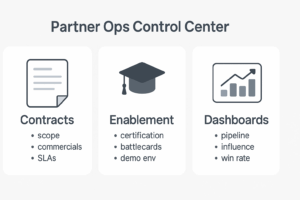
Dashboards You’ll Actually Use
Executive (monthly)
- Partner‑sourced vs influenced pipeline & revenue
- Win‑rate & cycle time delta vs solo deals
- Net revenue after fees/take‑rate (marketplace/reseller)
- Top partners (sourced $) and top influencers (influence score)
Ops (weekly)
- New/expiring deal regs; validity window
- Joint meetings booked; next steps overdue
- Marketplace private offers in flight
- Conflicts resolved by the credit table (count and trend)
Affiliate/Publisher (weekly)
- Eligible vs suppressed orders
- New‑to‑file %, AOV/margin by partner
- Refund/chargeback rate by partner
- Blacklist/violation log
Measuring Incrementality (Separate From Attribution)
Attribution assigns credit; incrementality asks what would have happened otherwise. Run light tests:
- Geo split: enable a partner or marketplace offer in matched regions and compare per‑capita revenue.
- Time‑boxed blackout: pause a top affiliate or newsletter partner for 2 weeks; read deltas vs control.
- PSA swap: replace links with neutral content temporarily to estimate baseline.
- Survey assist: post‑purchase “Which helped you decide?”—weight lightly.
Report a single Incremental Revenue line: tracked partner revenue × incrementality % − fees/take‑rate − spiffs.
Governance & Policy Snippets (Copy/Paste)
- Trademark Bidding: “No bidding on [Brand] or misspellings. Violations void commission for 30 days.”
- Coupon Rules: “Session‑only window; ineligible if another qualifying click exists within 14 days.”
- Deal Reg Validity: “90 days from approval; lapses if no meeting within 21 days.”
- Data Sharing: “Limited to account/opportunity metadata; no resale; comply with DPAs.”
90‑Day Implementation Plan
Weeks 1–2 — Define
Publish definitions and the CREDIT table; update MPA and partner guide.
Map the shared data model; add missing fields in PRM/CRM.
Weeks 3–6 — Wire & Train
Turn on PRM↔CRM sync; create dashboards; launch a 30‑minute attribution training for AEs/partner AEs.
Enable marketplace switch flow and AE quota policy.
Weeks 7–9 — Pilot & Test
Run with 5 partners; track conflict count, win‑rate delta, cycle time.
Start one incrementality test (geo or blackout).
Weeks 10–12 — Rollout
Publish exec readout; adjust rules; expand to all partners; lock quarterly QBR rhythm.
Checklist (Print This)
Conclusion
Fair partner attribution is a system, not a spreadsheet. When you align definitions, wire the data, and resolve credit with business‑first rules—then check reality with simple tests—you replace channel knife fights with momentum. Partners get the credit they deserve; sellers keep moving; finance trusts the numbers.

Add comment