
Introduction
Journalists don’t wake up looking for your brand. They wake up looking for stories that are timely, relevant to their audience, evidence‑backed, and easy to file. The most reliable way to earn that attention is to treat owned and earned as a system, not rivals. Owned channels (your site, blog, product docs, newsletter, social) create proof and clarity. Earned media converts that proof into reach and authority. This article shows how to architect the flow between the two so reporters care—and actually publish.
What Makes a Journalist Care (In One List)
A pitch earns a read when it checks five boxes:
- Timeliness: Why now? Tie to a calendar event, policy shift, trend peak, or exclusive release.
- Relevance: Why their readers? Map your angle to the outlet’s beat and audience stakes.
- Newness: What’s truly new—data, product capability, partnership, or point of view?
- Evidence: Numbers, independent voices, customers on-record, transparent methods.
- Ease: Clean assets, quotes, and links that reduce the work to file.
Owned channels are where you stage 2–5 before you ever email a reporter.
Treat Owned as Your Evidence Lab
Owned content is more than marketing—it’s where you prove the claims your pitch will make.
- Data briefs: Publish short, methodology‑noted charts that quantify a shift. Keep them copy‑pastable and linkable.
- Named customer stories: One paragraph, one number, one quote, one screenshot. If names are embargoed, say so—and explain why.
- Explainer pages: A non‑sales explanation of the tech or process. No adjectives; diagrams beat adjectives.
- Leadership POV: Opinion pieces are stronger when they reference your own data and external sources.
- Newsroom/press page: Logos, bios, factsheet, downloadable assets, and a contact with real availability.
Guardrails: Don’t publish the full scoop before you pitch. Use owned channels to host proof and context, but time the public release to support your embargo plan.
The O→E→O Flywheel (Owned → Earned → Owned)
Think of your program as a flywheel:
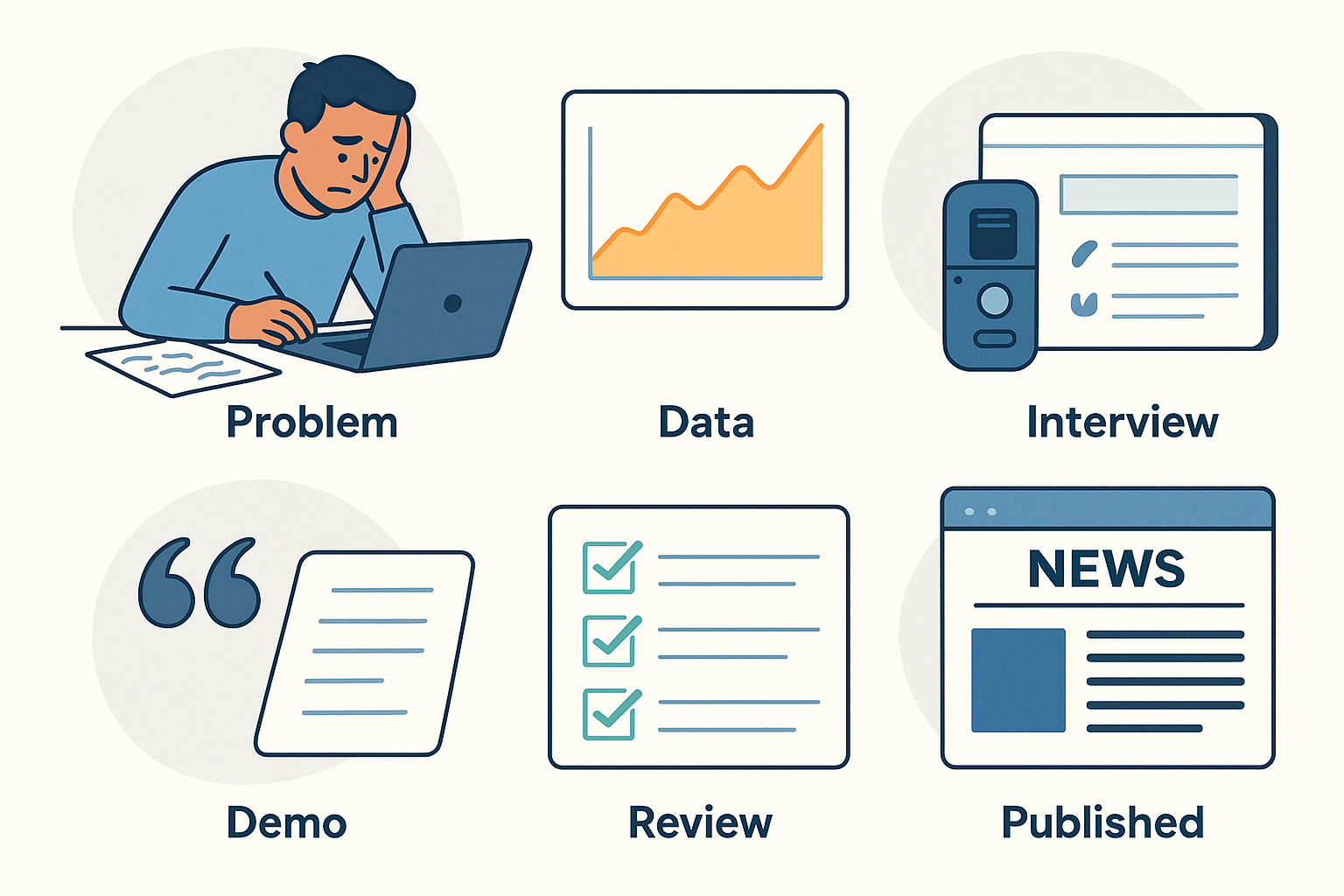
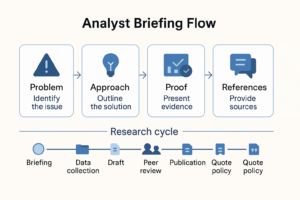
- Hypothesis (Owned planning): What do we believe is changing for our audience? Draft two testable claims.
- Evidence build (Owned): Run a dataset pull, customer interviews, or a pilot result. Package as a 2–3 page brief with charts and a one‑line method note.
- Press‑ready narrative (Bridge): Compress into a headline + nut graf. Pre‑answer tough questions (sample size, confounders, limitations).
- Embargoed outreach (Earned): Offer early access to the brief, a customer interview, and a product sandbox.
- Coverage (Earned): Provide quotes and art that match the outlet’s tone. Be responsive on clarifications within hours.
- Amplify and clarify (Owned): When coverage lands, publish a post that expands the methods, provides full charts, and links to the article.
- Iterate: Watch which angles move fastest and build the next brief accordingly.
This flywheel prevents the common failure mode: a shiny announcement with no proof, or a great dataset buried on your blog that no journalist ever sees.
Choosing the Right Angle by Outlet
One story can carry several angles. Match them to the outlet and beat.
- Business/finance: efficiency, market size, hiring, risk, and ROI.
- Technology/product: architecture, benchmarks, open‑source, or a hard problem solved.
- Consumer: convenience, trust, safety, time saved, or cultural relevance.
- Regional: jobs, local partnerships, or policy effects.
Rewrite example (same news, different angles)
Base fact: You’re launching a fraud‑detection feature.
- Business: “Expense fraud up 38%—mid‑market firms plug the leak in Q4.”
- Tech: “Self‑supervised model spots duplicate receipts with 94% precision on cold starts.”
- Consumer: “Why your reimbursements get faster: the receipts AI that cuts week‑long waits.”
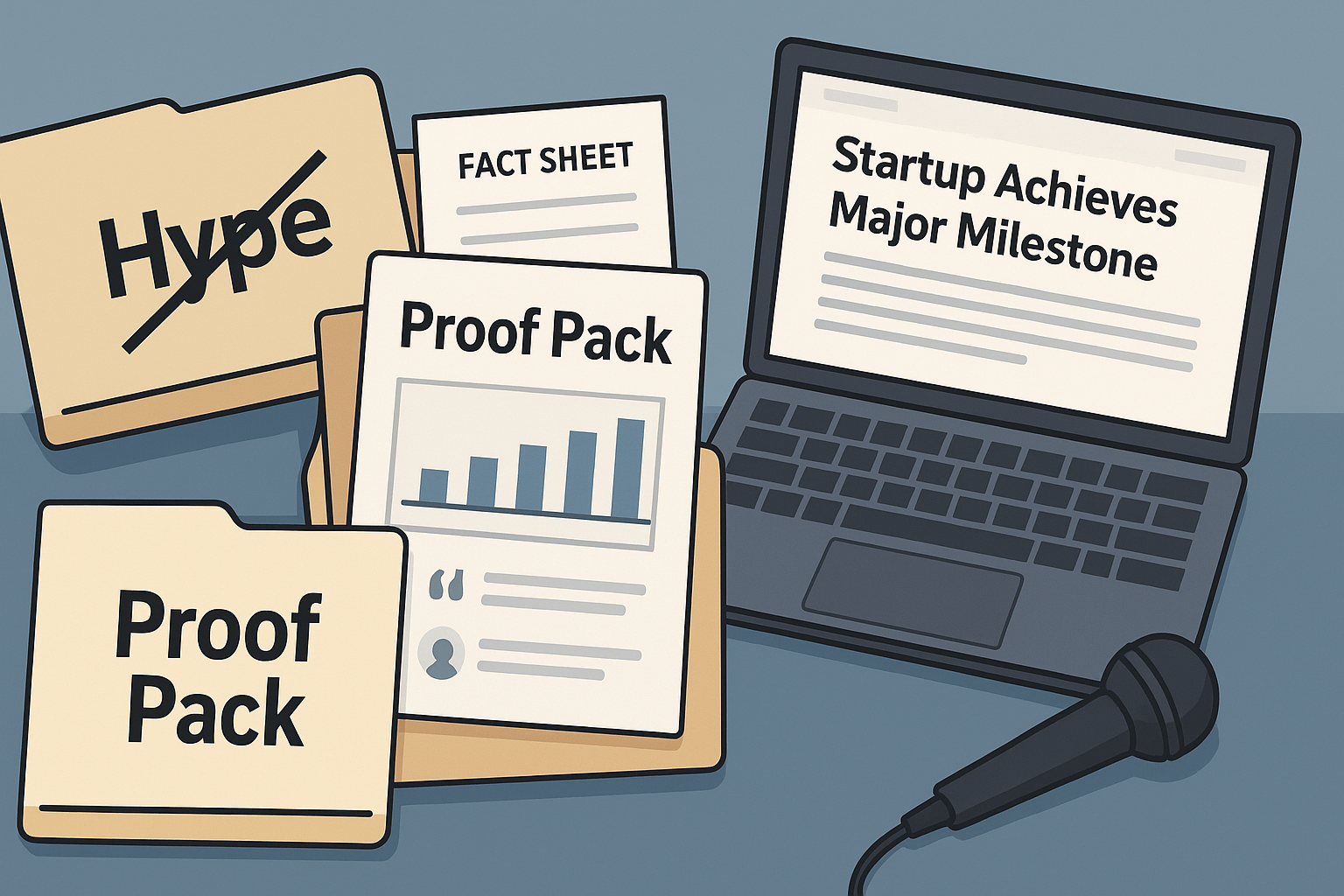
Your Proof Pack: The Assets Reporters Actually Use
Before outreach, stage the following on your press page or in a private folder you can share:
- Factsheet (one pager): What the product/company does, who it’s for, simple pricing, adoption ranges (or latest count with date), leadership bios.
- Numbers doc: Every stat as a one‑line paste: Metric, number, period, source, method note.
- Named quotes: 1–2 customer quotes (short and long versions), plus one independent expert.
- Art: 2–3 press‑quality images (SVG + PNG@2x), a short b‑roll, and annotated screenshots.
- Access: Scheduling link for spokespeople and a sandbox/demo login if relevant.
- Compliance: Trademark guidance, image credits, and accessibility notes (e.g., alt text pre‑written).
If a reporter can grab the factsheet, a chart, and a quote in under a minute, you’ve reduced the friction to publish.
Email That Gets a Call (Template)
Subject: [Data/Trend peg] + [Why it matters to their beat]
Hi [Name],
Two fast facts your readers care about: 1) [Proof line #1]; 2) [Proof line #2]. We’re launching [thing] next [date] and can share a brief with charts, a named customer ([Company]) and a 10‑min demo. Under embargo we can also walk you through the method and limitations. Interested in a quick look today or tomorrow?
— [Your name], [role], [phone], [time windows]
Why this works: It leads with relevance and evidence, not adjectives. It offers access and places a clear time box.
Timing: When Owned Should Lead, and When It Should Follow
- Lead with owned when you need to educate or establish a new frame. Publish an explainer the day before outreach and include it as context.
- Lead with earned when the news itself is the hook (funding, acquisition, executive hire). Keep owned content ready to publish hours after the first story goes live.
- Embargo windows: 24–72 hours is enough for most stories; longer requires truly unique data or access.
Accessibility and Performance (Yes, Reporters Notice)
Large, slow pages and unreadable charts kill momentum. Keep diagrams SVG, supply alt text for all images, ensure color contrast meets WCAG AA, and host media on fast CDNs. In your brief, add a one‑line method note and a “limitations” line; credibility goes up when you name what your data can’t prove.
Owned vs. Earned Do’s and Don’ts
Do
- Turn every claim into a line in the numbers doc with date and source.
- Use owned channels to publish how you know, not just what you think.
- Offer a spokesperson who can speak plainly and a customer who lived the change.
- Keep a visual library: charts in SVG, product stills with annotations, team photos with names/titles.
- Follow up once with a new angle or asset; otherwise, move on.
Don’t
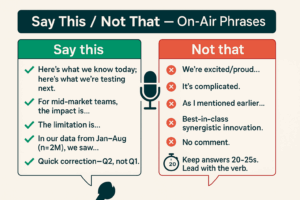
- Send adjectives without evidence.
- Hide numbers behind a “request access” wall.
- Over‑engineer embargo rules; plain language wins.
- Announce everything at once—sequence into pegs across weeks.
- Argue with an editor’s headline; correct facts, not tone.
Mini Case (Hypothetical but Realistic)
A fintech notices a surge in savings among 18–24 year‑olds. Instead of pitching “we redesigned our app,” the team pulls a dataset of 2M users (Jan–Aug), publishes a 2‑page brief with a method note, and lines up two named customers. They email reporters with: “Gen Z savings doubled in 2025; we have the cohort math and two voices under embargo.” One outlet runs the exclusive; the same morning the company publishes a blog that expands the charts, embeds the article, and adds a how‑to for their new Goals feature. Result: coverage with a strong peg, a linkable owned explainer, and a week of social lifts from customers who see themselves in the story.
Metrics That Matter (and How Owned Helps Measure Them)
Track outcomes like a product team:
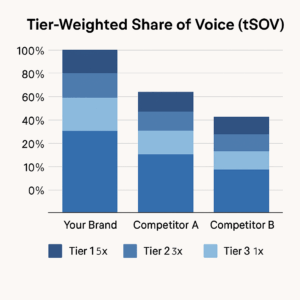
- Coverage quality: Tier, headline fit to your angle, and whether your key stat made it in.
- Link equity: Dofollow vs. nofollow, anchor text, and landing page performance.
- Time to file: Hours from first email to first published story.
- Spokesperson throughput: Interviews per week, quote acceptance rate.
- Reader actions: Scroll depth, downloads of your brief, demo requests.
Feed what works back into the next owned brief.
Checklist: Press‑Ready in 60 Minutes
Conclusion
Owned vs. earned isn’t a debate. It’s a workflow. Use owned channels to build proof and clarity; use earned media to deliver that proof to the audiences who haven’t met you yet. When you pair hard evidence with human stakes and make it easy to file, journalists not only care—they choose your story.
Add comment