
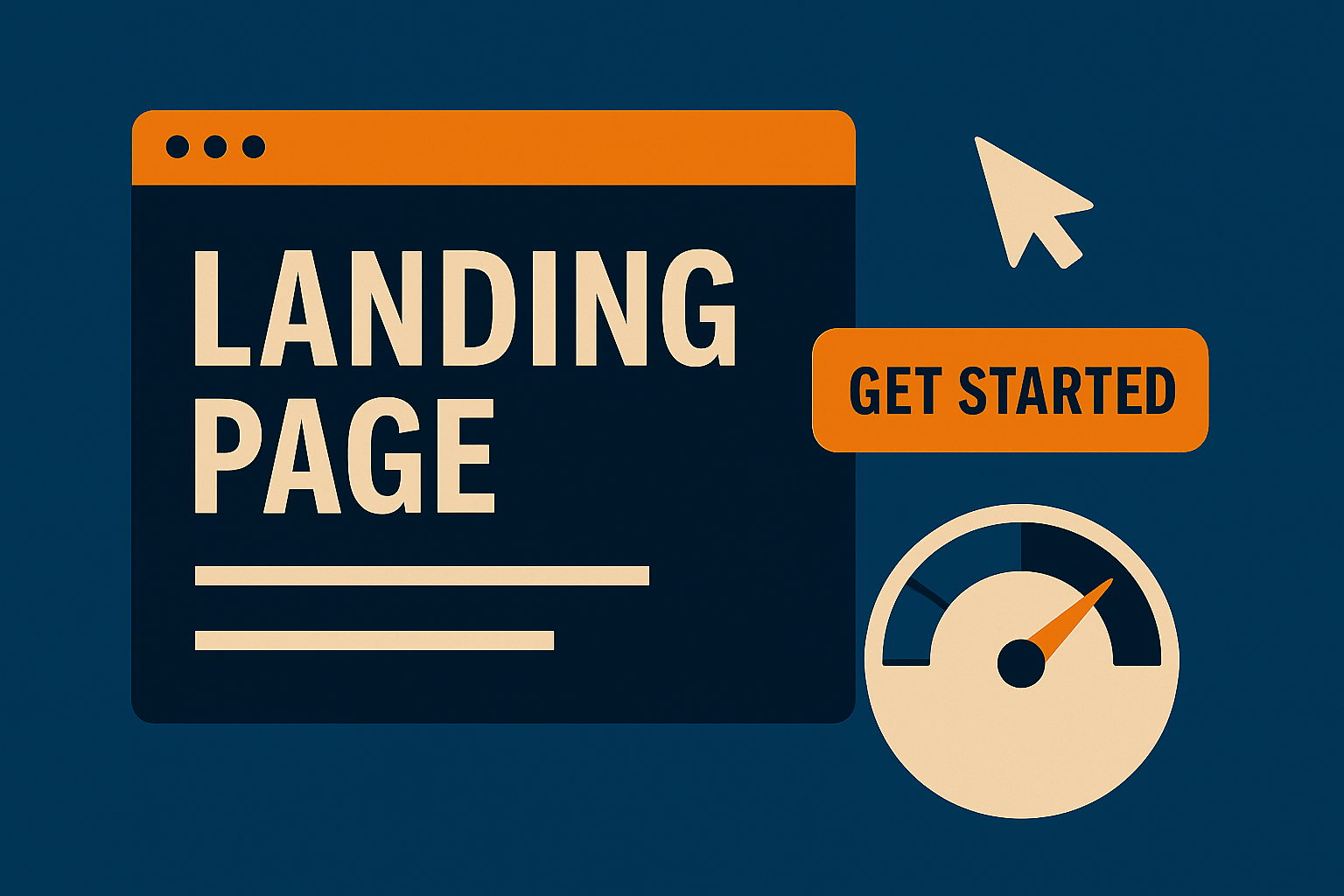
In digital marketing, not all clicks are created equal. Some visitors stumble onto your website out of curiosity, while others arrive with strong intent to buy, sign up, or take a specific action. These are your high-intent users—and the landing pages you build for them can make or break your conversion rates.
Most businesses spend heavily on driving traffic but fail to align the landing experience with the quality of that traffic. When someone is already predisposed to convert, every second of delay, every extra word, and every unnecessary distraction chips away at revenue.
Let’s break down how to design landing pages tailored for high-intent visitors—anchored in three pillars: speed, focus, and specificity.
1. Speed: The Invisible Conversion Killer
High-intent users don’t have patience for slow pages. Research consistently shows that a one-second delay in page load can reduce conversions by up to 7%. For performance marketing campaigns, this is the difference between profit and loss.
Why speed matters for high-intent traffic:
- Paid search clicks often come from users ready to make a purchase decision. A lagging page feels untrustworthy.
- Mobile-first audiences demand fast, seamless experiences.
- Google increasingly rewards fast-loading pages with better Quality Scores, reducing CPCs.
Best practices for speed optimization:
- Use lightweight designs and compress all media assets.
- Implement server-side caching and a global CDN.
- Minimize scripts and prioritize critical rendering paths.
- Measure load times with tools like Google Lighthouse or WebPageTest, not just your own device.
For high-intent users, speed isn’t just UX—it’s revenue.
2. Focus: Remove Everything That Isn’t the Goal
When someone arrives on your landing page with intent, your job isn’t persuasion—it’s clarity. High-intent traffic already knows what it wants. Your landing page should act as a fast lane, not a museum.
Key principles for focus:
- Single CTA rule: Every element should drive toward the same action—signup, demo, purchase, etc.
- Minimal navigation: No leaks. Limit top and footer navigation to reduce exit points.
- Visual hierarchy: Make the primary CTA impossible to miss, with consistent placement across devices.
- No competing offers: Don’t stack “subscribe to our newsletter” on a page meant to close deals.
Focus means stripping away distractions so that intent translates directly into action.
3. Specificity: Talk to the User’s Context
Generic landing pages waste high-quality traffic. Specificity means matching the page to the promise of the ad, keyword, or referral source.
Examples of specificity in action:
- If the ad says “Free 14-Day Trial of Project Management Software,” the headline should echo exactly that—not “Welcome to Productivity Solutions.”
- Use dynamic text replacement for keywords to reassure users they’re in the right place.
- Show relevant proof: testimonials, logos, or case studies tied to the exact audience segment.
- Customize offers: A B2B SaaS CFO persona might see a “ROI Calculator,” while a marketing manager sees “Campaign Templates.”
Specificity removes doubt. It confirms to users: “This page is built for me.”
4. Measuring High-Intent Landing Page Success
Traffic quality makes traditional vanity metrics misleading. Bounce rate or average session duration might look fine, but for high-intent users, the only metric that matters is conversion.
Key KPIs:
- Conversion rate (by traffic source)
- Cost per acquisition (CPA)
- Time to conversion
- Form completion rates
- Speed metrics (Core Web Vitals)
By connecting analytics with campaign-level tracking, you can see which landing page versions truly serve high-intent visitors.
Conclusion
High-intent traffic is a gift most brands fail to maximize. By designing landing pages that are fast, focused, and specific, businesses can turn expensive clicks into measurable revenue.
Remember: high-intent users don’t need to be convinced—they need clarity, trust, and speed. Every distraction removed, every second saved, and every headline tailored to context moves you closer to conversion.
Landing pages are not just digital brochures. For high-intent traffic, they’re the closing room.


Add comment