
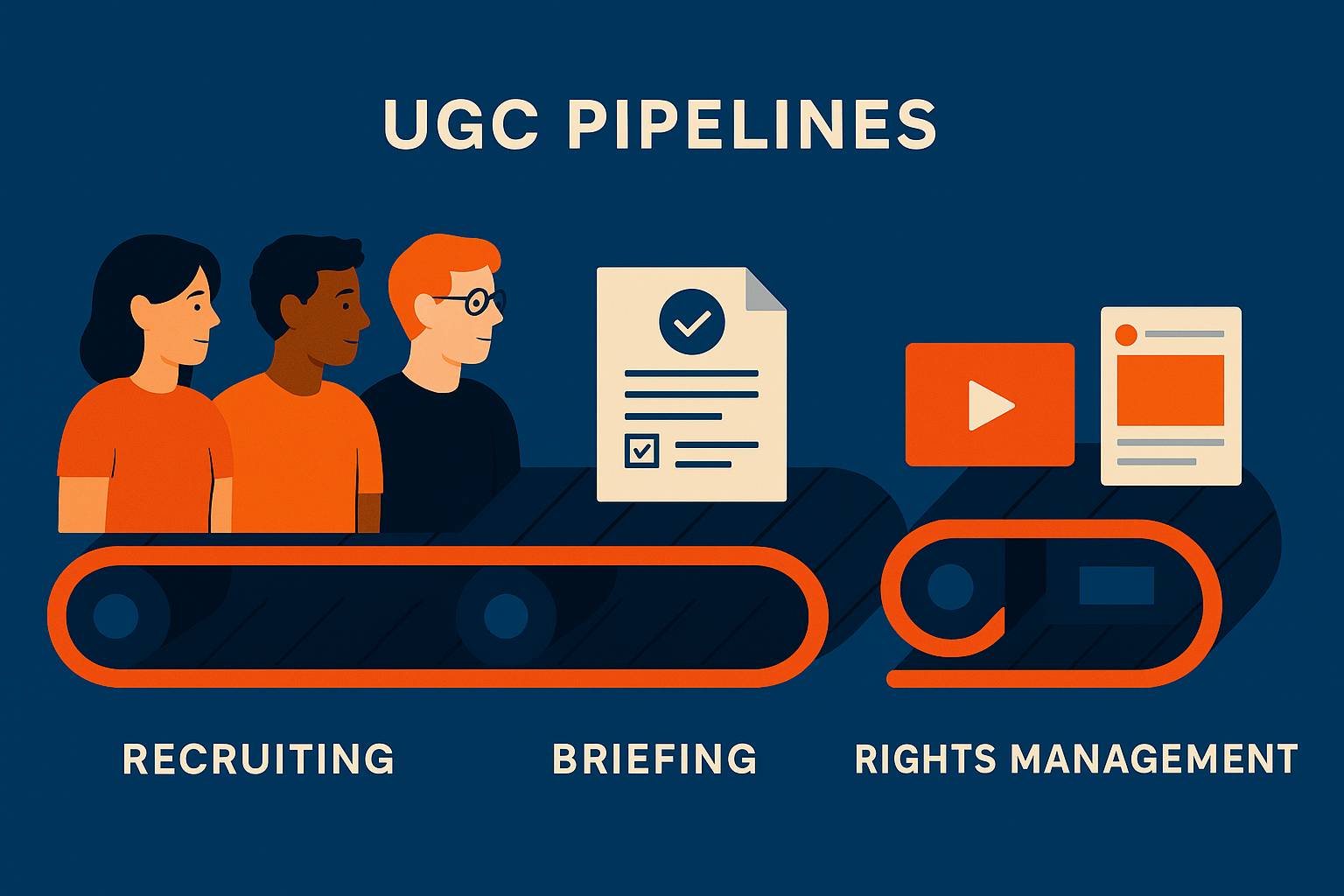
UGC Pipelines: Beyond One-Off Collaborations
User-generated content (UGC) has moved from being a “nice-to-have” marketing tactic to a central engine of scalable growth. Brands no longer think of UGC as a few reposted customer photos—they treat it as a pipeline: structured, predictable, and deeply connected to their campaigns.
But pipelines require engineering. Without processes for recruiting, briefing, and rights management, brands risk chaos: inconsistent creative, legal exposure, and wasted spend.
This article unpacks each step of the UGC pipeline so your brand can scale UGC like a system—not a gamble.
Step 1. Recruiting: Finding the Right Voices
The first bottleneck in UGC is sourcing creators. Not every customer or influencer will fit your goals. Recruiting needs structure:
- Criteria-based selection — Define what matters: demographics, platform fit, tone of voice, product usage authenticity.
- Multi-channel sourcing — Don’t rely only on Instagram or TikTok. Reddit threads, niche Discord servers, or micro-communities often provide higher authenticity.
- Always-on recruiting — Treat UGC sourcing like sales prospecting. Maintain a database of creators you’ve engaged, tested, and vetted.
The key shift: recruit for repeatability, not virality. One viral TikTok won’t sustain you. A roster of 30–50 reliable creators can.
Step 2. Briefing: Balancing Structure and Creativity
Recruitment fails without proper guidance. A pipeline breaks when creators don’t know what to do, or worse, when briefs are so rigid that they kill authenticity.
Best practices for UGC briefing:
- One-page briefs — Keep instructions simple, clear, and visual. Show examples, avoid jargon.
- Creative freedom zones — Define “non-negotiables” (brand, product, disclaimers), then leave room for authentic voice.
- Feedback loops — UGC isn’t static. Share results with creators so they learn what converts and improve over time.
Think of briefing as enabling creativity within guardrails. Too much freedom equals chaos, too much rigidity equals lifeless ads.
Step 3. Rights Management: Protecting Scale
Perhaps the most overlooked step. Brands use UGC in ads, websites, even TV spots. Without rights management, that’s a lawsuit waiting to happen.
Core principles:
- Written agreements — Always secure written consent (ideally contracts). DMs don’t hold up in disputes.
- Duration & scope — Define where and for how long you can use content (organic, paid, email, OOH).
- Attribution & royalties — Some creators want credit, others want flat fees. Clarity upfront prevents conflict later.
- Centralized database — Track who owns what. Imagine using a video globally, only to realize you bought rights for one quarter in one region.
Good rights management is invisible insurance: your campaigns run at scale without costly interruptions.
Building the UGC Pipeline Mindset
Recruiting, briefing, and rights management aren’t one-off tasks. They form a repeatable pipeline that scales with your marketing system.
- Recruiting ensures a steady stream of authentic voices.
- Briefing aligns creativity with brand outcomes.
- Rights management protects your ability to scale safely.
When brands treat UGC as a pipeline, it stops being random and starts being an asset. That’s how you win in the era where authenticity is the only true differentiator.
CTA
👉 Ready to scale your content engine? Spectrum Media Labs helps brands design UGC pipelines that are structured, compliant, and built for conversion.





Add comment