
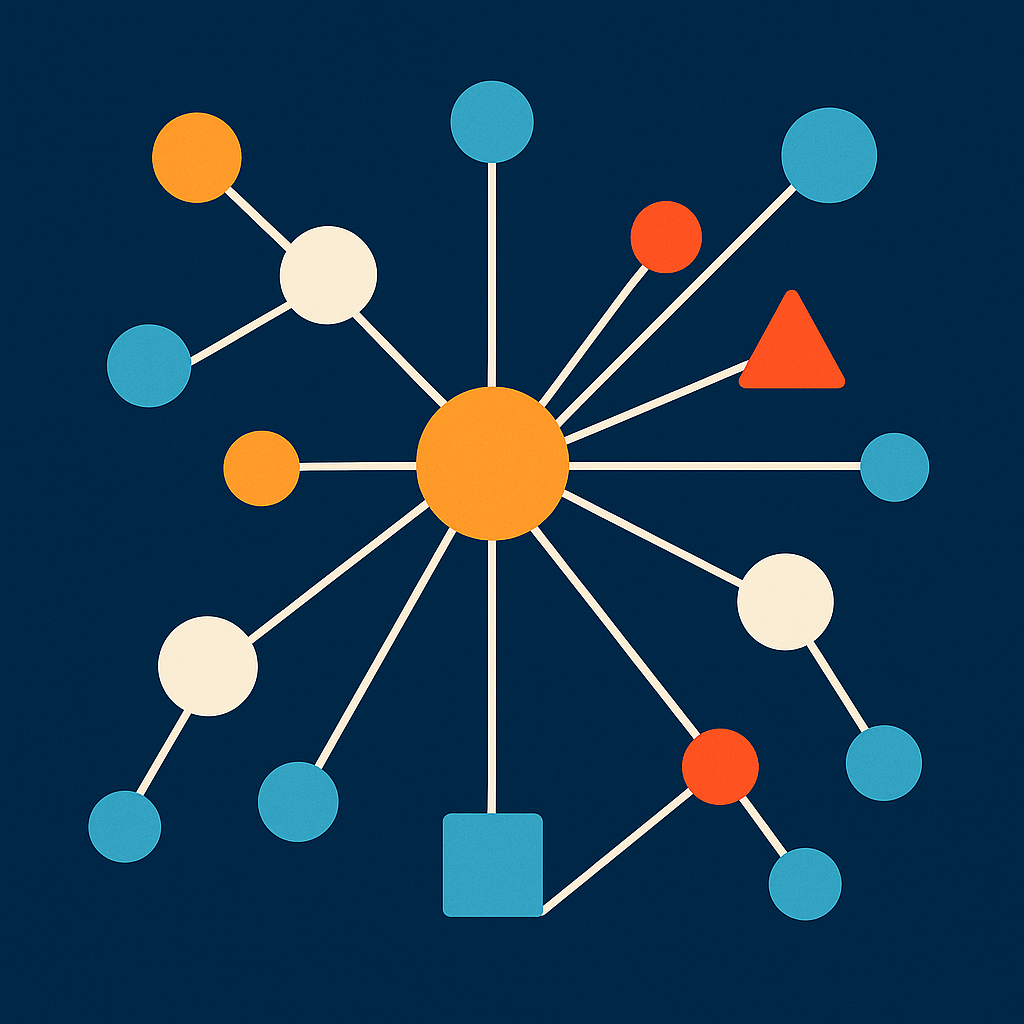
Every brand today operates in networks, not in isolation. Customers, partners, influencers, and employees form clusters of relationships that determine whether your message spreads or stalls. Yet most companies treat audiences as disconnected “personas” or demographic profiles. To compete in a world where attention flows through social ties, brands need to map and design their own social graph.
What Is a Brand Social Graph?
A social graph is a map of connections — who talks to whom, who influences decisions, and how information travels. For brands, a social graph is the intentional mapping of three things:
- Who – The people that matter: customers, advocates, critics, partners, and employees.
- Where – The platforms and communities where they interact.
- Why – The motivations behind their engagement: status, belonging, problem-solving, or recognition.
Unlike standard segmentation, a social graph emphasizes relationships, not just attributes.
Why Brands Need Social Graphs
- Signal vs. Noise: Social graphs help identify nodes of influence, so you know which voices amplify your message.
- Efficient Outreach: Rather than chasing every possible audience, you invest in clusters that have multiplier effects.
- Community Building: Social graphs reveal where authentic engagement happens, informing your community strategy.
- Risk Management: By tracking critics and detractors, you can anticipate reputational risks.
In short, social graphs turn marketing from a broadcast into an ecosystem play.
The “Who”
Start by identifying the people who matter most:
- Core customers: Who actually buys and stays loyal.
- Amplifiers: Influencers, media, and community leaders who spread ideas.
- Connectors: Employees, partners, or customers who bridge groups.
- Skeptics: Critics whose opinions could block growth if ignored.
Each node has a different role in shaping perception. Mapping them clarifies where to allocate time and resources.
The “Where”
Social graphs live across platforms and contexts:
- Mainstream social media (LinkedIn, TikTok, X): Broad awareness and influence.
- Private communities (Slack, Discord, Telegram): Deeper engagement, often hidden from public view.
- Offline spaces (events, industry groups): Still powerful in shaping digital conversations afterward.
The challenge isn’t choosing one platform, but understanding where clusters overlap. Often, the same advocate carries influence in both a private group and a public channel.
The “Why”
Relationships don’t form randomly; they’re driven by motivations:
- Belonging: People want to feel part of a group.
- Utility: They join spaces to solve real problems.
- Recognition: They share content for visibility and status.
- Values: They connect with brands that align with beliefs.
When brands design strategies aligned with these motivations, the social graph becomes self-reinforcing.
How to Build and Use a Social Graph
- Audit your current audience: Look at engagement data, referral traffic, and platform overlaps.
- Map connections: Identify not just followers, but how clusters interact. Tools like Graph Commons or built-in analytics can help.
- Identify leverage points: Who are the top 5% of nodes that disproportionately spread messages?
- Design interventions: Create campaigns, communities, or content that energize those connections.
- Measure health: Track growth of clusters, overlap across platforms, and engagement density.
Case Example
A B2B SaaS brand discovered through mapping that 70% of its inbound enterprise leads originated from discussions in two niche Slack communities, even though LinkedIn was driving more impressions. By shifting resources to support and sponsor those Slack communities, the brand generated higher-quality leads while reducing wasted spend.
Final Thought
Designing a social graph for your brand isn’t just about where to post content. It’s about understanding who influences whom, where they connect, and why they care. In a noisy digital world, brands that build and maintain intentional social graphs turn random outreach into compounding influence.





Add comment