

Third-party cookies are fading into the rearview mirror. Between privacy regulation, browser restrictions, and user expectations, the era of cheap, anonymous targeting is over. Yet the demand side of the equation hasn’t changed: marketers still need precision, frequency control, and measurable lift. The answer isn’t a hack or yet another ID consortium—it’s mastering first-party data and the playbooks that put it to work responsibly.
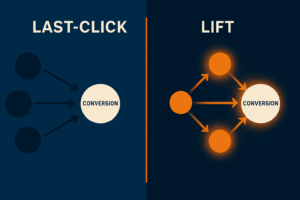
The post-cookie winners build durable data assets, integrate them into media and product surfaces, and prove value through incrementality rather than last-click myths. This isn’t a single tactic; it’s an operating system.
The Four Pillars of a First-Party Data OS
1) Consent & Value Exchange
You don’t “collect” first-party data—you earn it. Every form, preference center, or login wall must trade real value for information. Examples: gated tools that calculate ROI, personalized onboarding sequences, community access, loyalty perks, and content hubs aligned to roles or industries. The rule: no data without dividends for the user.
2) Identity Resolution (Lightweight & Ethical)
You don’t need a heavy CDP to start. A pragmatic stack:
- Event layer (server-side & client-side) to standardize events and traits.
- Profiles keyed to email/phone/login, with pseudonymous device joins where permitted.
- Deterministic over probabilistic: avoid black-box graph vendors; keep joins transparent and revocable.
- Preference storage (consent, channels, frequency) as first-class fields, not afterthoughts.
3) Data Products (Not Just Dashboards)
Turn raw data into reusable products: e.g., a “high-intent lead score,” a “churn risk segment,” or a “topic affinity vector.” These are versioned, documented, and accessible via APIs or reverse ETL to ad platforms, CRM, and email.
4) Governance by Design
Tag fields with provenance (source, consent scope, timestamp) and retention policy. Build UI for support/sales to see allowed uses at a glance. Automate deletion/opt-out flows. If your team must ask legal every time, the system will stall.
From Collection to Activation: Six High-Leverage Playbooks
Playbook 1 — Preference-Led Email & Web Personalization
What it does: Uses explicitly declared interests (topics, use cases, verticals) to tailor nurture, product education, and on-site modules.
Signals: Self-selected topics, role, company size, feature toggles used during onboarding.
Activation:
- Dynamic blog/homepage rails filtered by topic.
- Nurture sequences mapped to buyer jobs-to-be-done.
- Progressive profiling in forms (one new field per visit).
Success metric: Lift in CTR and assisted pipeline from matched topics vs. baseline.
Playbook 2 — Modeled High-Intent Audiences (Server-Side)
What it does: Trains a simple model (logistic regression or gradient boosting) on first-party behaviors (visited pricing, repeated product pages, calculator usage) to score likelihood of conversion within 30 days.
Activation:
- Suppress low-intent from expensive channels; reallocate budget to top deciles.
- Create “VIP windows” with increased frequency caps for the top 10–20%.
- Feed top-decile seed audiences into platform lookalikes (with consent).
Success metric: Incremental conversion rate and CAC delta by score decile.
Playbook 3 — Post-Cookie Remarketing via Auth & Email-Matched Audiences
What it does: Replaces pixel retargeting with consented identifiers: login, newsletter, trial signups.
Activation:
- Upload hashed emails to walled gardens (where policy allows).
- Trigger on-site remembered states (e.g., return to saved cart or plan comparator).
- Use server-side events to ensure resilience against client-side blockers.
Guardrail: Only remarket within consented scope; respect frequency & purpose limitations.
Playbook 4 — Content-to-Product Loop (Zero-/First-Party Fuel)
What it does: Embeds calculators, diagnostics, and interactive tools inside articles to capture declared needs and pipe them into product and CRM.
Activation:
- “Stack fit” quizzes (integration maps), maturity assessments, ROI tools.
- Save results to profile; tailor demos, emails, and on-site CTAs accordingly.
- Trigger in-product tours that mirror the diagnostic output.
Success metric: Form completion to trial start uplift; demo show-rate for scored cohorts.
Playbook 5 — Community & Events as Data Engines
What it does: Uses events, webinars, and community forums to collect rich context at low friction.
Activation:
- Registration fields tied to problems (not vanity firmographics).
- Polls during sessions; pipe answers into traits.
- “Office hours” signups that fork into solution-based nurtures.
Success metric: Multi-touch attribution lift vs. non-community members; retention impact.
Playbook 6 — Loyalty & Lifecycle Compression
What it does: For services/commerce, converts purchase history + preferences into replenishment and cross-sell sequences.
Activation:
- Predict next-best action windows (subscription bump, refill prompts).
- On-site banners with personalized bundles, hidden from non-members.
Success metric: LTV uplift and churn reduction by cohort with explicit consent.
Media Activation Without Third-Party Cookies
- Clean Rooms: Share aggregated first-party segments with publishers/retail media to build overlaps without exposing raw PII.
- Retail Media Networks: Leverage shoppers’ purchase signals (as allowed) to reach in-market audiences, then close the loop with your first-party conversions.
- Contextual+Entity Targeting: Map your first-party topic affinities to publisher entity graphs; buy placements where your segments over-index.
Measurement in a Privacy-First World
Forget perfect user-level attribution. Embrace triangulation:
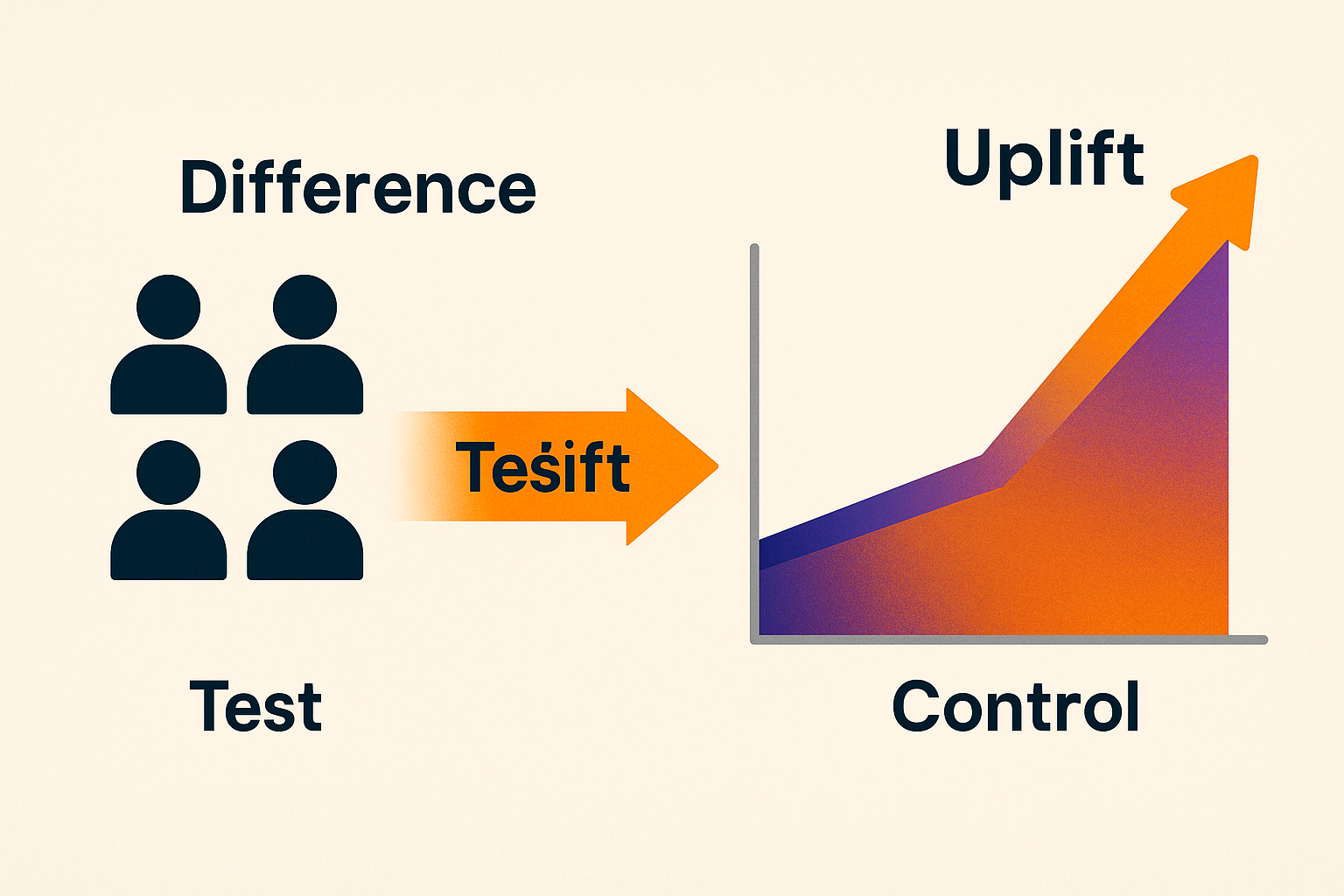
- Holdout Tests: Always keep a geographic or audience holdout for incrementality.
- MMM (Lightweight): Monthly models that blend spend, seasonality, and macro signals for channel contribution.
- Conversion Lift Studies: Platform lift tests + your own first-party conversion windows.
- Path Analytics: Session depth & assisted conversions among consented profiles.
If you can’t show incrementality, none of the sophistication matters.
Implementation Roadmap (90 Days)
Weeks 1–2: Foundation
- Audit consent flows; rewrite value propositions.
- Map events and traits; standardize naming (e.g.,
trait.topic_affinity=“security”). - Stand up server-side event piping and a minimal profile store.
Weeks 3–6: First Activations
- Launch 1–2 interactive tools (calculator/diagnostic).
- Build top-decile intent model; pipe to CRM & ads.
- Deploy preference-led homepage rails and nurture.
Weeks 7–10: Media & Measurement
- Stand up one clean-room pilot with a key publisher or RMN.
- Start a geo holdout for incrementality.
- Roll out frequency caps tied to consented profiles.
Weeks 11–13: Scale & Governance
- Document data products; version scoring models.
- Add self-service preference center & deletion request flows.
- Quarterly review: what traits predict value, what to retire.
Common Failure Modes (and How to Avoid Them)
- Collecting without a plan: Start with 3–5 traits you’ll actually activate.
- Overengineering the stack: Shipping a small, working pipeline beats waiting on a monolithic CDP rollout.
- Creepy personalization: Target jobs and moments, not sensitive attributes. Default to context, not surveillance.
- No feedback loop: If sales and product don’t see the signals, the flywheel dies. Pipe insights back into roadmaps and messaging.
Final Thought
Post-cookie marketing doesn’t shrink your opportunity—it clarifies it. The brands that win aren’t those with the loudest retargeting; they’re the ones with the clearest value exchange, cleanest consent, and sharpest data products. First-party data is not a spreadsheet; it’s a set of playbooks executed with taste, governance, and relentless testing.




Add comment