
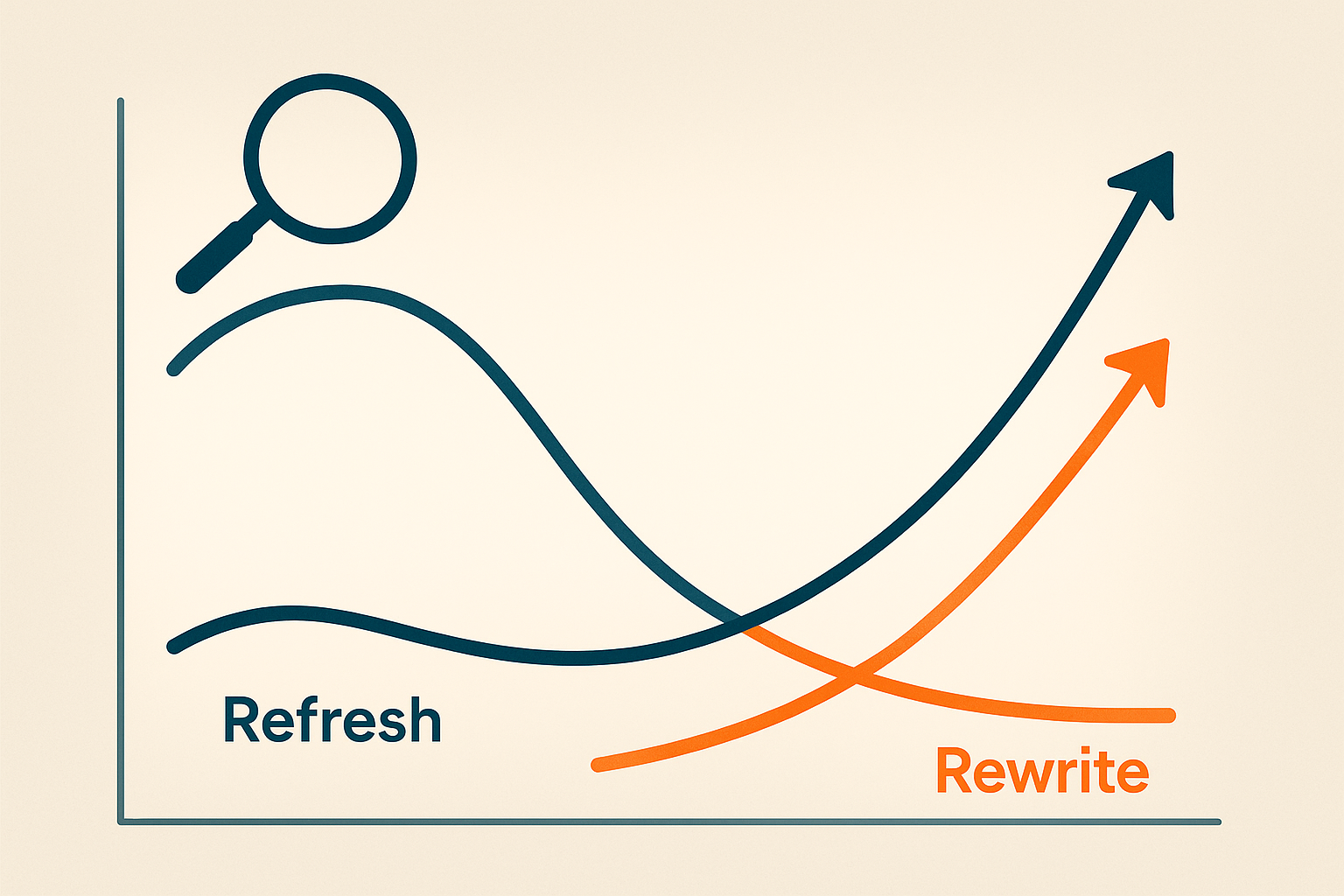
One of the most frustrating SEO challenges is watching a once high-performing article lose traffic. The instinct is often to “rewrite it from scratch.” But not every piece of declining content needs a full overhaul. Sometimes, a refresh is enough.
The key is knowing when to refresh and when to rewrite — and the best tool for that decision is the decay curve.
Understanding Content Decay
Content decay happens when an article’s performance naturally declines over time. It’s not necessarily a failure — it often reflects changes in search intent, new competitors, or updated information.
A decay curve typically looks like this:
- Launch Spike — early traction from promotion.
- Plateau — steady organic performance.
- Gradual Decline — rankings and traffic fade.
The question is: when you spot a decline, should you refresh the piece or rewrite it entirely?
When to Refresh
Refreshing means making incremental updates while keeping the core structure intact.
Best for:
- Stable Intent: The search query still demands the same type of answer.
- Evergreen Topics: Content is still relevant, just outdated.
- Competition Catch-Up: Rivals added more examples, stats, or visuals, but the core angle remains valid.
Examples of refresh tactics:
- Update statistics and examples.
- Add new internal links.
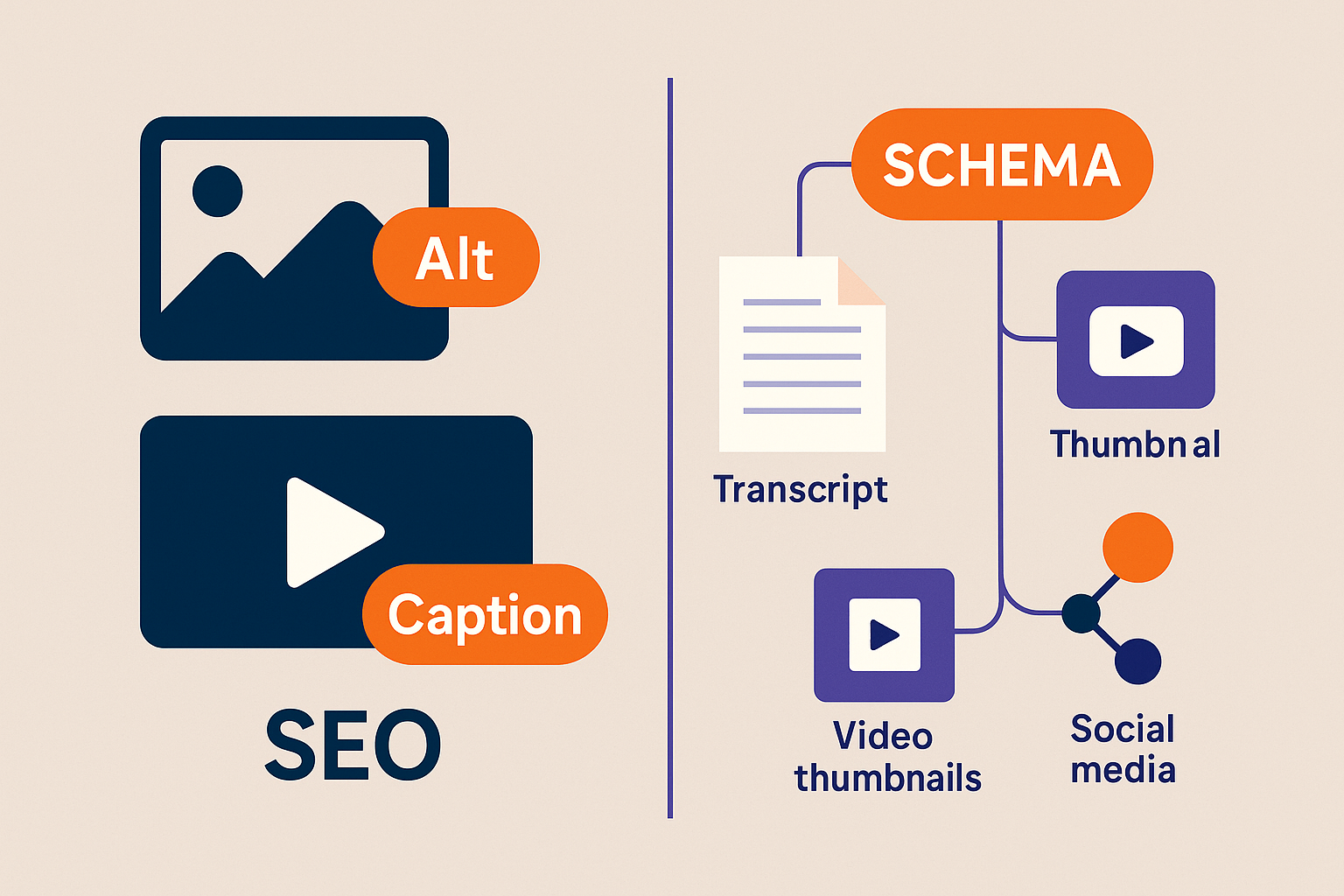
- Improve formatting, visuals, or schema.
- Re-promote through distribution channels.
When to Rewrite
Rewriting means starting fresh, often with a new structure, framing, or angle.
Best for:
- Intent Shift: The SERP has moved on (e.g., from “tools” to “strategies”).
- Content Saturation: Your old angle is now generic; you need differentiation.
- Poor Original Quality: The article was thin, outdated, or misaligned from the start.
Examples of rewriting tactics:
- Change the headline and positioning.
- Introduce a new framework or methodology.
- Rebuild with long-form, authoritative depth.
Using Decay Curves to Decide
- Map Traffic Over Time
Look at analytics to spot the rate of decline. Is it slow and steady (refresh) or sharp and steep (rewrite)? - Audit SERP Composition
Check top results. If they look similar to your old piece, refresh. If they’re completely different, rewrite. - Match With Business Priorities
If the topic is high-value for conversions, err on the side of rewriting to maximize impact.
Case Example
A SaaS brand had an article on “best CRM integrations” that declined by 40%. SERP analysis showed competitors added new screenshots and features, but intent was the same. They refreshed with updated visuals and new integration partners — traffic bounced back within 6 weeks.
Conversely, an article on “remote work policies” saw SERPs shift toward hybrid/AI-powered policies. They rewrote the piece entirely, reframing around “AI in hybrid workplaces.” Rankings quickly recovered.
Final Thought
Refreshing vs. rewriting isn’t guesswork — it’s a decision grounded in decay curves and SERP signals. By analyzing performance trends and intent shifts, you can invest effort where it matters most.
The smartest SEO teams don’t treat all decays the same. They know when to refresh, when to rewrite, and when to let content go.





Add comment