
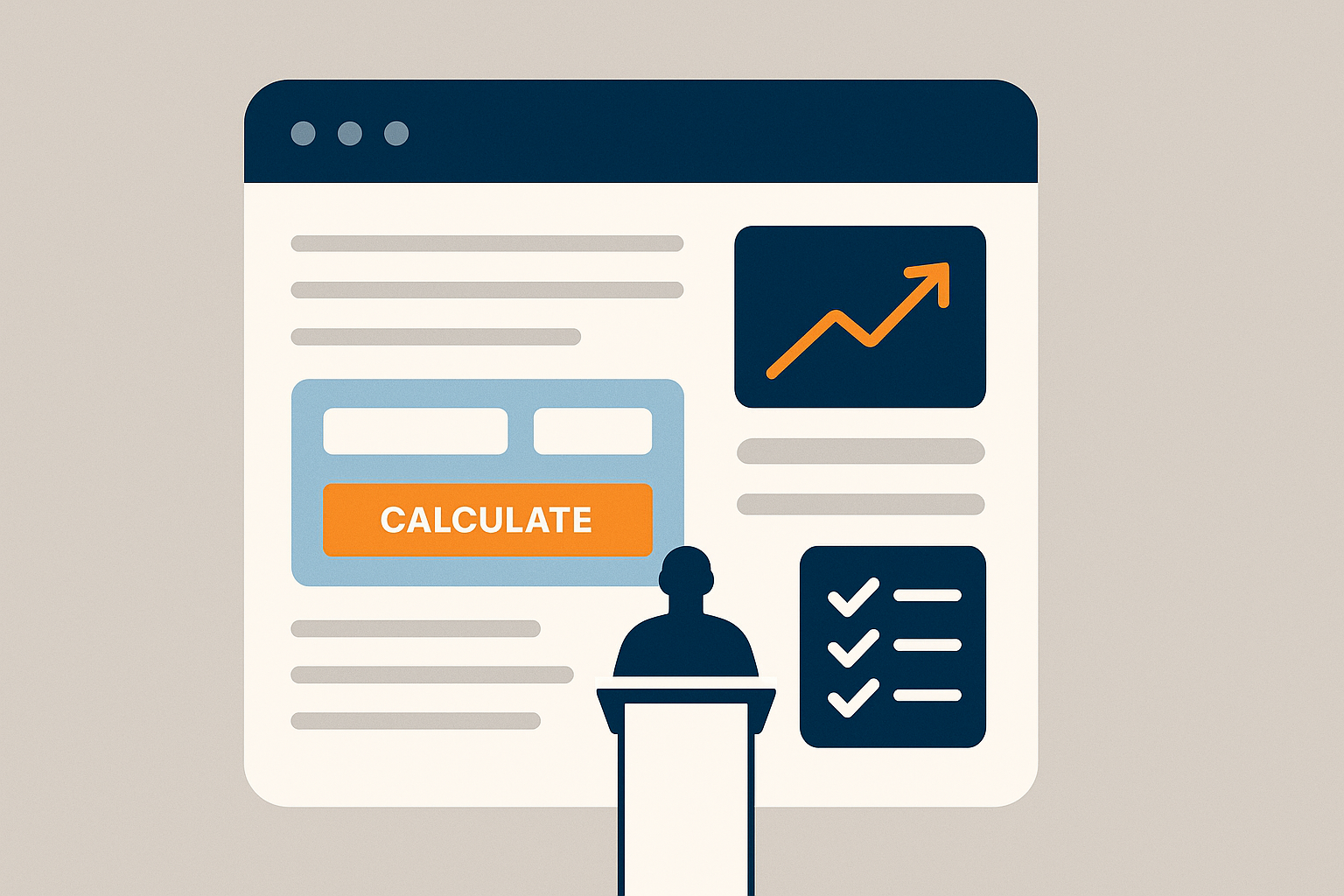
Most brands still treat content and product as two separate worlds. Content is for attracting traffic and generating leads; product is for solving problems once the buyer signs up. But in 2025, this siloed model leaves massive value on the table. The real opportunity lies in creating a content-product loop — embedding tools, calculators, and interactive elements directly inside articles so content isn’t just informative, but immediately useful.
This approach doesn’t just inform an audience; it lets them act on insights in real time. That creates stickiness, differentiation, and most importantly — conversion.
Why the Content-Product Loop Matters
- From Passive to Active Engagement
Traditional content delivers information. Embedded tools transform consumption into interaction, making readers participants instead of spectators. - Shorter Distance to Value
Instead of asking a user to fill out a form and wait for a demo, you let them experience your solution right away — inside the content. - Higher Shareability
Useful tools get bookmarked, shared, and revisited far more than static articles. - Data Feedback for Product and Marketing
Every interaction provides insights into user needs, which can refine both product features and future content strategy.
Forms of Embedded Tools
- Calculators: ROI calculators, pricing estimators, or savings projections.
- Diagnostics: Quizzes or self-assessments that reveal gaps or opportunities.
- Interactive Visuals: Charts or frameworks where users can input their own data.
- Mini-Workflows: Limited free versions of the product’s core function.
For example, instead of writing an article titled “How Much Can Automation Save You?”, embed a calculator that lets readers input their team size and instantly see the projected hours saved.
How to Build the Loop
1. Start With High-Intent Problems
Not every article deserves an embedded tool. Focus on problems where numbers, diagnostics, or interactive insights matter most.
2. Repurpose Core Product Features
Strip down your product’s value proposition into micro-experiences. If your SaaS offers analytics, embed a lightweight dashboard demo in relevant blog posts.
3. Design for Zero Friction
Tools must work instantly — no logins, no paywalls, no loading delays. The goal is immediate value.
4. Capture Data Gracefully
Offer to send results via email or save progress for later. The exchange feels natural when the tool has already delivered value.
5. Close the Loop
Link the tool back to the full product experience. Content sparks curiosity; the tool proves usefulness; the product delivers scale.
Case Example
A financial SaaS brand embedded a “retirement savings gap” calculator inside its blog post on retirement planning. Engagement time tripled, backlinks surged from financial forums, and 22% of users who interacted with the calculator clicked through to a free trial.
The Strategic Payoff
- Content informs → tool demonstrates → product delivers.
- The loop creates self-qualifying leads who arrive primed with context and urgency.
- Marketing and product stop operating in silos — they compound each other’s strengths.
Final Thought
The future of content marketing isn’t more words; it’s more experiences. By embedding tools inside articles, you transform static blogs into living product touchpoints.
This is the essence of the content-product loop: readers don’t just learn about solutions — they try them before they ever convert.






Add comment