

For the past decade, content marketing has been obsessed with volume. The logic was simple: the more you publish, the more keywords you rank for, the more traffic you capture. But in 2025, the strategy of more has hit a wall. Search algorithms are smarter, audiences are saturated, and brands are realizing that authority doesn’t come from volume — it comes from precision.
The winning strategy now is authority without bloat: publishing less, but with greater impact.
Why “More Content” No Longer Wins
- Algorithm fatigue: Search engines prioritize depth, originality, and engagement, not sheer quantity.
- Audience fatigue: Buyers are overwhelmed by noise and tune out repetitive, shallow posts.
- Operational fatigue: Teams burn out chasing quotas instead of focusing on substance.
The result: hundreds of articles that generate impressions but little credibility — and even less conversion.
Redefining Authority
Authority today means being the go-to source on the problems that matter most to your buyers. It’s about depth over breadth, trust over traffic.
Signals of authority in 2025:
- Content cited by peers and competitors.
- Long-tail visibility in high-intent searches.
- Engagement metrics that reflect time spent, not just clicks.
- Direct influence on pipeline (content as sales enablement, not just marketing fluff).
How to Publish Less and Win More
1. Audit for Bloat
Identify redundant, low-performing, or outdated content. If two articles overlap, consolidate. If a post has thin engagement, either rewrite it with depth or kill it.
2. Build a Problem-First Framework
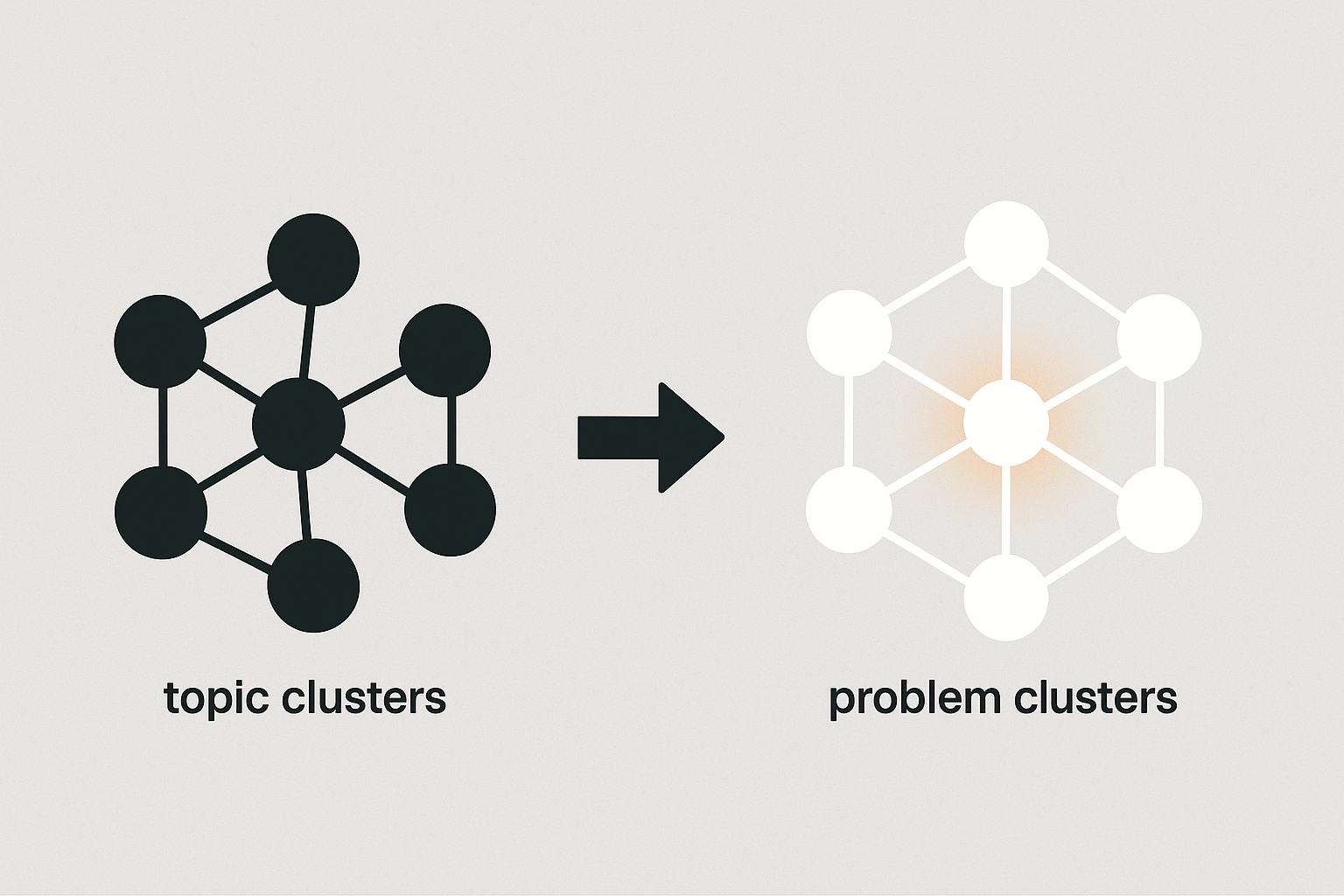
Anchor publishing around problem clusters, not keyword lists. Each piece should directly address buyer friction and decision-making.
3. Prioritize Flagship Assets
Instead of 20 mediocre posts, create 3–5 in-depth, evergreen resources (playbooks, benchmark reports, deep-dive guides). These act as anchors for authority.
4. Embrace Multi-Use Content
A single high-value piece can be atomized into webinars, social posts, sales decks, and email nurtures. One strong idea fuels many touchpoints.
5. Measure Pipeline Impact, Not Pageviews
Stop optimizing for vanity metrics. Track how content influences demos, proposals, or closed deals.
Case Example
A B2B SaaS firm cut its publishing volume by 60%. Instead of weekly blog churn, it released quarterly “state of the industry” reports. Traffic dipped slightly, but average session duration tripled, backlinks grew, and inbound leads citing the reports as their reason for outreach increased by 40%.
Less content, more authority.
The Cultural Shift for Teams
Publishing less requires a mindset change:
- Writers must think like analysts, not just content creators.
- Editors become curators, cutting ruthlessly to preserve clarity.
- Leadership must resist the temptation of vanity volume metrics.
It’s harder to say no than to say yes, but discipline is what builds authority.
Final Thought
In content marketing, bloat is the enemy of authority. The brands that win are not the ones with the biggest libraries, but the ones with the sharpest insights.
In 2025 and beyond, success will belong to the marketers who publish less, but make every piece count.





Add comment