
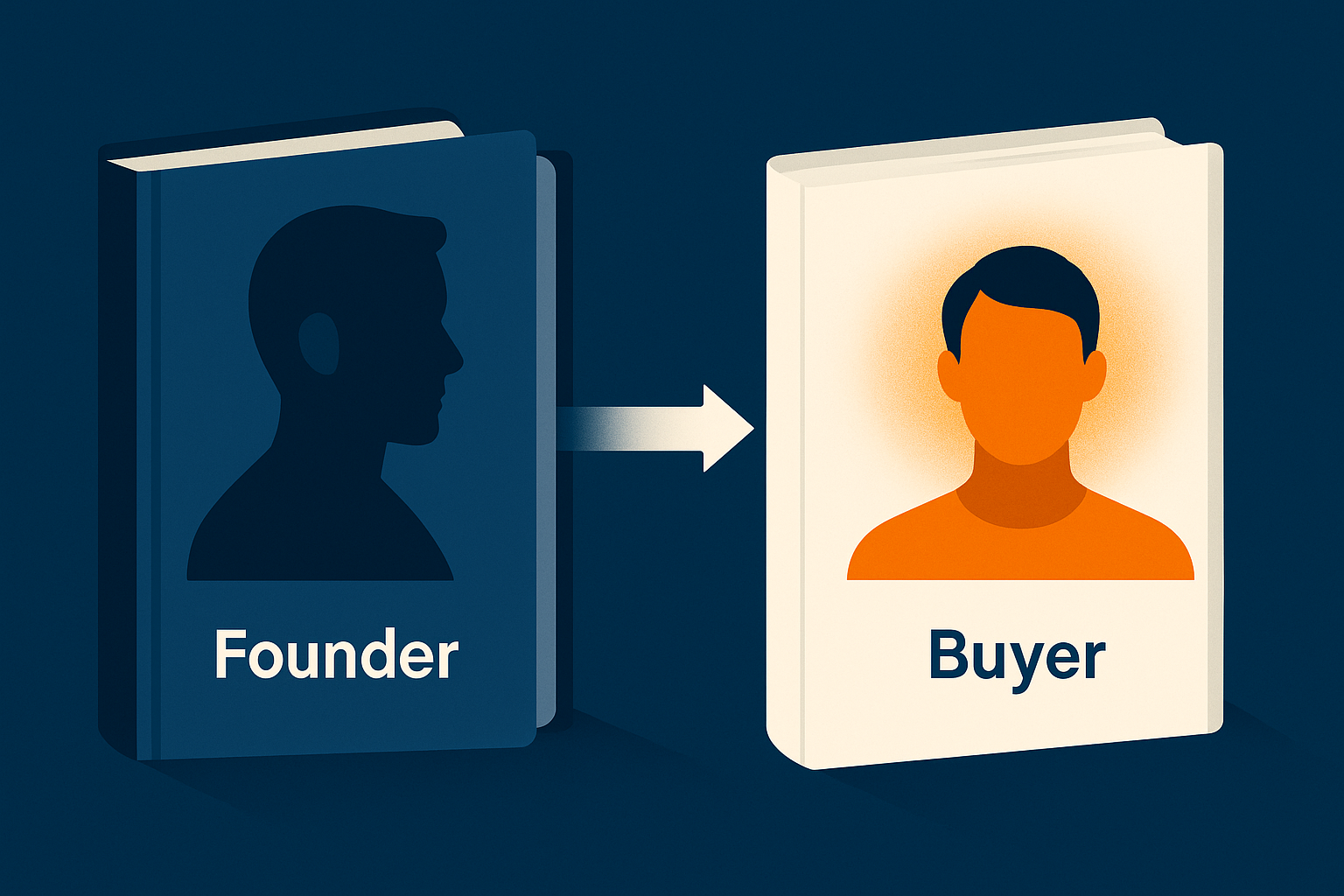
Every startup begins with a founder story. A moment of frustration, a flash of insight, a decision to build something better. It’s the origin myth that rallies investors, recruits early employees, and provides a sense of purpose.
But here’s the problem: founder stories rarely sell. Buyers don’t wake up caring about how you got here. They care about how you solve their problems, in their language, at their moment of need.
Making the leap from founder story to buyer story is one of the most critical brand transitions a company must navigate.
The Founder Story: Why It Works (But Only at First)
The founder story is powerful because it conveys passion and authenticity. It demonstrates why the company exists beyond making money. It creates early emotional buy-in.
- For investors: it signals grit and vision.
- For employees: it inspires loyalty.
- For press: it provides a compelling angle.
But for customers, the founder story often feels distant. A SaaS buyer doesn’t purchase because the founder struggled with spreadsheets in 2012; they purchase because today, their workflow is broken and costly.
The Buyer Story: Why It’s Essential
The buyer story flips the narrative. Instead of being about the founder’s journey, it’s about the customer’s journey — their pain points, frictions, and desired outcomes.
- Founder story: “I built this because I was frustrated with inefficiency.”
- Buyer story: “Here’s how you can cut your team’s onboarding time in half.”
The buyer story makes the customer the hero. The brand becomes the guide, tool, or enabler of their transformation.
How to Make the Leap
1. Translate Passion into Outcomes
Founders should extract the insight from their story but reframe it around the buyer. Example: “I hated wasting time on manual tasks” becomes “Your team deserves freedom from repetitive work.”
2. Speak Buyer Language, Not Founder Language
Buyers don’t care about your MVP journey or Series A round. They care about faster, safer, cheaper, easier. Audit your messaging for words that center you instead of them.
3. Identify Buyer Archetypes
Not all customers share the same motivations. Some want efficiency (Caregiver archetype), others want innovation (Explorer archetype). Map your buyer story to the motivations of your ICP.
4. Anchor in Proof, Not Origin
The founder story is proof of intent. The buyer story needs proof of results: case studies, metrics, testimonials.
5. Redesign the Hero’s Journey
In the founder story, the founder overcomes challenges. In the buyer story, the customer overcomes challenges, with your product as the guide.
Example: Slack
- Founder story: Stewart Butterfield’s frustration with failed game development led to building a better communication tool.
- Buyer story: Teams around the world waste hours in email; Slack gives them faster, transparent collaboration.
The founder story got investors and early adopters. The buyer story built a global platform.
Practical Framework: Founder-to-Buyer Narrative Shift
- Founder Insight: What problem did you experience?
- Market Validation: Who else feels this pain today?
- Buyer Problem: How do they describe it in their own words?
- Buyer Transformation: What’s the before-and-after state they desire?
- Brand Role: How do you position your company as the enabler of that transformation?
Final Thought
The founder story will always matter — it’s your origin, your authenticity. But growth depends on making the leap to the buyer story.
When buyers see themselves, not you, as the protagonist, they don’t just listen — they act.
Your story might have started with why you built it, but it scales only when it becomes why they buy it.






Add comment